Windows 11 Installation Stuck at 100
What is the Windows 11 Installation Stuck at 100
When the setup for your PC shows Windows 11 Installation Stuck at 100, it can feel like you’re trapped in limbo. You wait, sometimes for hours — but nothing happens. This blog post will guide you, step by step, on how to understand why this hang occurs, what real users and experts recommend, and how you can get past it safely. You’ll discover practical solutions, real case studies, and best practices to ensure a smooth installation or upgrade.
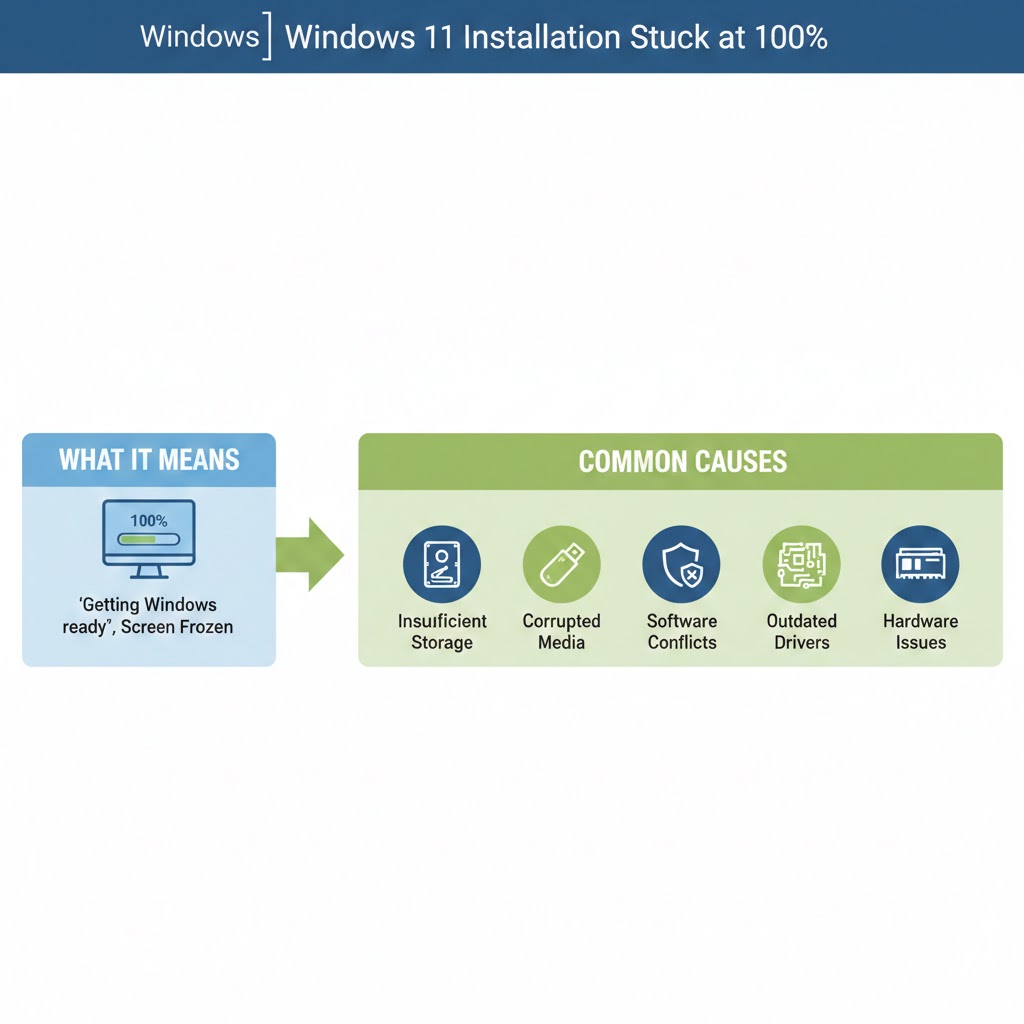
What Does “Windows 11 Installation Stuck at 100” Mean?
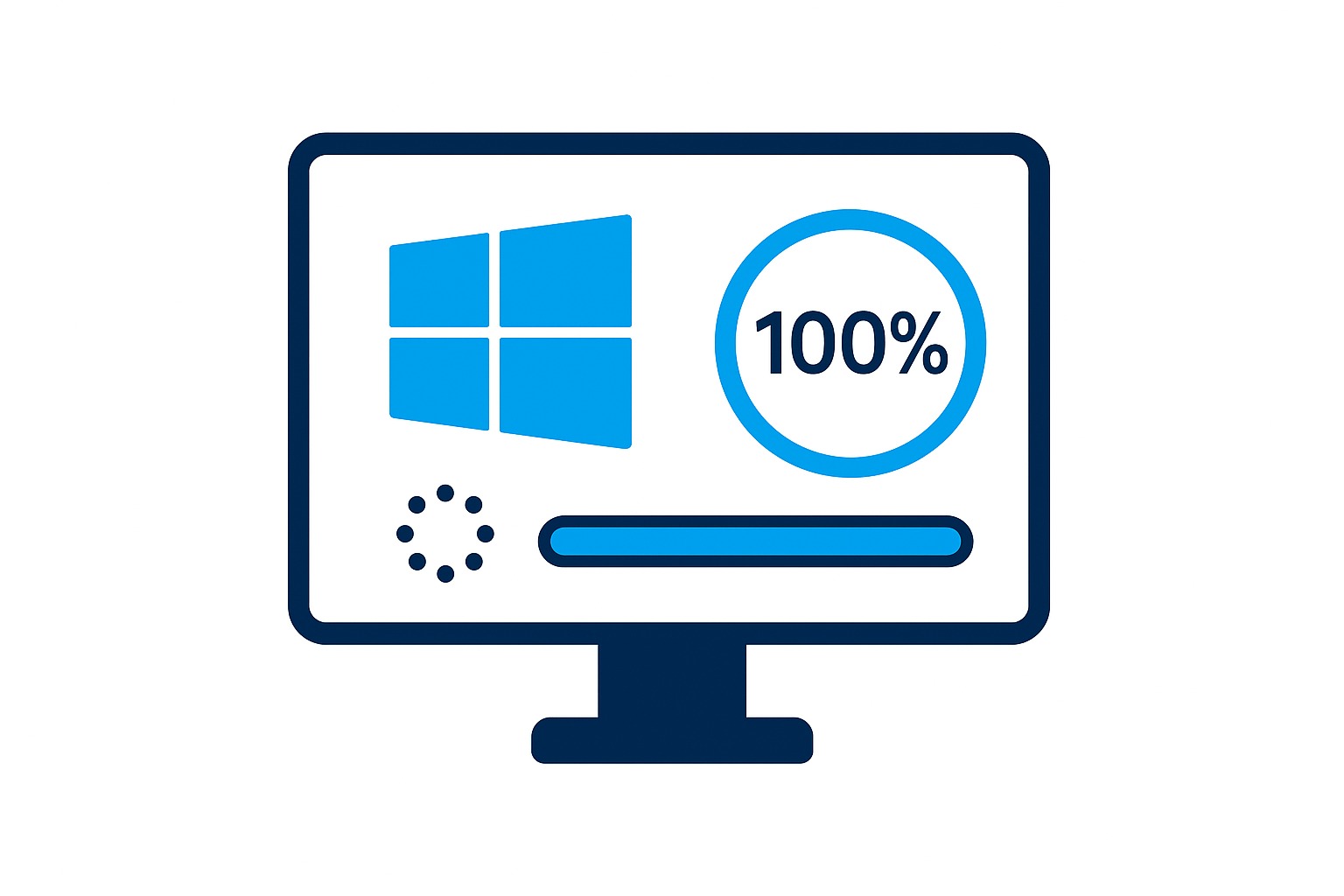
Many users report that their Windows 11 installation seems to finish — progress hits 100% — but then nothing else happens. The screen may linger at “Getting Windows ready,” “Configuring updates,” or simply remain blank. This phenomenon is often described as “Windows 11 Setup Freezes at 100%,” “Windows 11 Installation Hangs at 100%,” or “Windows 11 Update Stuck During Install.”
What’s happening behind the scenes is that the system may still be working on final setup tasks: unpacking files, updating system configuration, rewriting registry entries, or cleaning up old components. PHP.cn+2Wondershare PDFelement+2
But sometimes the system truly hangs: the PC becomes unresponsive, disk activity stops, and even after hours nothing changes. That’s when intervention is required. MakeUseOf+2PHP.cn+2 Understanding this distinction — between “still working quietly” and “completely stuck” — is critical before you take corrective action.
Why Does the Installation Hang at 100%?
There are several common culprits behind a stuck Windows 11 installation or update. Often, these problems overlap.
-
Insufficient storage space or problematic disk/SSD
Update or installation processes need extra space for temporary files, extraction, and configuration. If your system drive (usually C:) is nearly full, Windows may fail to complete the installation. Even a failing or degraded SSD can cause hangs. HackMD+2SilverPC Blog+2 -
Corrupted or improperly created installation media or update files
If the ISO file or USB installation media is damaged or corrupted, setup may hang during file extraction or copying. Similarly, a partially downloaded or corrupt update package can freeze the process. SilverPC Blog+2PHP.cn+2 -
Conflicts with third-party software (antivirus, background services, etc.)
Security tools, system optimizers or other background apps may interfere with setup processes. They might block changes, treat update components as threats, or lock system files — causing the installation to stall. HackMD+2IT trip+2 -
Incompatible or outdated drivers, especially storage or controller drivers
If Windows cannot properly interface with your storage subsystem — SSD, NVMe, RAID, or even unusual controller configurations — the installation may fail at the final stages. SilverPC Blog+1 -
Hardware issues — failing drives, faulty RAM, overheating, or unstable PSU
A failing SSD/HDD, bad RAM modules, excessive heat, or inadequate power supply can all destabilize installation. These hardware problems sometimes go unnoticed until system demands spike during an OS install. SilverPC Blog+1 -
Power interruptions or forced shutdowns during installation
Losing power during final stages can corrupt file writes and leave the system in a semi‑configured state, causing hangs or boot failures. Wondershare PDFelement+1 -
Background processes overload or system resource constraints
If RAM, CPU, or disk are maxed out by background processes, Windows setup might struggle to complete. This holds especially for older PCs or heavily loaded systems. HackMD+2MakeUseOf+2
Given these multiple potential causes, the appropriate fix depends on the symptoms you observe — whether disk activity is ongoing, whether the PC responds at all, how long it’s been “stuck,” and whether you’re using an upgrade or a fresh installation.
Real User Experiences & Case Studies
It helps to learn from others who’ve faced this frustrating issue. Here are a few real‑world examples and what ultimately worked for them:
-
On a forum thread about new PC builds, one user wrote:
“My brother and I just built a new PC, but we’re running into issues while trying to install Windows 11… we updated the BIOS to version F7c and disabled C-States in the BIOS (C-Connect)… That allowed installation to succeed.” Reddit
-
Another user attempting to upgrade from Windows 10 shared:
“Installation went fine until 99% then it stuck like that for over 6 hours.” Reddit
That thread saw many similar reports — and the consensus advice was: wait a bit longer before taking action because sometimes Windows was silently processing tasks.
-
Yet another person, installing via USB, observed: after hours of freeze, they re-created the installation media using a different USB drive and tool — then the install completed successfully. Reddit+1
These anecdotes highlight two important lessons: sometimes problems are due to BIOS/hardware settings or faulty storage/USB media; sometimes simply recreating the install media solves a hang.
Steps to Troubleshoot & Fix Windows 11 Installation Hanging at 100%
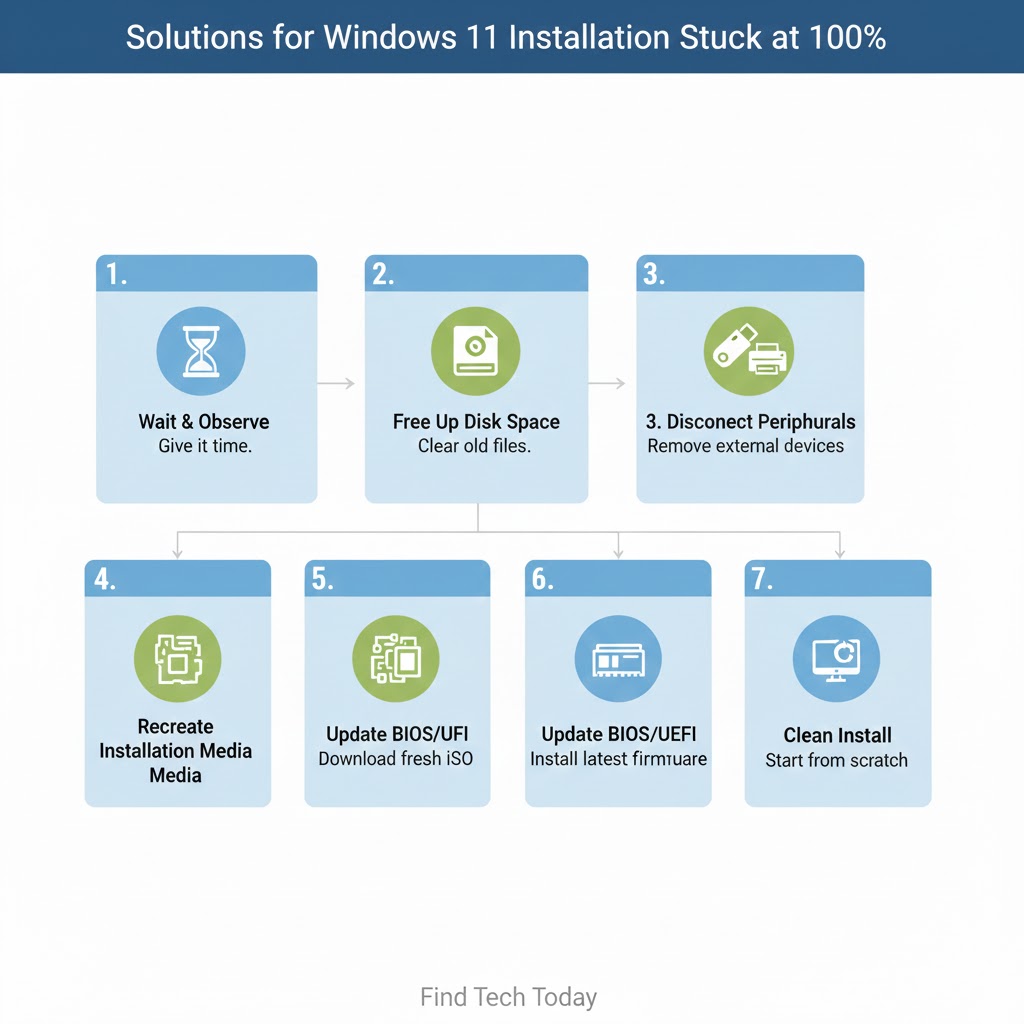
Here’s a practical, step-by-step checklist to resolve the “Windows 11 Installation Stuck at 100” problem. Use these in order: start with the least invasive (waiting, checking), and escalate only if needed.
➤ Preliminary — Wait, observe, and don’t panic
-
If installation just hit 100%, wait for at least 1–2 hours before intervening. On slower or older systems — or when upgrading from a much older Windows version — background tasks like registry updates, driver installs, and system cleanup can take time. PHP.cn+1
-
Watch for disk activity (HDD/SSD LED blinking) or system activity — if activity persists, the system may still be working.
-
If after 2+ hours nothing changes — no disk activity, no mouse cursor blink, no screen change — treat it as a hang.
➤ Basic checks & housekeeping
-
Free up space: make sure the system partition (usually C:) has ample free space. Remove temporary files, old installers, and large unused data. Aim for significantly more than the minimum required 64 GB since Windows needs temp space during installation. IT trip+2SilverPC Blog+2
-
If this is an upgrade: disable or uninstall unnecessary startup apps and background services (especially third‑party antivirus or optimization software) before retrying. HackMD+2PHP.cn+2
-
Disconnect non-essential peripherals: USB drives, external hard drives, printers, webcams — unplug everything except the keyboard, mouse, and (if using external media) the installation USB. This avoids driver conflicts. SilverPC Blog+1
➤ Advanced troubleshooting
Use these if basic steps don’t solve the problem:
-
Recreate installation media
-
If you’re installing via USB: recreate the bootable drive using the official tool (or a trusted tool like Rufus).
-
Verify ISO file integrity (if ISO was downloaded) using checksums (e.g. SHA‑256). Corrupted or improperly created media is a frequent cause of installation freezes. SilverPC Blog+1
-
-
Update BIOS/UEFI, and check BIOS settings
-
Outdated BIOS or improper BIOS settings (CSM, Secure Boot, fast boot, C‑States, TPM, etc.) can cause instabilities. Several users fixed installation hangs by updating BIOS or disabling problematic BIOS features. Reddit+1
-
If you changed BIOS/UEFI settings, boot into BIOS setup and restore to defaults (or recommended settings), then retry.
-
-
Run disk and memory diagnostics
-
If using SSD or HDD, run tools like the built-in disk checker (
chkdsk /f /r) from command prompt (when possible) or from media recovery environment. This fixes or flags bad sectors that might block file writes during install. PHP.cn+1 -
If using multiple RAM sticks, test installation with only one stick inserted. Faulty RAM often manifests as freezes during installation. SilverPC Blog+1
-
-
Use a clean install rather than upgrade
-
If repeated upgrade attempts fail, consider performing a clean install via USB: boot from a freshly created installation media, format the system partition (after backing up data), and install fresh. This often bypasses issues caused by old system corruption. PHP.cn+1
-
-
Use built-in repair tools if upgrade already stalled
-
If installation hangs and you can reboot into recovery mode (WinRE), run repair tools such as “Startup Repair,” or use commands to rebuild boot configuration (for example
bootrec /fixmbr,bootrec /fixboot,bootrec /rebuildbcd). PHP.cn+1 -
After repair, restart the PC without external media and check if Windows boots or setup resumes.
-
-
Ensure stable power supply and avoid interruptions
-
For desktops: make sure PSU is stable, connections solid, and consider using a UPS if power supply is unreliable.
-
For laptops: ensure battery is charged, and ideally keep the charger connected until installation completes (especially for large upgrades). Power loss during install can corrupt files and cause incomplete installs. Wondershare PDFelement+1
-
Combining Solutions: A Realistic Scenario
Suppose you’re upgrading a 5‑year‑old laptop from Windows 10 to Windows 11 and the installation hangs at 100%. Here’s a practical way to proceed, combining several fixes:
-
First, wait 2 hours. If disk activity light is quiet, proceed.
-
Boot into Safe Mode (or disconnect antivirus, background apps), disable nonessential startup items.
-
Open disk cleanup, delete temporary files, empty Recycle Bin, uninstall big unused programs, and free up at least 30–40 GB on C:.
-
Plug nothing else in (no external drives, no printers).
-
Recreate a clean installation USB using the official media creation tool and verify ISO integrity.
-
Update BIOS/UEFI if an update is available; otherwise, reset to default settings (disable C‑States / extra power-saving CPU features, enable AHCI, disable legacy/CSM if unnecessary).
-
Attempt clean install (back up data beforehand).
-
If still stuck, use recovery USB to run
bootrecand repair boot configuration, or run a full disk check.
This method often resolves hangs that have persisted even after repeated attempts by users.
Why These Fixes Work — Technical Explanation
-
Free disk space & healthy drives: Windows uses the system partition to extract, decompress, and copy thousands of files during installation. If the SSD/HDD is nearly full or has bad sectors, write operations may fail silently or take very long, leading to a “hang.”
-
Clean installation media & correct BIOS configuration: A corrupted ISO or a misconfigured BIOS can cause setup to misinterpret disk architecture (e.g. mixing legacy BIOS/CSM with UEFI, or wrong SATA modes), leading to driver conflicts or inability to write critical system files.
-
Minimized background interference: Antivirus tools or system optimizers may lock files or intercept system changes. Disabling them ensures Windows can operate without interference.
-
Hardware test (RAM, storage integrity, power stability): Faulty RAM can cause random freezes; bad storage corrupts file writes; power fluctuations can interrupt write operations mid‑install. Addressing hardware issues reduces the chance of hung installs.
In short: a Windows installation — especially a clean install or major upgrade — is a delicate process. It demands correct hardware state, clean media, stable power, and minimal interference. When one of those factors is off, the final 100% often becomes “stuck at 100.”
When Should You Consider Professional Repair or Replacement?
If you have tried the steps above and still face repeated installs freezing at 100%, it may indicate deeper hardware-level problems. Consider these possibilities:
-
SSD / HDD might be failing. Frequent disk errors, slow reads/writes, or SMART warnings suggest you replace the drive.
-
RAM could be faulty; if installing with different RAM configurations fails, test memory using tools like MemTest86, or replace RAM modules entirely.
-
Motherboard or storage-controller compatibility issues (e.g. NVMe drivers, SATA/AHCI/RAID compatibility) — especially in older hardware — may require motherboard replacement or using a different drive interface.
-
Power supply problems: if the PSU cannot consistently supply enough power (especially under load), installations can fail unpredictably.
When hardware becomes the bottleneck — rather than software or configuration — no amount of troubleshooting will guarantee a successful install. In such cases, it’s safer and more cost-effective to repair or replace the problematic component.
Real‑World Evidence: What Experts and Technicians Say
-
According to a widely referenced troubleshooting guide on system freezes during setup: corrupted installation media and incompatible hardware drivers are among the top causes when Windows 11 installs hang. Recommended solution: recreate the bootable media, check SSD health, update BIOS, and ensure driver compatibility. SilverPC Blog
-
Tech support communities and blogs consistently recommend clearing temporary files, disabling third‑party antivirus, and using the built-in system file repair tools (like
DISMandSFC) if system files are corrupt or missing — all common after failed or interrupted installs. Coding Lap+2techaipost.com+2 -
Many users find that a clean install (rather than upgrade) solves persistent issues, particularly where a fresh OS environment sidesteps existing system file corruption, driver conflicts, or registry problems. PHP.cn+2SilverPC Blog+2
These recommendations align with general principles of reliability and best‑practice systems administration: fresh media, clean environment, hardware integrity, and minimal interference.
Additional Related Fixes (Post‑Install Issues)
Sometimes installation completes — or seems to — but after logging in, you encounter problems such as UI glitches, disabled features, or update errors. Other online guides cover topics like what to do when right-click doesn’t work on the Windows desktop, or when your Windows Update throws error codes such as 0x80070002. If you face such issues, you might find the following articles valuable:
-
Troubleshooting right‑click issues on Windows desktop (fix for context-menu problems).
-
Guide to fix “Windows Update error 0x80070002” — useful if updates after installation fail.
-
Steps to address a broken taskbar after a Windows 11 update — sometimes caused by driver problems or incomplete updates.
These additional resources help ensure your system stays stable and functional even after a challenging install.
Frequently Asked Questions (FAQs)
Q: I waited over 3 hours after Windows 11 showed 100% — still nothing. Is it safe to force restart?
Yes — but only if there’s no disk activity (hard drive LED is off), and mouse/keyboard are unresponsive. After a forced restart, boot into recovery or safe mode and try repairing or reinstalling. If you used a USB installer, reconnect it and attempt installation again.
Q: My PC meets the minimum requirements for Windows 11. Why does the setup hang?
Minimum requirements cover basic functionality. However, installation needs extra space, storage‑controller compatibility, stable hardware, and correct BIOS settings. If any of these are suboptimal — e.g. small SSD, outdated BIOS, conflicting drivers — setup may still hang even on “eligible” hardware.
Q: I have important data on my system drive. Will a clean install erase everything?
Yes — a clean install will wipe the system partition completely. Always back up your data (documents, photos, etc.) before proceeding. If you need to preserve data, consider using in‑place upgrade methods — but those are more prone to hang if underlying filesystem or driver issues exist.
Conclusion
Windows 11 installation freezing at 100% is a common — yet solvable — headache. The root causes vary: sometimes it’s a slow configuration process silently running, sometimes it’s corrupted media or incompatible hardware, and sometimes third‑party software or hardware faults.
By following a structured, step‑by‑step troubleshooting plan — freeing up space, disabling background apps, checking hardware health, recreating installation media, and repairing system files — most users succeed in completing the installation without losing data. For stubborn cases, a clean install or hardware repair may be necessary.