Wood Siding Boards Estimator
Wood Siding Boards Estimator
Calculate the number of wood siding boards (bevel, clapboard, shiplap, board & batten) needed for exterior walls. Accounts for exposure, gables, openings, and waste – global imperial/metric support.
Wood Siding Boards Estimator: Your Complete Guide to Accurate Wood Siding Calculations
Installing wood siding on a home or commercial building is a rewarding project, but miscalculating the number of boards can lead to unnecessary costs and material waste. This is where the Wood Siding Boards Estimator comes in. Whether you’re a DIY enthusiast, contractor, or builder, this tool ensures you order just the right amount of siding boards, saving money and reducing waste while keeping your project on schedule.
Imagine preparing for a home exterior renovation: you measure the walls, account for windows and doors, and realize you’re unsure how many boards to buy. Ordering too few means delays; ordering too many wastes both money and resources. Our estimator simplifies this process by calculating board quantity using real-world measurements, exposure, gable areas, and waste percentage—all in a matter of seconds.
Why Accurate Wood Siding Estimation Matters
Incorrect siding estimates can cause multiple headaches:
-
Over-purchasing: Excess boards take up space and tie up capital.
-
Under-purchasing: Delays construction and increases labor costs due to additional trips.
-
Material waste: Cutting errors, defective boards, and pattern mismatches increase loss if unaccounted for.
-
Project mismanagement: Timelines and budgets can quickly get off track.
Using a Wood Siding Quantity Calculator ensures precision, allowing for better planning and improved resource allocation. By considering board exposure, gable areas, and openings, the tool reflects realistic scenarios rather than rough guesses.
How the Wood Siding Boards Estimator Works
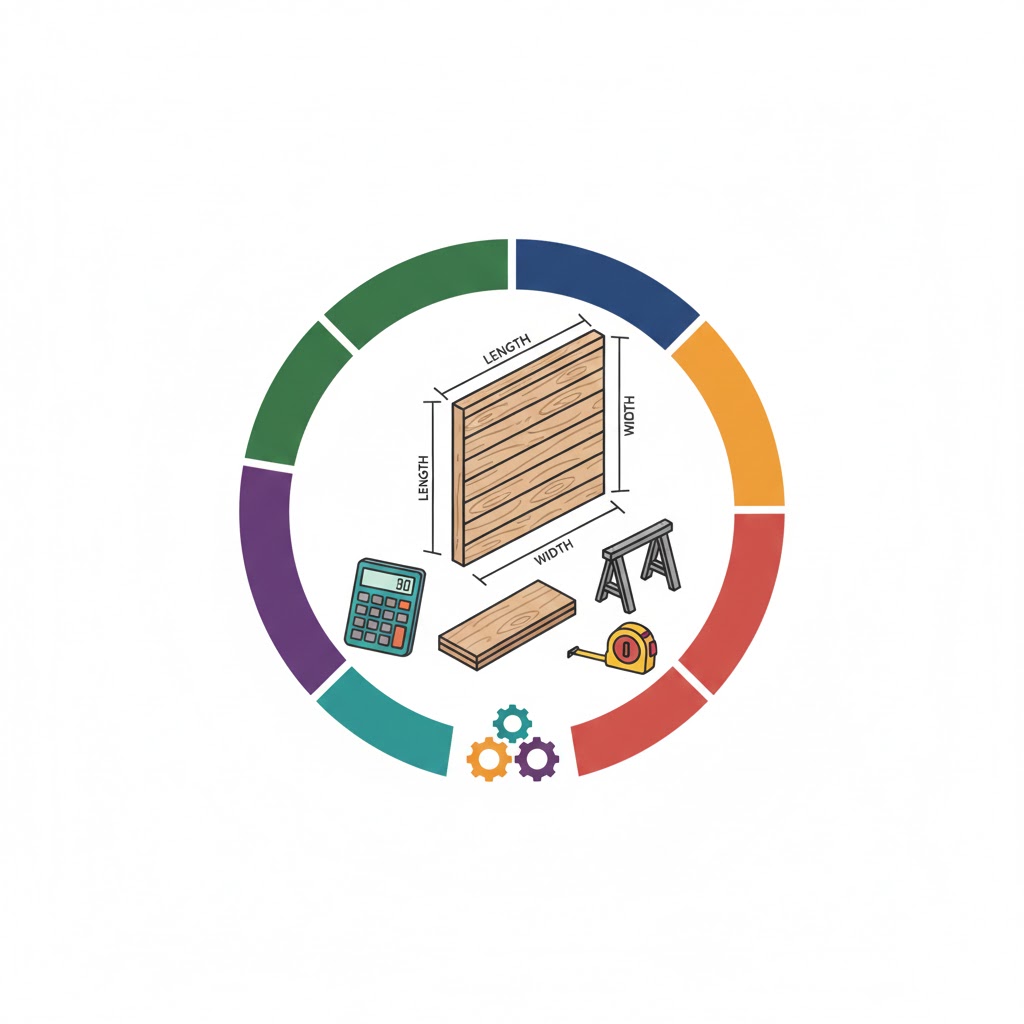
Our estimator is designed for simplicity and accuracy. Here’s a breakdown of its logic:
Inputs Required:
-
Unit System – Choose between Imperial (feet/inches) or Metric (meters/cm).
-
Total Wall Area – Combined area of all exterior walls.
-
Gable/Triangle Area – Optional, for triangular or angled sections.
-
Window & Door Openings – Subtract areas not covered by siding.
-
Board Exposure – The visible portion of each siding board (common: 6″, 8″, 10″, or custom).
-
Board Length – Standard board length available for purchase.
-
Waste Percentage – Typically 10–25% to cover cutting and defects.
Calculation Logic:
-
Gross Area =
Wall Area + Gable Area -
Net Area =
Gross Area – Openings -
Total Area with Waste =
Net Area × (1 + Waste%) -
Exposure Conversion: Convert inches or cm to feet/meters:
-
Linear Board Requirement =
Total Area with Waste ÷ Exposure -
Number of Boards =
Linear Requirement ÷ Board Length(rounded up to nearest whole number)
This calculation ensures every square foot or meter is covered while factoring in real-life variations like gables, openings, and material waste.
Step-by-Step Examples
Example 1: Basic Imperial Calculation
-
Wall Area: 1,800 sq ft
-
Gable Area: 400 sq ft
-
Openings: 300 sq ft
-
Exposure: 6″
-
Board Length: 12 ft
-
Waste: 15%
Step 1: Gross Area = 1,800 + 400 = 2,200 sq ft
Step 2: Net Area = 2,200 – 300 = 1,900 sq ft
Step 3: Total with Waste = 1,900 × 1.15 = 2,185 sq ft
Step 4: Exposure in feet = 6 ÷ 12 = 0.5 ft
Step 5: Linear Requirement = 2,185 ÷ 0.5 = 4,370 linear ft
Step 6: Boards Needed = 4,370 ÷ 12 ≈ 365 boards
Example 2: Metric Units with Custom Exposure
-
Wall Area: 150 m²
-
Gable Area: 35 m²
-
Openings: 25 m²
-
Exposure: 20 cm
-
Board Length: 3.66 m
-
Waste: 20%
Step 1: Gross Area = 150 + 35 = 185 m²
Step 2: Net Area = 185 – 25 = 160 m²
Step 3: Total with Waste = 160 × 1.2 = 192 m²
Step 4: Exposure in meters = 20 ÷ 100 = 0.2 m
Step 5: Linear Requirement = 192 ÷ 0.2 = 960 linear m
Step 6: Boards Needed = 960 ÷ 3.66 ≈ 263 boards
Example 3: Accounting for Large Openings
-
Wall Area: 2,500 sq ft
-
Gable Area: 300 sq ft
-
Openings: 700 sq ft
-
Exposure: 8″
-
Board Length: 14 ft
-
Waste: 18%
Following the same steps, the estimator calculates the exact board quantity, factoring in large window and door openings.
These examples demonstrate how varying inputs—like board exposure, waste percentage, or openings—affect the final quantity.
Practical Tips for Using the Wood Siding Boards Estimator
-
Test multiple scenarios: Try different waste percentages or board lengths to optimize costs.
-
Include all openings: Even small vents or trim areas impact total material needed.
-
Consider board mix: Using multiple board lengths reduces waste.
-
Select durable wood: Cedar, redwood, or engineered wood lasts longest and minimizes maintenance.
-
Prime and seal boards: Protect edges and cuts before installation to extend life.
Related Tools to Enhance Planning
-
Fiber Cement Siding Tool – Compare wood vs. fiber cement siding needs.
-
Brick Veneer Quantity Calculator – Estimate complementary masonry finishes.
-
Home Improvement Calculators – Explore more construction material estimators.
FAQs About Wood Siding Boards Estimator
Q1: Can I use the estimator for angled or irregular walls?
A: Yes! Include gable areas or triangles in the Gable/Triangle input. The tool calculates net coverage accordingly.
Q2: How much waste should I plan for?
A: Typically, 10–25% is recommended. More complex patterns, short boards, or frequent cuts require higher waste.
Q3: Does the tool work with both metric and imperial units?
A: Absolutely. You can switch between feet/inches and meters/cm, and the calculation adapts automatically.
Conclusion
The Wood Siding Boards Estimator is an essential tool for accurate planning, helping you save money, reduce waste, and streamline your exterior siding projects. By understanding inputs, outputs, and calculations, you can confidently order the right number of boards, account for real-world variables, and maintain professional standards.
Whether you’re a homeowner or contractor, exploring this tool alongside other material estimators ensures every project is efficient, precise, and cost-effective.