Kitchen Cabinet Quantity Calculator
Kitchen Cabinet Quantity Calculator
Estimate the quantity of kitchen cabinets needed based on wall lengths – supports global units (meters or feet) and calculates approximate number of cabinets.
Kitchen Cabinet Quantity Calculator: Effortlessly Plan Your Kitchen Cabinets
Designing a kitchen can be both exciting and overwhelming. One of the most common challenges homeowners and designers face is estimating how many cabinets are actually needed for a space. This is where the Kitchen Cabinet Quantity Calculator comes in—a smart, easy-to-use tool that turns confusing measurements into clear, actionable numbers. Whether you’re planning a small kitchen remodel or a full-scale renovation, this tool helps ensure your cabinets fit perfectly without overbuying or underestimating.
Why Accurate Cabinet Planning Matters
Imagine spending weeks selecting stylish kitchen cabinets, only to discover they don’t fit properly or leave awkward gaps along your walls. Overestimating cabinet needs wastes money and space, while underestimating can force last-minute design compromises.
With a Cabinet Count Estimator, you can:
-
Quickly determine the exact number of base and wall cabinets needed.
-
Account for islands, corners, and extra storage spaces.
-
Include a wastage or adjustment percentage to avoid surprises.
-
Compare different layouts before committing to purchases.
This proactive planning saves time, money, and stress while ensuring your kitchen looks polished and functional.
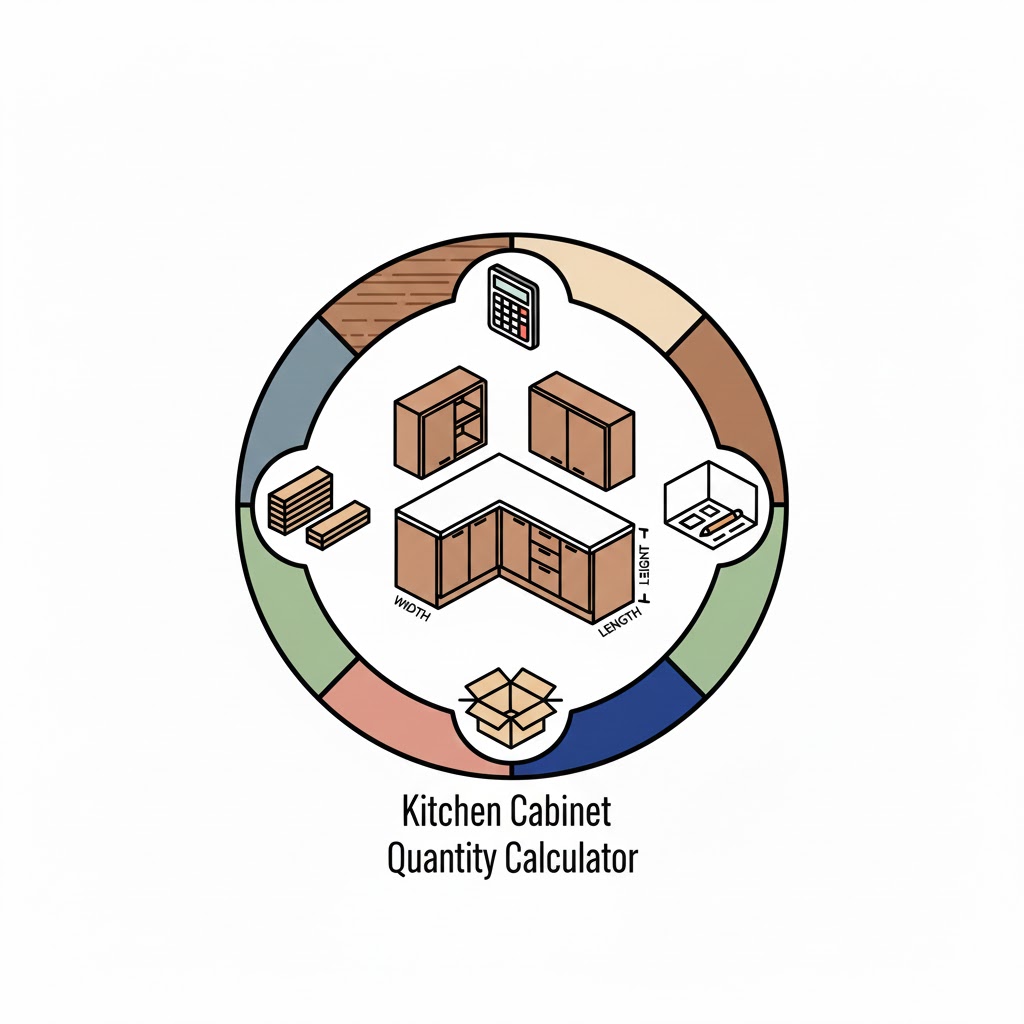
How the Kitchen Cabinet Quantity Calculator Works
The tool is designed to be intuitive and precise, using simple math to provide realistic cabinet counts. Here’s a breakdown:
1. Inputs You Provide
-
Base Cabinet Wall Length: Total horizontal length of lower cabinets along your walls.
-
Wall Cabinet Length: Total upper cabinet length for storage above counters.
-
Island or Additional Base Length: Optional extra cabinets for islands or peninsulas.
-
Units: Meters or feet. The calculator supports global units.
-
Average Cabinet Width: Standard width of cabinets (e.g., 0.6 meters or 24 inches).
-
Wastage/Adjustment Percentage: Extra allowance to account for corners, fillers, or appliances.
2. How the Calculations Are Done
The calculator follows a simple formula for each cabinet type:
-
Base Cabinets: Includes both wall and island lengths.
-
Wall Cabinets: Separate from base cabinets to account for height differences.
-
Total Cabinets: Sum of base and wall cabinets, giving you a clear picture of your needs.
The tool rounds up to the nearest whole cabinet to ensure you don’t fall short.
3. Outputs You Receive
After calculation, you’ll see:
-
Base Cabinet Linear Length – total run of lower cabinets including islands.
-
Wall Cabinet Linear Length – total upper cabinet span.
-
Total Linear Length – combined measurement for easy reference.
-
Estimated Base and Wall Cabinets Needed – including your specified adjustment.
-
Total Cabinets Approximate – quick snapshot for budgeting and ordering.
Additionally, the tool provides practical advice and insights for better layout planning, helping you avoid common pitfalls.
Real-Life Examples
Let’s walk through a few practical scenarios:
Example 1: Standard 8m Kitchen Wall
-
Base Wall: 8 meters
-
Wall Cabinets: 8 meters
-
Island: 0 meters
-
Average Cabinet Width: 0.6 meters
-
Wastage: 10%
Calculation:
Outcome: You need approximately 30 cabinets for this layout.
Example 2: Kitchen with Island
-
Base Wall: 6 meters
-
Wall Cabinets: 5 meters
-
Island: 2 meters
-
Average Width: 0.7 meters
-
Wastage: 12%
Outcome: 21 cabinets ensure full coverage with some adjustment for corners.
Example 3: Compact Kitchen (Feet Units)
-
Base Wall: 20 feet
-
Wall Cabinets: 15 feet
-
Island: 5 feet
-
Average Cabinet Width: 2 feet
-
Wastage: 8%
Outcome: Using the tool in feet gives a clear, accurate count.
Key Benefits of Using a Cabinet Measurement Tool
-
Time Efficiency: Skip manual calculations and instantly see results.
-
Cost Savings: Prevent over-ordering or last-minute purchases.
-
Design Confidence: Experiment with layouts without committing financially.
-
Global Usability: Switch between meters and feet seamlessly.
-
Scenario Testing: Include islands, corners, or custom cabinet widths.
For related tools, explore our Granite Countertop Estimator or Quartz Countertop Calculator to plan your full kitchen surface.
Practical Tips for Accurate Cabinet Estimation
-
Standard Cabinet Widths: Usually 0.3–0.9m (12–36 inches). Adjust inputs accordingly.
-
Corners & Fillers: Always account for a small adjustment to prevent gaps.
-
Island Planning: Treat islands as separate base cabinet runs.
-
Custom Cabinets: If designing custom widths, input exact measurements.
-
Future Expansion: Consider extra cabinets for appliances, pantries, or storage needs.
FAQs
1. Can this tool handle custom cabinet sizes?
Yes! Simply input the exact average cabinet width in meters or feet, and the calculator adjusts automatically.
2. How is the wastage percentage used?
The wastage or adjustment percentage accounts for corners, fillers, and design gaps, ensuring you don’t underestimate.
3. Can I calculate cabinets for both upper and lower cabinets together?
Absolutely. The tool calculates base and wall cabinets separately and then totals them for convenience.
Conclusion
The Kitchen Cabinet Quantity Calculator transforms cabinet planning from guesswork into a precise, reliable process. By inputting wall lengths, cabinet widths, and minor adjustments, you get an accurate estimate of base, wall, and total cabinets.
Take control of your kitchen project: test different scenarios, adjust cabinet widths, and include islands to optimize space. Pair it with tools like the Cabinet Measurement Tool for full project planning and make your kitchen renovation stress-free and budget-friendly.