Birdhouse Placement Tool
Birdhouse Placement Tool
Find the optimal height, direction, and spacing for your birdhouse to attract specific backyard birds safely and effectively. Globally applicable guidelines.
Birdhouse Placement Tool: Your Ultimate Guide to Backyard Birdhouses
Imagine standing in your backyard, hoping to attract colorful birds like bluebirds, robins, or wrens, only to find that your birdhouses remain empty season after season. The secret isn’t just luck—it’s placement, spacing, and orientation. That’s where the Birdhouse Placement Tool comes in, helping you determine the optimal height, direction, and distance between birdhouses to create a thriving backyard ecosystem. Whether you are a casual bird lover or a serious backyard conservationist, this tool gives practical guidance backed by global birding standards.
Why Proper Birdhouse Placement Matters
Birds are selective about where they nest. Factors such as height, facing direction, spacing, and predator protection influence whether they choose your birdhouse or skip it entirely. Proper placement can:
-
Increase nesting success for your target species.
-
Reduce conflicts between different birds by ensuring adequate spacing.
-
Protect nests from predators like cats, raccoons, and snakes.
-
Promote biodiversity in your garden by attracting multiple bird species.
Even small adjustments, like facing the house east instead of west or raising it by a meter, can significantly improve occupancy.
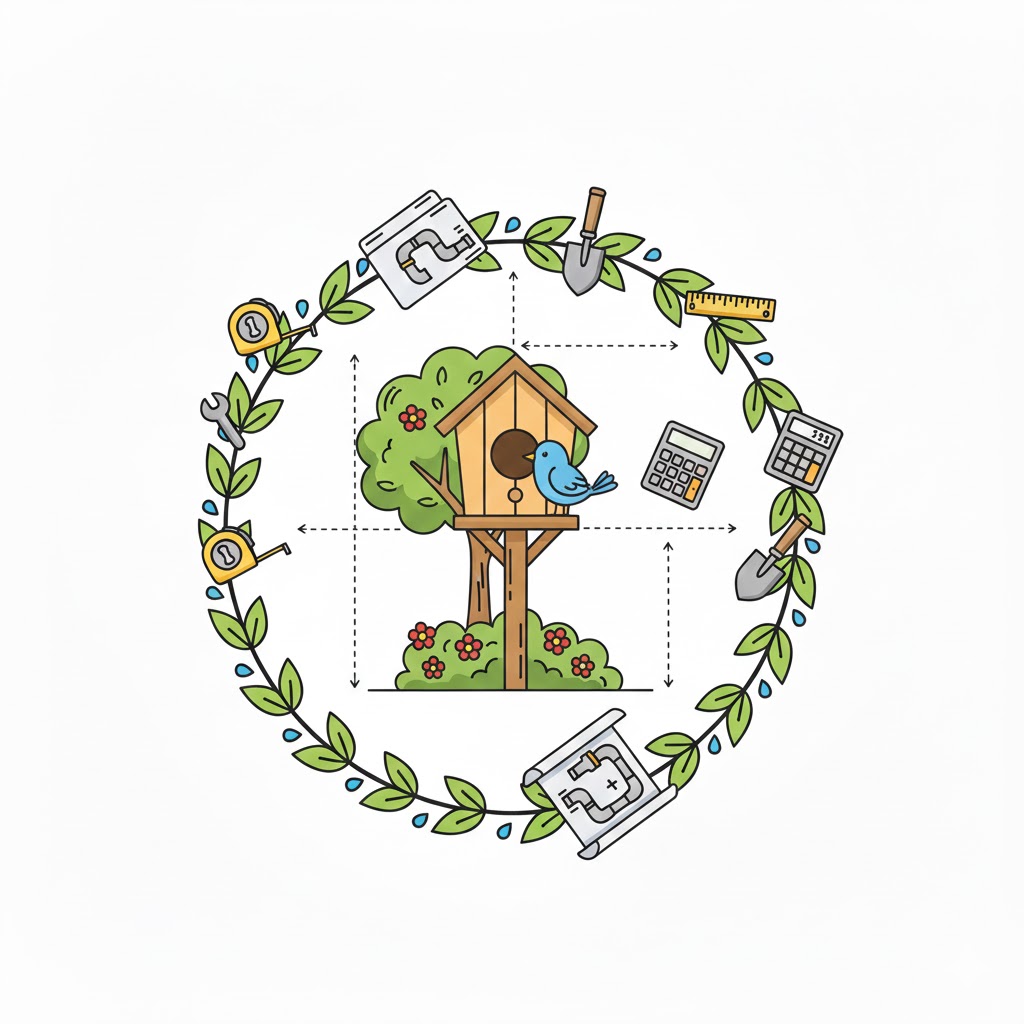
How the Birdhouse Placement Tool Works
The Birdhouse Placement Tool is designed for both beginners and experienced gardeners. Here’s a step-by-step breakdown of its functionality:
1. Inputs You Provide
-
Target Bird Species: Choose from species like Bluebirds, Chickadees, Wrens, Robins, Woodpeckers, or Owls. Each species has unique height, spacing, and predator protection needs.
-
Mounting Type: Pole, tree, or wall installation. Poles are recommended for safety against predators.
-
Habitat/Location: Suburban yard, rural field, or near wooded areas. Habitat affects spacing and height adjustments.
-
Number of Birdhouses: How many houses you plan to install.
2. How Calculations Are Done
The tool uses species-specific guidelines to calculate:
-
Recommended Height:
heightMin – heightMaxmeters based on the bird species and habitat. -
Best Facing Direction: Ideal compass direction or sheltered side for safety and sun exposure.
-
Minimum Spacing: Calculated as
spacing × (number of houses - 1)to reduce territorial conflicts. -
Predator Protection: Notes if a baffle or ledge is needed to protect nests.
For example:
This ensures that if you have three bluebird boxes spaced 100 meters apart, the total coverage is 200 meters, minimizing competition.
3. Outputs You Get
-
Clear metric cards showing height, direction, spacing, predator protection, and habitat-specific recommendations.
-
Human-readable advice section explaining additional tips like flight path, cleaning, and nearby perches.
-
Option to copy results for planning and record-keeping.
Step-by-Step Examples
Example 1: Bluebirds in a Suburban Garden
Inputs: 3 houses, pole mounting, suburban yard, Bluebirds
Calculations:
-
Height: 1.5 – 2 m
-
Direction: East or Southeast
-
Spacing: 100 m →
100 * (3-1) = 200 mtotal coverage -
Predator Guard: Baffle essential
This setup ensures each bluebird pair has enough space and protection.
Example 2: Wrens Near Woods
Inputs: 5 houses, tree-mounted, near woods, Wrens
Calculations:
-
Height: 1.5 – 3 m + 1 m adjustment for wooded area → 1.5 – 4 m
-
Direction: Any
-
Spacing: 3 m →
3 * (5-1) = 12 mtotal span -
Predator Guard: Optional
Wrens are less picky but need vertical clearance and minimal competition, which this spacing provides.
Example 3: Owls in a Rural Field
Inputs: 2 houses, pole-mounted, rural, Small Owls
Calculations:
-
Height: 3 – 6 m
-
Direction: Quiet area, any orientation
-
Spacing: 100 m × (2-1) = 100 m total span
-
Predator Guard: Optional but recommended
This spacing helps territorial owls avoid conflict and ensures safety from predators.
Practical Tips for Using the Tool
-
Test different values: Try varying the number of birdhouses or species to see how spacing changes.
-
Adjust for environment: Rural or wooded areas require different height and spacing adjustments.
-
Combine with landscaping: Adding shrubs, perches, and water sources increases attractiveness.
-
Annual Maintenance: Clean houses after the nesting season to ensure bird health.
Core Entities Related to Birdhouse Placement
To establish semantic relevance for search engines, this tool naturally ties into:
-
Bird species-specific nesting habits (Bluebirds, Chickadees, Wrens, Robins, Owls, Woodpeckers)
-
Mounting types (pole, tree, wall)
-
Backyard habitat categories (suburban, rural, forest edge)
-
Predator protection methods (baffles, ledges, safe flight paths)
-
Spacing calculations to reduce bird conflict
FAQs
Q1: Can I use this tool for multiple bird species in the same yard?
Yes. Simply calculate placement for each species separately, then adjust spacing to ensure minimal overlap.
Q2: What if my backyard is small?
The tool automatically recommends minimum spacing. For smaller yards, prioritize fewer houses or target smaller bird species like Wrens or Chickadees.
Q3: How do I protect birdhouses from predators?
Use pole-mounted baffles, avoid low-hanging branches, and ensure a clear flight path. The tool highlights when protection is essential.
Related Tools
-
Butterfly Garden Area Calculator – plan pollinator-friendly spaces.
-
Herb Garden Pot Estimator – optimize planting density for edible herbs.
-
Home Improvement Calculators – plan your garden and backyard projects efficiently.
Conclusion
The Birdhouse Placement Tool is more than a simple calculator—it’s your personal backyard birding assistant. By providing species-specific guidance, adjusting for habitat, and recommending safe spacing and predator protection, it ensures your birdhouses are welcoming, safe, and effective. Whether you are a beginner or experienced bird enthusiast, testing different scenarios with this tool can turn your backyard into a thriving haven for birds.
Take action today: enter your species, habitat, and number of houses, and watch your garden come alive with bird activity. Your feathered friends are waiting!