Vegetable Yield per Square Foot Tool
Vegetable Yield per Square Foot Tool
Estimate expected harvest yields and number of plants for popular vegetables using intensive square-foot gardening methods.
Vegetable Yield per Square Foot Tool: Maximize Your Garden Productivity
If you’ve ever stared at your backyard garden and wondered, “How much can I realistically harvest from this space?”, the Vegetable Yield per Square Foot Tool is exactly what you need. Designed for home gardeners, raised beds, and urban gardening enthusiasts, this tool helps you estimate both the number of plants and expected yields for popular vegetables, all based on scientifically-backed intensive planting methods.
Whether you’re planning a small balcony garden or a full backyard plot, understanding how to maximize output per square foot can save space, reduce waste, and increase your harvest throughout the season.
Why Square-Foot Gardening Maximizes Harvest
Traditional gardening often leaves empty spaces or over-crowded plants that underperform. Square-foot gardening, pioneered by Mel Bartholomew, emphasizes:
-
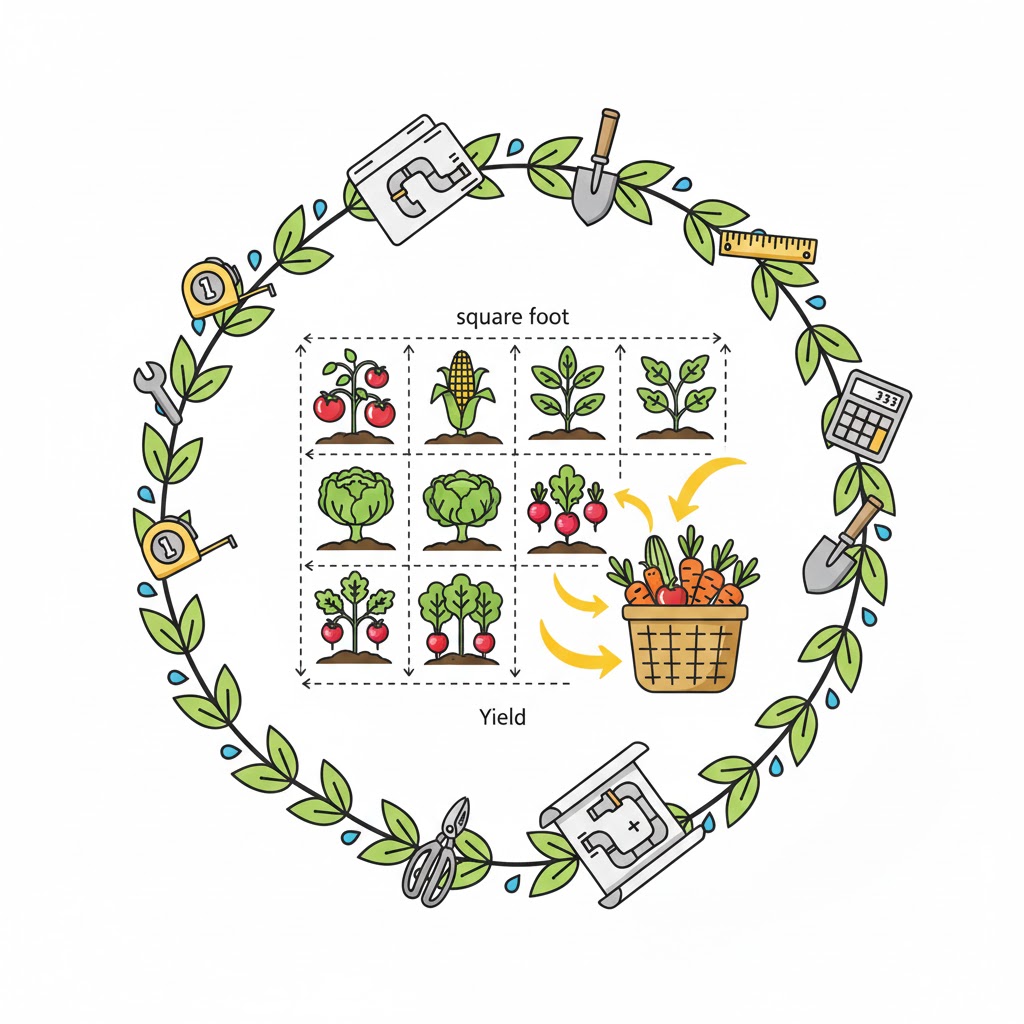
Dividing your garden into square-foot sections
-
Planting crops according to their growth requirements
-
Using intensive spacing for smaller plants without crowding
This approach ensures higher yields, efficient space usage, and easier maintenance, especially for urban or raised-bed gardens.
Key benefits include:
-
Increased productivity per square foot
-
Reduced weed growth
-
Easier pest management
-
Simpler crop rotation planning
The Vegetable Yield per Square Foot Tool incorporates these principles automatically, letting you make accurate predictions without guesswork.
How the Tool Works: Inputs, Outputs, and Calculations
Using the tool is simple, but understanding its logic helps you plan smarter:
Inputs You Provide
-
Garden Area (sq ft) – the total planting space you have.
-
Vegetables (up to 3 types) – choose your primary crops to calculate mixed-bed yields.
-
Growing Style – choose between:
-
Intensive / Square-Foot: maximum plants per square foot
-
Standard: conventional spacing for easier maintenance
-
Calculation Logic
The tool calculates yields using a step-by-step approach:
-
Divide total area equally among the selected vegetables:
-
Determine number of plants per section based on the selected style (intensive or standard):
-
Calculate expected harvest using per-plant yield averages:
This formula ensures your output reflects realistic gardening conditions and avoids overstating harvests.
Step-by-Step Examples
Here are three practical scenarios showing how the tool helps plan your garden:
Example 1: Simple Tomato Garden
-
Area: 100 sq ft
-
Vegetable: Tomato (indeterminate)
-
Style: Intensive
Calculation:
-
Plants per sq ft (intensive) = 1
-
Total plants = 100 × 1 = 100
-
Average yield per plant = 10 lbs
Result: ~1,000 lbs of tomatoes.
Tip: Even for smaller gardens, intensive spacing ensures every square foot counts.
Example 2: Mixed Vegetable Garden
-
Area: 120 sq ft
-
Vegetables: Lettuce, Carrot, Spinach
-
Style: Intensive
Calculation:
-
Area per vegetable = 120 ÷ 3 = 40 sq ft each
-
Lettuce: 40 × 4 plants/sq ft = 160 plants → ~80 lbs
-
Carrot: 40 × 16 plants/sq ft = 640 plants → ~320 lbs
-
Spinach: 40 × 9 plants/sq ft = 360 plants → ~160 lbs
Total Harvest: 560 lbs
Tip: Mixed planting maximizes variety and continuous harvest in limited spaces.
Example 3: Standard Spacing for Easy Maintenance
-
Area: 50 sq ft
-
Vegetable: Bell Pepper
-
Style: Standard
Calculation:
-
Plants per sq ft (standard) = 0.5
-
Total plants = 50 × 0.5 = 25
-
Yield per plant = 6 lbs
Result: 150 lbs of bell peppers
Tip: Standard spacing is perfect for beginners or when you prioritize maintenance over maximum yield.
Practical Tips for Maximum Accuracy
-
Use succession planting for fast-growing crops like radish or lettuce to extend harvest periods.
-
Apply quality compost and consistent watering to meet predicted yields.
-
Consider sunlight, soil fertility, and pest control—the tool assumes optimal conditions.
-
Track actual yields vs. estimates to refine your planning year after year.
Related Tools to Optimize Your Garden
For complete garden planning, consider these complementary tools:
-
Vineyard Row Length Estimator – for spacing long rows efficiently.
-
Orchard Irrigation Drip Tool – calculate precise drip irrigation lengths for fruit trees.
-
Shiplap Boards Calculator – ideal if planning DIY garden structures or raised beds.
These tools, combined with the Vegetable Yield per Square Foot Tool, create a comprehensive garden productivity plan.
Frequently Asked Questions (FAQs)
Q1: Can I estimate yields for more than three vegetables?
Yes, but the tool divides your total area among selected crops. For more vegetables, calculate in multiple sessions to avoid crowding.
Q2: How accurate are the yield predictions?
They reflect average intensive gardening outputs. Actual results vary based on climate, soil, water, and pest management.
Q3: Should I always use intensive spacing?
Intensive spacing maximizes yield but requires more care. Standard spacing is easier for beginners or low-maintenance gardens.
Conclusion
The Vegetable Yield per Square Foot Tool is your ultimate assistant for smart, efficient gardening. By providing clear, data-backed estimates, it saves you time, reduces waste, and helps you make every square foot count.
Try it today with your own garden layout, experiment with different vegetables, and see how small changes in area allocation or planting style can dramatically impact your harvest. Pair it with related tools for irrigation and garden layout to fully optimize your productivity.