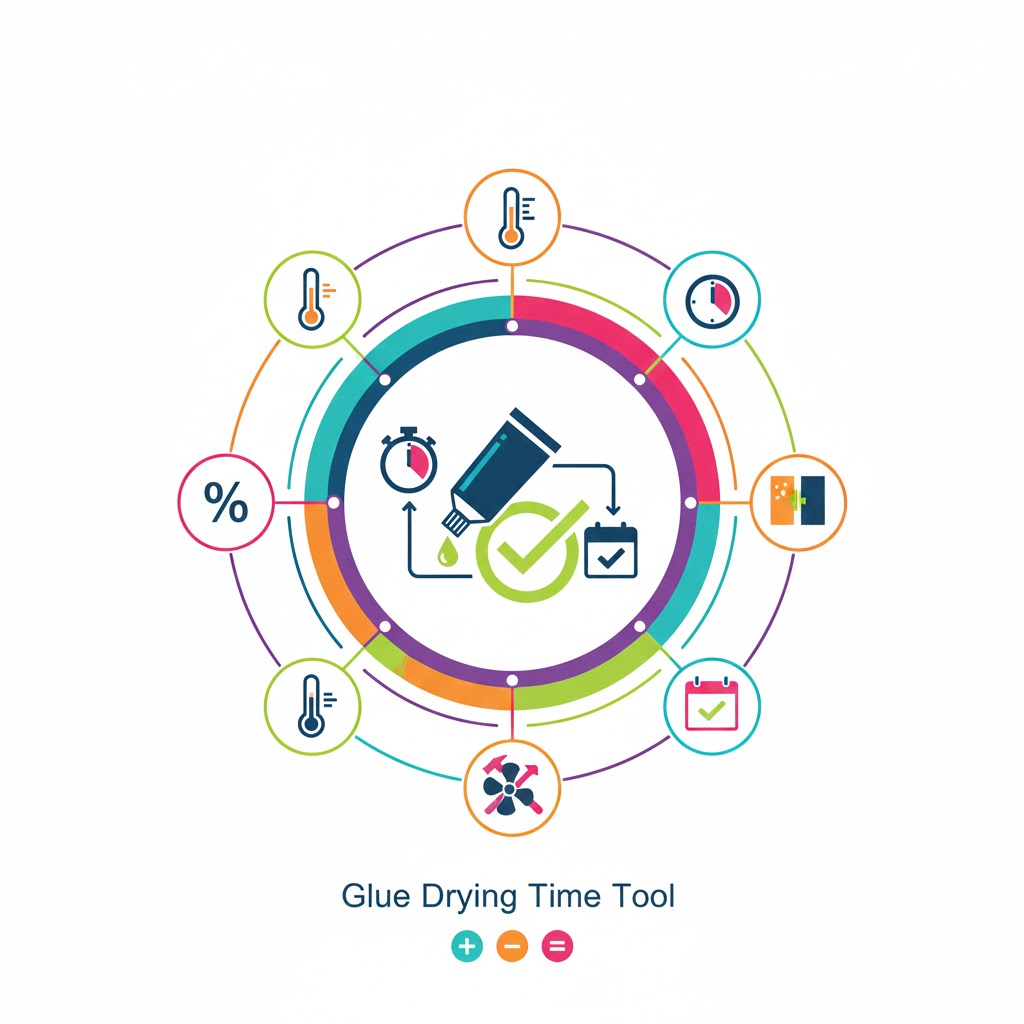
Estimate drying and curing times for common adhesives used in woodworking, crafts, construction, and repairs. Factors in glue type, temperature, humidity, and material.
Glue Drying Time Tool Explained
Glue Drying Time Tool is built for one very real problem almost everyone faces sooner or later: “How long do I actually need to wait before touching, moving, or using this glued item?”
Whether you’re fixing a loose chair leg at home, assembling cabinets on a job site, or bonding metal and plastic for a repair, guessing glue drying time often leads to weak joints, failed bonds, or wasted effort. This tool removes that guesswork by giving clear, condition-based estimates you can trust—based on temperature, humidity, material type, and adhesive behavior.
Instead of vague labels like “fast-drying” or “24-hour cure”, this tool provides practical timelines you can plan around.
Why Accurate Glue Drying Time Matters
Many bonding failures don’t happen because of bad glue—they happen because of poor timing. In real-world environments, drying and curing rarely match the numbers printed on the bottle.
Common Problems This Tool Solves
You remove clamps too early and the joint shifts
The surface feels dry but hasn’t reached structural strength
High humidity slows curing without you realizing it
Non-porous materials take longer than expected
The adhesive curing time calculator inside this tool adjusts for real conditions, not lab-perfect ones.
Glue Drying Time Tool
Who This Tool Is Designed For
This glue drying duration estimator is useful across multiple fields:
DIY homeowners fixing furniture, tiles, or trim
Woodworkers needing precise clamp and handling times
Contractors working with construction adhesives and sealants
Craft makers bonding mixed materials
Maintenance teams repairing plastic, metal, or glass
If timing affects the strength or finish of your project, this tool fits your workflow.
How the Glue Drying Time Tool Works
This section is intentionally transparent—because trust comes from understanding the logic behind the numbers.
Inputs You Provide
Glue Type (PVA, Epoxy, CA, Polyurethane, etc.)
Room Temperature (°C)
Relative Humidity (%)
Material Type (porous, non-porous, mixed)
Each input represents a real-world factor that directly impacts curing behavior.
Outputs You Receive
The tool calculates three key stages:
Clamp / Hold Time – When clamps can be safely removed
Handling / Dry Time – When light handling is possible
Full Cure Time – When maximum bond strength is achieved
This makes it a complete bonding cure time tool, not just a surface-dry estimator.
Calculation Logic (Simplified & Honest)
The tool starts with base drying times for each adhesive at standard conditions:
How accurate is this glue drying duration estimator?
The estimates are based on real adhesive behavior under variable conditions. While manufacturer formulas differ slightly, this tool reflects practical field results, not ideal lab values.
Is dry time the same as cure time?
No. Dry time means the surface can be handled lightly. Full cure time means the adhesive has reached maximum strength.
Can I speed up glue curing safely?
Yes—by increasing temperature slightly and improving ventilation. Avoid excessive heat unless the manufacturer allows it.
Tips for Best Results
Always test different conditions inside the tool
Compare porous vs non-porous scenarios
Use clamp time as your minimum safety threshold
Never load a joint before full cure
Try adjusting humidity and temperature values—you’ll immediately see how much they matter.
Conclusion
The Glue Drying Time Tool is designed to replace uncertainty with clarity. By combining adhesive science, environmental factors, and material behavior, it gives you realistic timelines you can trust.
Whether you’re working on a quick repair or a structural project, this tool helps you plan smarter, avoid mistakes, and achieve stronger bonds.
👉 Use the tool, test different scenarios, and build with confidence.
Ahmad Ali is the Founder of Find Tech Today, a platform dedicated to Provide Calculators, Digital Tools, Productivity Tools, Converters & More. Simple, Reliable & 100% Free!