Quilt Block Pattern Planner
Quilt Block Pattern Planner
Plan your quilt: calculate number of blocks, fabric per block type, and total yardage needed (supports imperial & metric).
Quilt Block Pattern Planner: Plan Your Quilt with Precision and Ease
Quilting is both an art and a science. Whether you’re creating a cozy throw for your living room or an intricate quilt for a loved one, one challenge always arises: how much fabric do you really need, and how many blocks will complete your design? That’s where the Quilt Block Pattern Planner comes in. This tool is specifically designed to help quilters of all experience levels calculate quilt dimensions, block counts, and fabric requirements with accuracy, saving time, money, and frustration.
By using this planner, you can ensure that your quilt comes together beautifully, without last-minute fabric shortages or leftover scraps piling up.
Why Use a Quilt Block Pattern Planner?
Planning a quilt without guidance can be tricky. Imagine you’ve chosen a 60 × 80-inch quilt with 12-inch blocks in a “straight grid” layout. Without careful calculation, you could either cut too few blocks, leaving your quilt incomplete, or overshoot and waste valuable fabric.
The Quilt Block Pattern Planner solves this problem by:
-
Calculating the exact number of blocks based on quilt size, block size, and layout style.
-
Estimating fabric yardage per block type, considering multiple fabrics and sashing widths.
-
Converting seamlessly between imperial and metric units, ideal for international quilting enthusiasts.
-
Providing expert tips on cutting, backing, and buffer fabric for a polished finish.
With these calculations, your quilting project moves from guesswork to precise planning.
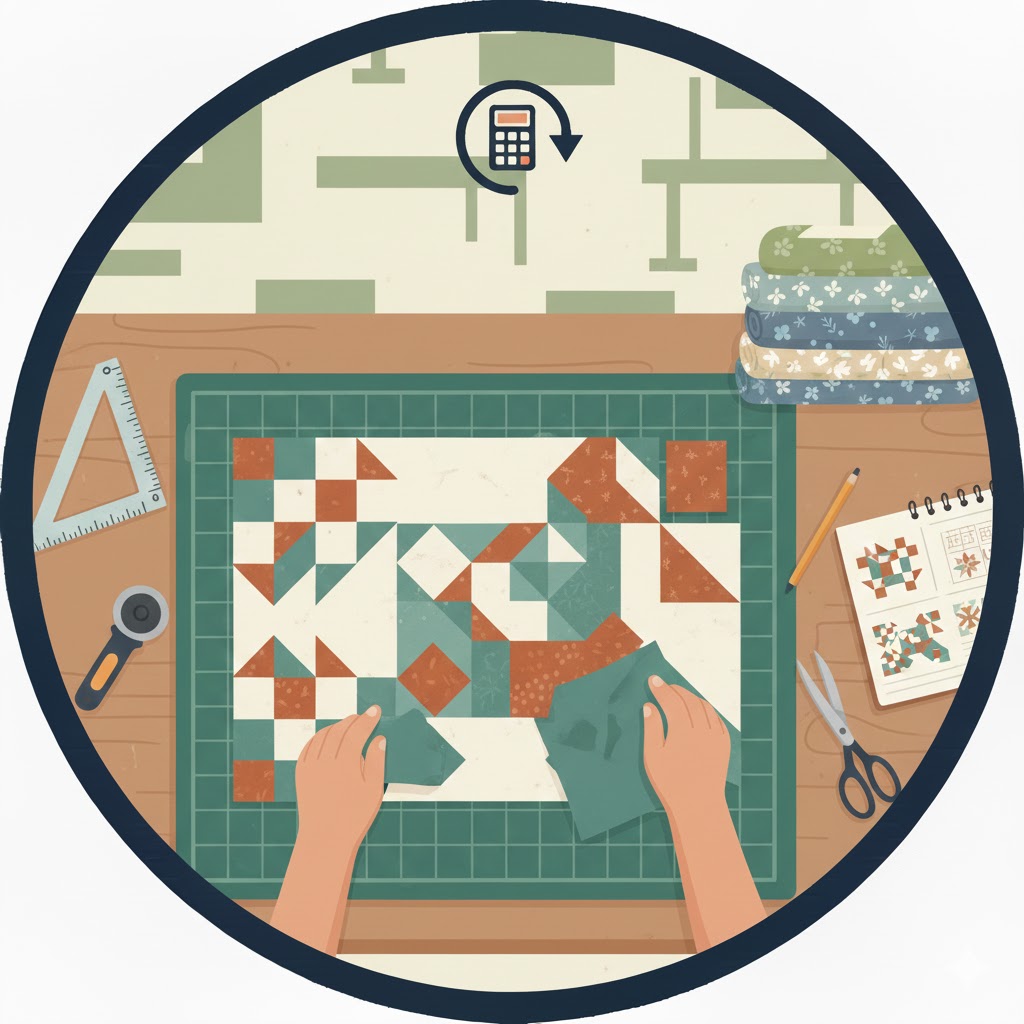
How the Quilt Block Pattern Planner Works
The tool is straightforward, but it incorporates expert quilting logic under the hood. Here’s a step-by-step breakdown:
Step 1: Enter Quilt Dimensions
-
Width × Height in inches or centimeters. Example:
60 × 80 inches. -
The tool automatically considers layout style—whether straight, on-point (diagonal), or sashed.
Step 2: Specify Block Size
-
Input the finished block size (the actual size after seams). Example:
12 inches. -
Larger blocks = fewer total blocks; smaller blocks = more intricate design.
Step 3: Layout Style Adjustment
-
Straight Grid: Blocks aligned row-by-row (most common).
-
On Point: Blocks rotated 45°; counts adjusted by √2 factor.
-
Sashed: Blocks separated by sashing strips; tool accounts for additional fabric needed.
Step 4: Sashing & Block Variations
-
Enter sashing width (
0if none). -
Choose number of block types/patches for a scrappy or uniform look.
-
The planner estimates fabric per block type using real quilting fabric widths (42–44 inches / 106–112 cm) and includes a 15% buffer for errors, borders, and binding.
Step 5: Select Units
-
Imperial (inches/yard) or Metric (cm/meter). Conversion is automatic.
Step 6: View Results
-
Total blocks needed, displayed as
rows × columns. -
Estimated total fabric, including buffer.
-
Fabric per block type for multi-fabric projects.
-
Expert tips on cutting, backing, and allowance for safety.
The Calculations Behind the Tool
The planner uses simple, practical formulas every quilter can understand:
-
Effective Block Size (with sashing):
-
Number of Blocks Across Width & Height:
-
On-Point Adjustment (approximate √2 factor for diagonal layout):
-
Fabric Estimate per Block Type (yards):
-
1–2 block types: ~0.25 yards per block
-
3 block types: ~0.18 yards
-
4+ block types: ~0.12 yards
-
Total Fabric with Buffer:
-
Metric Conversion (if needed):
These formulas reflect realistic quilt-making standards, ensuring your project is both practical and efficient.
Step-by-Step Examples
Example 1: Simple Throw Quilt
-
Quilt Size: 60 × 80 inches
-
Block Size: 12 inches
-
Layout: Straight Grid
-
Block Types: 1
Calculation:
Example 2: Scrappy Quilt with Sashing
-
Quilt Size: 72 × 72 inches
-
Block Size: 10 inches
-
Layout: Sashed, 2-inch sashing
-
Block Types: 4
Calculation:
Example 3: On-Point Baby Quilt
-
Quilt Size: 36 × 48 inches
-
Block Size: 6 inches
-
Layout: On Point
-
Block Types: 2
Calculation:
These examples show how layout, block size, and block type variety affect total fabric needs.
Practical Tips for Using the Planner
-
Always round up fabric estimates—it’s better to have leftovers than fall short.
-
Experiment with different block sizes and layouts in the tool to see how it affects material needs.
-
Use the planner in tandem with other tools, like the Cross-Stitch Fabric Count Calculator or Beading Wire Length Estimator, to optimize craft projects across mediums.
-
Consider borders and binding separately—add ~10–12% extra fabric.
-
Keep a small scrap bin for testing block combinations or adjusting patterns.
Frequently Asked Questions (FAQs)
Q1: Can I use the planner for metric measurements?
Yes, simply switch the unit system to metric, and the tool automatically converts inches to centimeters and yards to meters.
Q2: How accurate is the fabric estimate?
It’s highly reliable for planning purposes. A 15% buffer is included to account for mistakes, seam allowance, and cutting errors.
Q3: Can I plan scrappy quilts with multiple block types?
Absolutely. The planner calculates fabric per block type, making it easier to divide total fabric across different colors or patterns.
Conclusion
The Quilt Block Pattern Planner transforms quilt planning from guesswork into precision. By combining accurate calculations, real-world quilting logic, and practical tips, it saves fabric, time, and stress. Whether you’re a beginner or seasoned quilter, this tool ensures your project is realistic, beautiful, and fun.
Explore different layouts, block sizes, and fabric variations to make your quilting project uniquely yours. Don’t forget to check out related tools like the Cross-Stitch Fabric Count Calculator to complement your craft planning.