Butterfly Garden Area Calculator
Butterfly Garden Area Calculator
Estimate the ideal garden area, number of plants, and host/nectar balance to create a thriving butterfly habitat. Globally applicable guidelines.
Butterfly Garden Area Calculator: Plan the Perfect Pollinator Habitat
Creating a thriving butterfly garden can seem overwhelming at first. How much space do you really need? How many plants should you include? How do you balance nectar-rich flowers with host plants for caterpillars? The Butterfly Garden Area Calculator is designed to answer these questions, helping gardeners, educators, and nature enthusiasts estimate the ideal garden size and plant layout for maximum butterfly attraction.
Whether you’re planning a backyard pollinator garden, a schoolyard habitat, or a community green space, understanding the space, plant density, and species balance is key to supporting a healthy butterfly population.
Why Garden Size Matters for Butterflies
Butterflies are not just pretty visitors—they are critical pollinators that thrive in diverse, well-structured habitats. The size of your garden directly affects:
-
Species diversity: Smaller gardens may support only a few species, while larger areas encourage a variety of butterflies.
-
Plant health and accessibility: Proper spacing ensures flowers are reachable and host plants can grow without crowding.
-
Lifecycle support: Including both nectar and host plants helps butterflies complete their full life cycle.
For example, a 10 m² butterfly garden with a mix of nectar plants and host plants can attract roughly 10 species, but doubling the area can increase both the number of species and overall activity.
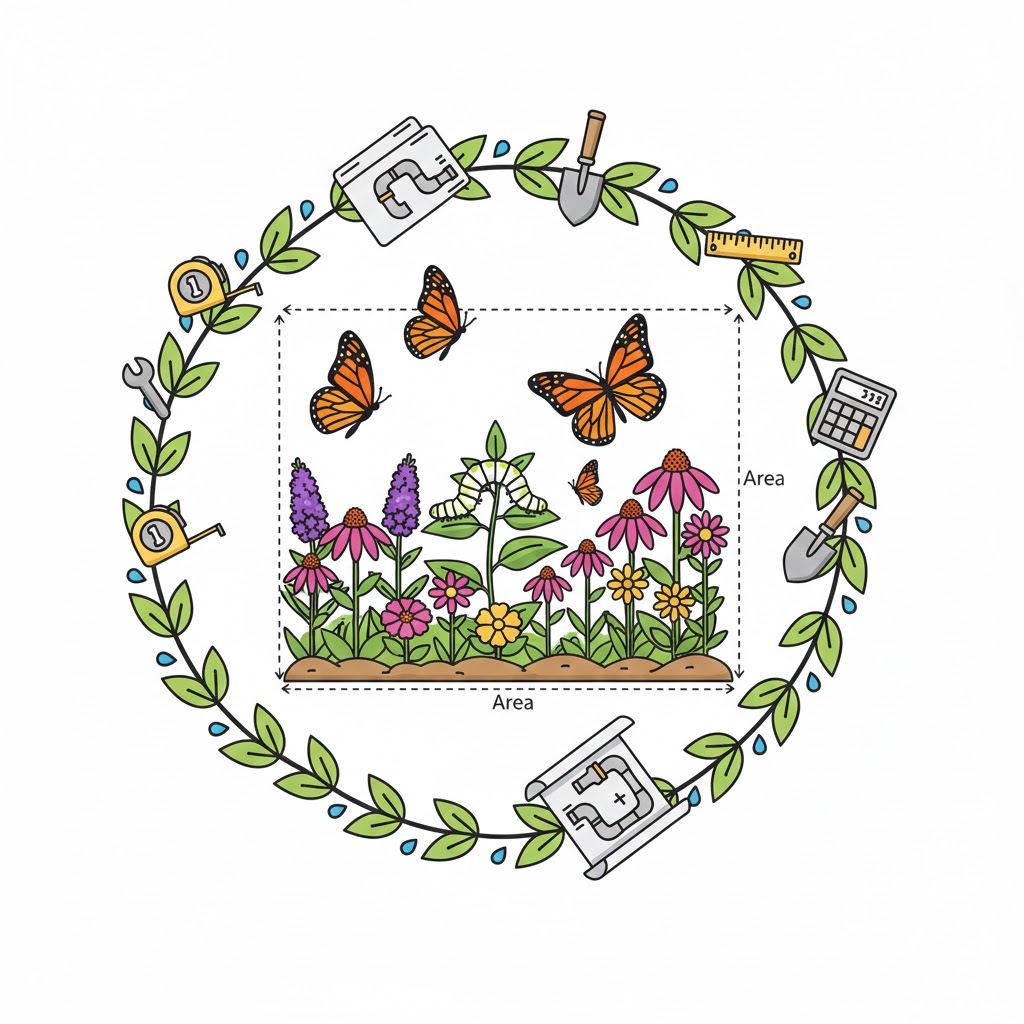
How the Butterfly Garden Area Calculator Works
The tool simplifies complex ecological planning into easy-to-understand calculations, allowing you to quickly determine garden area, plant numbers, and nectar-host ratios.
Key Inputs
-
Target Number of Butterfly Species – The number of species you want to attract. More species require more space and plant diversity.
-
Plant Density – Choose from:
-
Natural Drifts: Plants arranged naturally, mimicking wild habitats (recommended).
-
Dense: Maximum plant coverage for high butterfly attraction.
-
Sparse: Mixed with lawns or paths for aesthetic or functional purposes.
-
-
Host Plants – Decide whether to include plants that caterpillars feed on. Including host plants supports the full butterfly lifecycle.
-
Sun Exposure – Full sun encourages denser planting and faster flowering; partial sun requires slightly more space.
Calculation Logic
The calculator uses a practical formula based on ecological principles:
-
Base Area per Species: Typically 8 m²
-
Density Factor: Dense = 0.8, Natural = 1.0, Sparse = 1.5
-
Host Factor: Yes = 1.5, No = 1.0
-
Sun Factor: Full = 0.9, Partial = 1.1
This formula ensures the recommended area adapts to your choices realistically, providing both minimum required space and a suggested area range.
Plant Numbers are then estimated based on plant density:
-
Dense = 12 plants/m²
-
Natural = 9 plants/m²
-
Sparse = 6 plants/m²
Finally, the nectar-to-host ratio is calculated to guide planting:
-
With host plants: ~70% nectar / 30% host
-
Without host plants: 100% nectar
This ensures your garden supports butterflies through all stages of their life cycle.
Step-by-Step Examples
Example 1: Small Backyard Garden
-
Target species: 10
-
Density: Natural Drifts
-
Host plants: Yes
-
Sun: Full
Calculation:
Tip: Plant in clusters of 5–7 of the same species for easier butterfly access.
Example 2: Community Garden Patch
-
Target species: 15
-
Density: Dense
-
Host plants: No
-
Sun: Partial
Calculation:
Tip: Dense planting attracts maximum butterflies in a smaller area; perfect for limited urban spaces.
Example 3: Educational Butterfly Habitat
-
Target species: 8
-
Density: Sparse
-
Host plants: Yes
-
Sun: Partial
Calculation:
Tip: Include educational signage for children to learn about butterfly lifecycles.
Practical Tips for Maximum Impact
-
Use native plants: Butterflies prefer local species, which also require less maintenance.
-
Provide water and basking areas: Shallow puddles and flat stones help butterflies regulate temperature.
-
Avoid pesticides: Even small amounts can disrupt the butterfly lifecycle.
-
Group plants: Clumps of the same species help butterflies locate resources efficiently.
-
Test scenarios: Try different species numbers, densities, and sunlight conditions in the calculator to see how garden recommendations change.
Related Tools to Optimize Your Garden
-
Vegetable Yield per Square Foot Tool – Estimate planting density for edible gardens.
-
Fruit Tree Spacing Calculator – Plan optimal spacing for orchard layouts.
-
Pollinator-Friendly Garden Layouts – Combine butterfly and pollinator-friendly designs.
These tools complement the Butterfly Garden Area Calculator by helping with space planning, density, and productivity, whether for flowers, vegetables, or fruit trees.
Frequently Asked Questions
Q1: How many butterfly species can a small garden support?
A: Typically, a 50–100 m² garden can attract 5–10 species if planted with diverse nectar and host plants. Larger areas naturally support more species.
Q2: Can I have a butterfly garden in partial sun?
A: Yes, but slightly more space is recommended, and choose plants that tolerate some shade. Adjust the calculator’s sun exposure to see the effect.
Q3: Do I need host plants for caterpillars?
A: Including host plants ensures butterflies can complete their life cycle, from egg to caterpillar to adult. Without host plants, only adult butterflies are supported.
Conclusion
The Butterfly Garden Area Calculator empowers you to create thriving, sustainable butterfly habitats tailored to your space, goals, and conditions. By understanding garden size, plant density, and the balance between nectar and host plants, you can design spaces that attract diverse species while supporting their full lifecycle.
Experiment with the tool, adjust inputs, and watch your garden transform into a buzzing pollinator paradise. Every square meter counts in creating a welcoming home for butterflies and pollinators alike.