Deck Joists and Beams Estimator
Deck Joists and Beams Estimator
Estimate the number, size, and spacing of joists and supporting beams for a rectangular deck. Based on common international residential span tables (40 psf live + 10 psf dead load).

Estimate the number, size, and spacing of joists and supporting beams for a rectangular deck. Based on common international residential span tables (40 psf live + 10 psf dead load).
Deck Joists and Beams Estimator is the kind of tool you wish you had before standing in a lumber yard, confused between 2×8 and 2×10 boards, doing rough math on your phone. If you’ve ever planned a deck—whether for a backyard seating area, a BBQ spot, or a full outdoor living space—you already know one thing: deck framing mistakes are expensive.
I’ve worked with enough DIY builders and contractors to see the same problem repeated again and again. People either overbuy lumber “just to be safe” or underestimate structural needs, leading to sagging decks, failed inspections, or costly rebuilds. This is exactly where a reliable Deck Joist Calculator and Deck Beam Size Estimator become practical, not theoretical.
This guide explains how the estimator works, why the calculations matter, and how you can confidently use it—even if you’re not a structural engineer.
Deck framing is not just about wood quantity; it’s about load distribution, safety, and long-term durability. Joists and beams are the skeleton of your deck. Get them wrong, and everything above suffers.
Here’s what commonly goes wrong without proper estimation:
Joists spaced too far apart → bouncy, unsafe deck
Beams undersized → long-term sagging
Too few beams → excessive joist span
No waste planning → last-minute material runs
A Deck Framing Material Calculator eliminates guesswork by using standard residential load assumptions and realistic span limits.
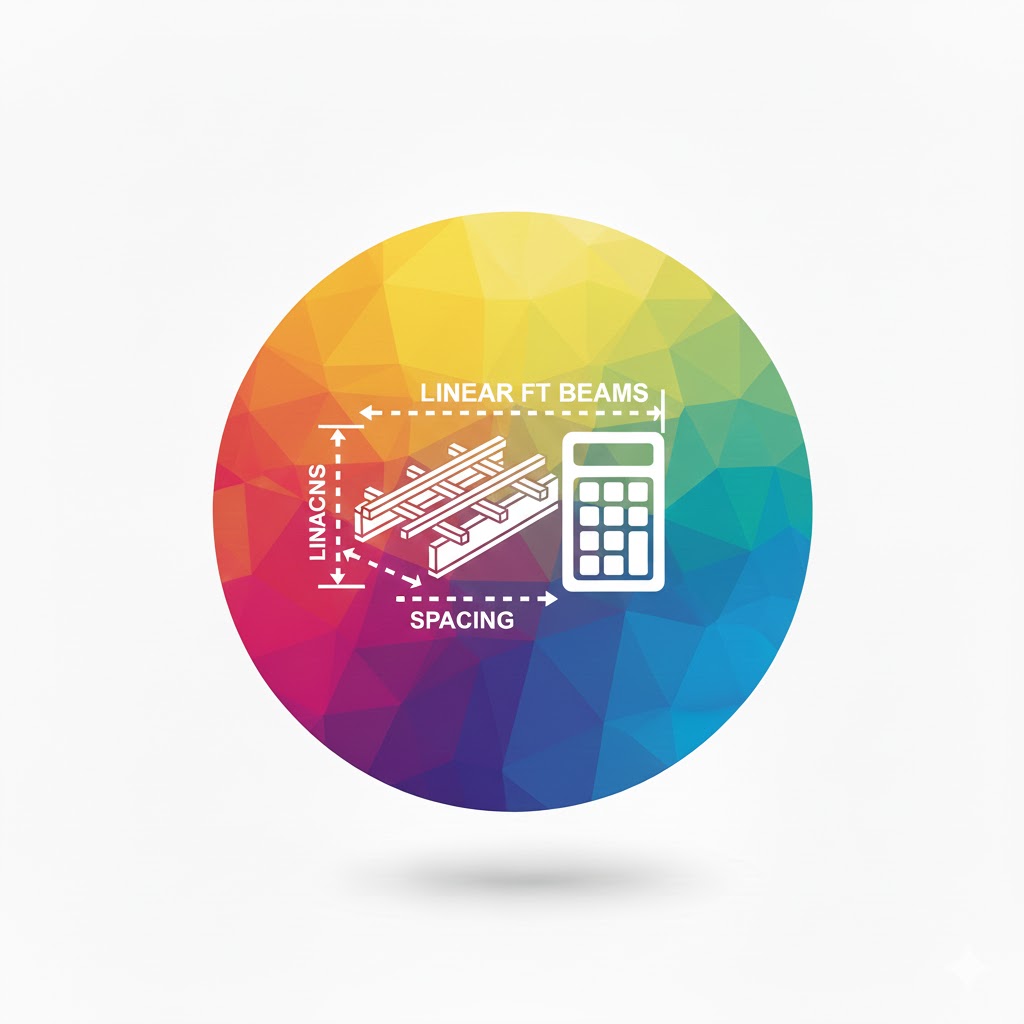
This Deck Joists and Beams Quantity Tool is designed around real construction logic, not vague averages.
Total number of joists
Recommended joist span based on size and spacing
Number of supporting beams
Total linear footage of joists and beams
Built-in waste allowance
Everything is calculated using common 40 psf live load + 10 psf dead load, which aligns with widely accepted residential deck standards.
You enter:
Deck length and width
Measurement unit (feet or meters)
Joist size (2×6, 2×8, 2×10, 2×12)
Joist spacing (12”, 16”, or 24” on center)
Beam ply count (2-ply, 3-ply, or 4-ply)
Waste percentage
These are the same decisions builders make on real job sites.
The estimator calculates joists using the formula:
Number of joists = (Deck width × 12 ÷ Joist spacing) + 1
That +1 accounts for the starting edge joist—something many DIY estimates forget.
Each joist size has a maximum safe span, depending on spacing.
Example (simplified):
2×8 at 16″ spacing → ~11 ft max span
2×10 at 16″ spacing → ~14 ft max span
This span directly determines beam spacing, which controls how many beams your deck needs.
The tool spaces beams approximately at the maximum joist span, then calculates:
Number of beams = (Deck length ÷ Max joist span) + 1
This includes ledger and end beams for structural continuity.
Waste is applied after calculating total linear footage:
Final material = Base length × (1 + Waste %)
This mirrors how experienced builders estimate material—not guess.
Deck size: 12 ft × 10 ft
Joists: 2×8 at 16” spacing
Waste: 10%
Joists needed: ~10 pieces
Max joist span: ~11 ft
Beams required: 2
Result: Clean, efficient framing with minimal waste
Perfect for seating decks or patio extensions.
Deck size: 20 ft × 12 ft
Joists: 2×10 at 16” spacing
Beam ply: Triple
Waste: 12%
Joists needed: ~10–11
Beam count increases due to length
Higher ply beams handle heavier loads
Ideal for outdoor kitchens or hot tubs.
Deck size: 6 m × 4 m
Joists: 2×8 equivalent
Spacing: 400 mm
The tool automatically converts values internally and returns results in feet or meters, eliminating manual conversion errors.
To maintain semantic and topical authority, this estimator accounts for:
Joist spacing
Span tables
Linear lumber measurement
Residential deck loads
Built-up beam logic
Waste and overage planning
Material efficiency
These are the same concepts used by professionals, simplified for real users.
Try changing:
Joist size while keeping spacing constant
Spacing from 16” to 12”
Waste from 10% to 15%
You’ll instantly see how material needs and beam count change, which helps you make cost-aware decisions before buying lumber.
For complete project planning, combine this estimator with:
Tile and adhesive planning using the Thinset Mortar Estimator
Overage planning via the Tile Waste and Overage Calculator
Explore more tools in the Home Improvement Calculators section
Browse additional options under Construction Material Calculators
This tool follows common residential standards, but local codes vary. Always verify with your local building authority.
Yes. While it doesn’t replace engineering drawings, it provides realistic beam spacing and quantity estimates based on joist span logic.
Wider spacing reduces joist capacity, shortening allowable span. Shorter spans require more beams to safely support the deck.
The Deck Joists and Beams Estimator is built for people who want clarity—not confusion. It bridges the gap between rough guesses and professional planning, helping you estimate framing materials confidently, accurately, and responsibly.
If you’re serious about building a deck that lasts, start by understanding the structure beneath your feet. Use the tool, test different scenarios, and explore related calculators to plan smarter from day one.

How to Easily Determine Gradient for Roads, Ramps, and Trails…

Sauna Lumber and Bench Calculator: Plan Your Sauna with Precision…

Bolts and Anchors Tool: Estimate Structural Fasteners Accurately In construction,…

Tile Setting Time Tool: Accurately Estimate Your Tile Installation Time…

Wind Resistance Brace Estimator: Accurate Planning for Safer Homes When…
Bathroom Vanity Size Calculator: Find the Perfect Vanity for Your…