Doorbell Camera Wiring Estimator
Doorbell Camera Wiring Estimator
Estimate the required wire length, gauge, transformer power, and compatibility for installing a wired video doorbell camera.
Doorbell Camera Wiring Estimator: Simplify Your Smart Home Installation
Installing a wired video doorbell can feel intimidating if you’re unsure about wiring length, transformer power, or chime compatibility. That’s where the Doorbell Camera Wiring Estimator comes in. This tool lets homeowners, electricians, and DIY enthusiasts quickly determine the exact wiring requirements, ensuring a smooth and safe installation. Whether upgrading a traditional chime or adding a new smart doorbell, understanding wire length, gauge, and transformer load is crucial for reliable operation.
By the end of this guide, you’ll know how to calculate your wiring needs, choose the correct components, and install your doorbell camera with confidence.
Why Accurate Doorbell Wiring Matters
A poorly wired doorbell system can lead to:
-
Inconsistent camera performance or failure to power on.
-
Chime malfunctions, especially with digital or electronic chimes.
-
Overheating or transformer strain due to underpowered circuits.
-
Frustration and costly fixes if the wire is too short or incorrectly gauged.
Using a doorbell camera cable length calculator ensures you plan ahead, save time, and avoid errors. Proper planning also helps maintain a clean, professional installation, whether you’re running wires through walls, conduit, or using surface-mounted solutions.
How the Doorbell Camera Wiring Estimator Works
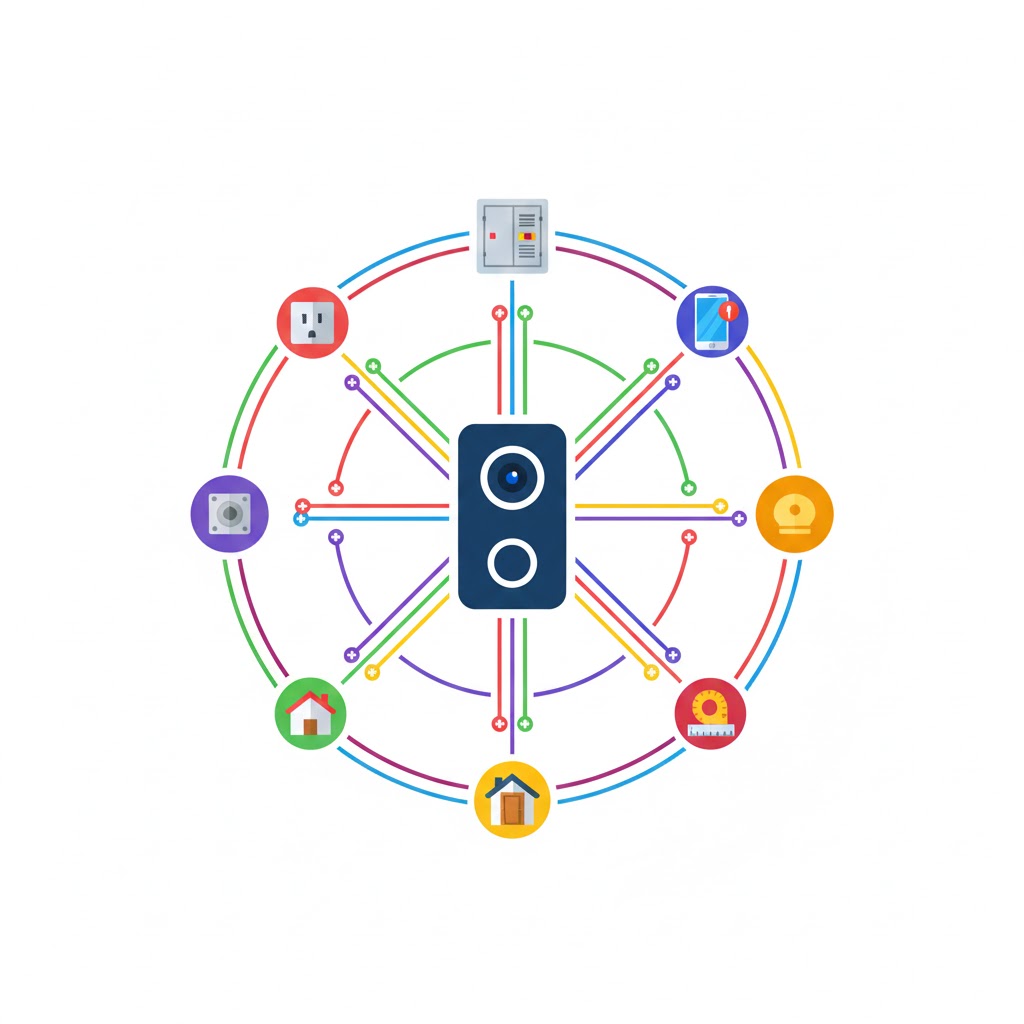
Our tool simplifies complex electrical considerations into actionable metrics. Here’s a breakdown:
Inputs You Provide
-
Existing Doorbell Type
-
None: No previous doorbell installed.
-
Traditional (mechanical chime): Common push-button with a simple bell.
-
Digital (electronic chime): Requires specific transformer loads or bypass kits.
-
-
Distance from Transformer to Doorbell
Enter the length in meters (distTransformer). This represents the power supply line from your transformer to the doorbell unit. -
Distance from Doorbell to Chime
Enter the distance to your chime (distChime) to account for total wire travel. -
Doorbell Power Requirement
Choose voltage: 16V AC (most common), 24V AC, or low-voltage 8–12V AC systems. -
Number of Chimes
Indicate if multiple chimes will ring simultaneously, as each adds to transformer load.
Outputs You Receive
-
Total Wire Length (round trip):
Calculated as:-
Adds extra meters if installing from scratch (
existing = none). -
Example:
distTransformer = 15m,distChime = 10m→totalWire = (15 + 10) * 2 = 50m.
-
-
Recommended Wire Gauge
-
Standard recommendations:
-
≤30m → 18 AWG
-
31–60m → 16 AWG
-
60m → 14 AWG
-
Using the right gauge prevents voltage drop and ensures your doorbell operates reliably.
-
-
Transformer Power (VA)
Base VA depends on voltage. Additional VA is added for:-
Multiple chimes (+10 VA per extra chime)
-
Digital chimes (+10 VA)
Example: 16V AC, 2 chimes, digital chime → Minimum transformer = 10 + 10 + 10 = 30 VA.
-
-
System Compatibility
Highlights if your current setup is compatible, needs a bypass, or requires full rewiring. -
Installation Complexity
Helps you assess whether professional help might be necessary.
Step-by-Step Example Scenarios
Example 1: Traditional Chime, Single Doorbell
-
Existing doorbell: Traditional
-
distTransformer = 12m,distChime = 8m -
Voltage: 16V AC
-
Chimes: 1
Calculation:
Example 2: Digital Chime, Two Doorbells
-
Existing doorbell: Digital
-
distTransformer = 20m,distChime = 15m -
Voltage: 24V AC
-
Chimes: 2
Calculation:
Example 3: No Existing Doorbell
-
Existing doorbell: None
-
distTransformer = 10m,distChime = 0 -
Voltage: 16V AC
-
Chimes: 1
Calculation:
These examples demonstrate how the tool adapts to different home layouts, ensuring your wiring is precise.
Practical Tips for Reliable Installation
-
Always use solid copper low-voltage bell wire (18–16 AWG).
-
Keep total voltage drop under 10% for optimal performance.
-
Mount transformers in cool, dry locations near the electrical panel.
-
Digital chimes may require a bypass or plug-in kit to avoid overload.
-
Route wires through walls or conduit for protection.
-
Turn off power at the breaker before working on wiring.
-
If wiring is complex, consider battery-powered doorbells as an alternative.
-
Professional electricians are recommended for new transformer setups.
Related Tools to Enhance Your Smart Home Setup
-
WiFi Extender Placement Tool – Plan optimal coverage for your home network.
-
Home Theater Speaker Layout Estimator – Optimize room audio for immersive sound.
-
Smart Home Tools Collection – Discover additional calculators for home automation and smart devices.
FAQs
Q1: How do I know if my existing transformer is sufficient?
A: Check your doorbell camera voltage requirement and number of chimes. Use the formula transformerVA = baseVA + extraVA. If total exceeds current VA rating, upgrade.
Q2: Can I use a digital chime with any wired doorbell?
A: Not always. Digital chimes may require a bypass or specific transformer. Our tool highlights compatibility automatically.
Q3: What wire gauge should I use for long distances?
A: Use 14 AWG for runs over 60 meters to minimize voltage drop. Always check total round-trip length using our calculator.
Conclusion
The Doorbell Camera Wiring Estimator streamlines your installation process, helping you calculate wire length, gauge, transformer rating, and system compatibility with confidence. By planning ahead, you reduce installation errors, save time, and ensure your smart doorbell operates flawlessly.
Try different scenarios using the tool to see how distance, chimes, and voltage affect your setup. Pair it with related smart home tools for a fully optimized, connected home.