Mulch Coverage Depth Tool
Mulch Coverage Depth Tool
Calculate how much mulch you need for your garden beds, trees, or landscape areas. Includes recommended depth, volume in cubic feet/yards/meters, and common bag estimates.
Mulch Coverage Depth Tool: Calculate Your Garden Mulch Needs Accurately
Whether you’re a seasoned gardener or just refreshing your landscape, knowing exactly how much mulch to apply can save both time and money. The Mulch Coverage Depth Tool is designed to simplify this process, helping you calculate the right mulch quantity for garden beds, trees, or large landscaping projects. No more guesswork, uneven coverage, or wasted bags—just precise, practical results.
Imagine you’re preparing your flower beds for spring. You want a consistent layer of mulch to suppress weeds, retain moisture, and give your garden a polished look. But how many bags do you need? Is a 2-inch layer enough, or should it be 3 inches? This tool answers those questions instantly.
Why Accurate Mulch Coverage Matters
Applying mulch isn’t just about aesthetics. The right depth supports plant health, prevents soil erosion, and keeps your garden looking fresh throughout the year. Using too little mulch can allow weeds to thrive, while excessive mulch can suffocate plant roots or trap moisture against stems, leading to rot.
By using a Mulch Calculator or Landscaping Mulch Depth Tool, you can:
-
Estimate mulch volume in cubic feet, cubic yards, or cubic meters.
-
Calculate the number of bags required for your project, including a 10% extra for settling.
-
Choose the optimal depth for specific garden areas: 2 inches for light refresh, 3 inches for standard coverage, or 4 inches for heavy weed suppression.
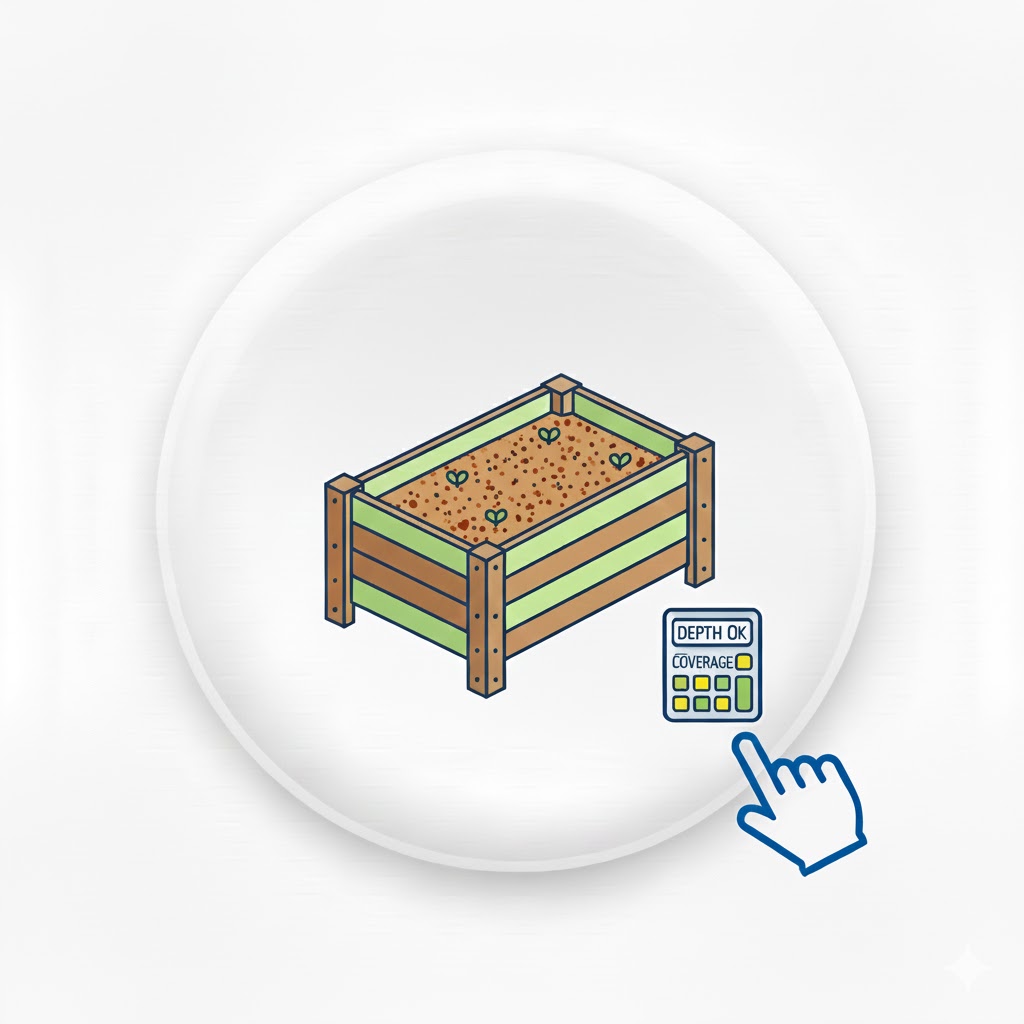
How the Mulch Coverage Depth Tool Works
The tool is designed to be intuitive, yet precise. Here’s a breakdown of how it works:
Inputs:
-
Units Selection: Choose between Imperial (feet/cubic yards) or Metric (meters/cubic meters).
-
Total Area: Enter the length and width of the area you want to mulch.
-
Mulch Depth: Select 2, 3, or 4 inches (or equivalent in cm).
-
Bag/Bulk Size: Indicate whether you are using 2 or 3 cubic feet bags or bulk by cubic yard/meter.
Outputs:
-
Total Area: Displayed in square feet or square meters.
-
Mulch Depth: Converted to your selected unit.
-
Volume Needed: Shown in cubic feet, cubic yards, or cubic meters.
-
Bags/Bulk Needed: Includes 10% extra to account for settling and uneven spreading.
Calculation Logic:
The tool calculates volume using the formula:
From there:
-
Cubic Yards:
Volume (cu yd) = Volume (cu ft) ÷ 27 -
Cubic Meters:
Volume (cu m) = Volume (cu ft) ÷ 35.3147 -
Bags Needed:
Bags = ceil((Volume ÷ Bag Size) × 1.10)
These calculations ensure accuracy whether you’re measuring a small flower bed or a large landscape area.
Step-by-Step Examples
Example 1: Small Garden Bed
-
Area: 10 ft × 8 ft
-
Depth: 3 inches
-
Bag Size: 3 cu ft
Calculation:
-
Volume:
10 × 8 × 3 ÷ 12 = 20 cu ft -
Bags:
ceil((20 ÷ 3) × 1.10) = 8 bags
Outcome: You’ll need 8 bags to cover this bed at 3 inches depth.
Example 2: Tree Circle
-
Area: 6 ft diameter circle (approx area = π × r² = 3.1416 × 3² ≈ 28.3 sq ft)
-
Depth: 2 inches
-
Bag Size: 2 cu ft
Calculation:
-
Volume:
28.3 × 2 ÷ 12 ≈ 4.72 cu ft -
Bags:
ceil((4.72 ÷ 2) × 1.10) = 3 bags
Outcome: 3 bags will cover the tree circle with light mulch.
Example 3: Large Landscaping Area
-
Area: 50 ft × 30 ft
-
Depth: 4 inches
-
Bulk delivery: cubic yard
Calculation:
-
Volume:
50 × 30 × 4 ÷ 12 = 500 cu ft -
Cubic yards:
500 ÷ 27 ≈ 18.52 cu yd -
Including 10% extra:
18.52 × 1.10 ≈ 20.4 cu yd
Outcome: Order 21 cubic yards for full coverage without shortage.
Practical Tips for Using Mulch
-
Keep mulch 2–3 inches away from stems of plants and tree trunks.
-
Organic mulches like bark or wood chips decompose over time, so refresh annually.
-
Light mulch (2 inches) is suitable for maintenance, while 3–4 inches helps with weed suppression.
-
Bulk delivery is often cheaper for large areas; bags work best for small gardens.
FAQs
Q1: Can I use this tool for irregularly shaped gardens?
A: Yes! Measure the approximate length and width or break the area into smaller rectangles and sum the results.
Q2: How accurate is the 10% extra in calculations?
A: It accounts for settling and uneven spreading. For very precise projects, especially near trees or borders, measure and adjust as needed.
Q3: Can this tool help with metric measurements?
A: Absolutely. Simply switch to meters, and the tool converts areas, depths, and volumes automatically.
Related Tools You Might Find Useful
-
Compost Amount Estimator – Determine how much compost your garden needs.
-
Lawn Seed Coverage Calculator – Plan the right amount of grass seed for your lawn.
-
Explore more home improvement calculators and gardening calculators for accurate planning.
Conclusion
The Mulch Coverage Depth Tool takes the guesswork out of garden maintenance, helping you apply mulch efficiently and effectively. By inputting your area, depth, and bag size, you can instantly see exactly how much mulch you need in multiple units, saving both money and time.
Test different depths and bag sizes to see how coverage changes, and ensure your garden beds stay healthy and attractive year-round. With accurate calculations and practical guidance, your landscaping projects become simpler, faster, and more successful.