Patio Paver Quantity Calculator
Patio Paver Quantity Calculator
Calculate the exact number of pavers needed for your patio, including waste allowance. Supports rectangular, circular, and herringbone patterns with global imperial/metric units.
Patio Paver Quantity Calculator: Accurately Plan Your Patio Project
When planning a patio, one of the most frustrating challenges homeowners face is figuring out exactly how many pavers are needed. Too few, and your project stalls mid-installation; too many, and you risk unnecessary expenses. That’s where the Patio Paver Quantity Calculator comes in—a smart, easy-to-use tool designed to take the guesswork out of patio planning. Whether you’re designing a rectangular backyard patio, a circular stone feature, or a herringbone-patterned pathway, this calculator ensures you get precise material estimates every time.
In practical terms, using this tool helps you:
-
Save money by ordering the right quantity of pavers.
-
Reduce waste and environmental impact.
-
Plan more efficiently for complex patterns or unusual patio shapes.
How the Patio Paver Quantity Calculator Works
Understanding how the tool works is key to getting accurate results. Here’s a step-by-step breakdown:
1. Input Your Patio Dimensions
The calculator supports both imperial (feet / sq ft) and metric (meters / sq m) units. For rectangular patios, you provide length and width, and for circular patios, you provide the diameter.
2. Enter Paver Size
You’ll input the length and width of a single paver. This allows the tool to calculate the area of each paver using:
This ensures that your estimates are accurate for different paver sizes and formats.
3. Select Laying Pattern
Patterns like herringbone or basket weave require extra cuts and adjustments. The tool accounts for this with a pattern waste factor:
-
Running bond / straight: 1.0
-
Herringbone: 1.15 (15% extra for cuts)
-
Basket weave: 1.05 (5% extra)
4. Include Waste Allowance
Even with perfect calculations, it’s recommended to order 5–15% extra pavers to account for breakage, cutting errors, or future repairs. The tool lets you specify this percentage to get a realistic total paver count.
5. See Your Results
The calculator provides:
-
Patio Area
-
Single Paver Area
-
Base Pavers Needed (without waste)
-
Total Pavers Recommended (with waste and pattern cuts)
-
Estimated Border/Cutting Pavers for circular patios
These results are displayed in an easy-to-read, card-style layout, with additional installation tips included for practical guidance.
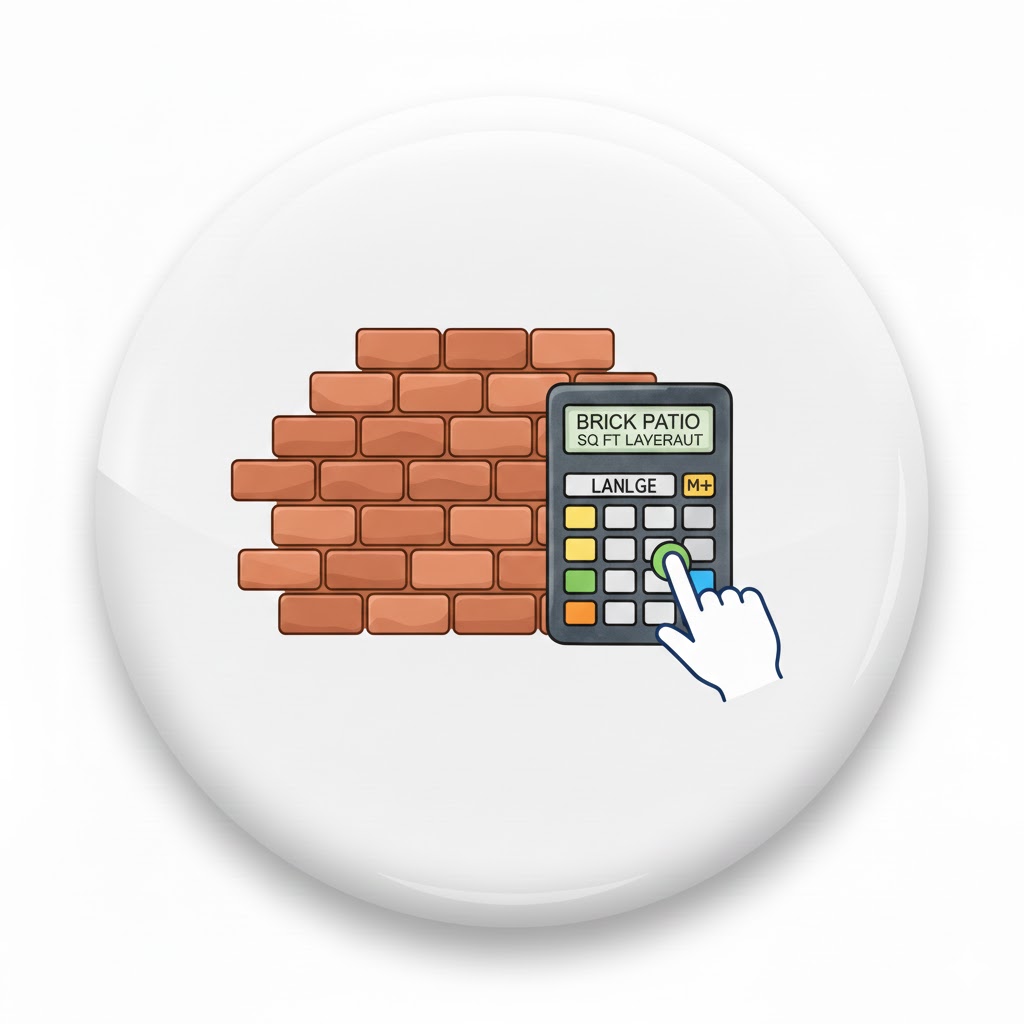
Core Entities & Materials Explained
When planning your patio, it’s helpful to understand the entities involved:
-
Patio Pavers: Modular blocks made from concrete, stone, or brick. Size and thickness affect coverage.
-
Pattern Layouts: Running bond, herringbone, and basket weave affect cutting and waste.
-
Waste Allowance: Extra material to cover errors, breakage, and cutting adjustments.
-
Patio Area: Calculated using
Length × Widthfor rectangles orπ × (Diameter / 2)²for circles.
By integrating these elements, the Patio Paver Calculator ensures that estimates are both realistic and actionable.
Step-by-Step Examples
Example 1: Rectangular Patio with Running Bond
-
Patio size: 20 ft × 15 ft
-
Paver size: 8 in × 4 in (0.667 ft × 0.333 ft)
-
Waste: 10%
Calculation:
Result: 1486 pavers recommended.
Example 2: Circular Patio with Herringbone Pattern
-
Diameter: 12 ft
-
Paver size: 6 in × 6 in (0.5 ft × 0.5 ft)
-
Waste: 12%
Calculation:
Result: 582 pavers total + 75 for circular border cuts.
Example 3: Square Patio with Basket Weave
-
Patio size: 16 ft × 16 ft
-
Paver size: 12 in × 12 in (1 ft × 1 ft)
-
Waste: 8%
Calculation:
Result: 290 pavers recommended.
These examples demonstrate how the calculator adapts to different shapes, sizes, and patterns, giving precise guidance for any project.
Practical Tips for Patio Planning
-
Always measure twice before ordering. Minor dimension errors can lead to large material discrepancies.
-
For herringbone or circular layouts, increase the waste allowance slightly above 10–15%.
-
Use a gravel and sand base (4–6 inches of gravel + 1 inch of sand) for long-lasting stability.
-
Apply polymeric sand between joints to prevent weed growth and shifting.
-
Consider edge restraints to prevent pavers from spreading.
-
Dry-lay a small section to confirm alignment before full installation.
For further planning, you can explore related tools such as the Fence Posts and Panels Calculator or Chain Link Fence Material Estimator.
FAQs
1. Can I use the calculator for non-standard paver sizes?
Yes, simply enter the length and width of your custom paver in feet or meters. The tool automatically adjusts all calculations.
2. How much extra material should I order for circular patios?
For circular patios, add 5–15% extra for border cuts, in addition to pattern-based waste.
3. Does the calculator work with metric units?
Absolutely. Select “meters” from the units dropdown, and all inputs and outputs will automatically convert.
Conclusion
The Patio Paver Quantity Calculator is your reliable companion for accurate, waste-free patio planning. By calculating exact paver quantities, accounting for pattern cuts and waste, and offering actionable installation advice, this tool saves time, money, and frustration. Try different shapes, sizes, and patterns to visualize your project and make confident purchasing decisions.
Explore additional resources like the Chain Link Fence Material Estimator or Wood Privacy Fence Calculator to streamline your home improvement projects.