Shed Roof Truss Estimator
Shed Roof Truss Estimator
Calculate the number of roof trusses needed for a shed or single-story building with gable or mono-pitch roof. Includes truss spacing, overhangs, and global imperial/metric support.
Shed Roof Truss Estimator: How to Accurately Calculate Your Shed’s Roof Trusses
Building a shed or a small single-story structure often starts with a seemingly simple question: “How many roof trusses do I actually need?” Miscalculating can lead to wasted materials, structural weaknesses, or extra trips to the hardware store. That’s exactly why the Shed Roof Truss Estimator was designed—to give homeowners, builders, and DIY enthusiasts a precise, reliable way to plan and budget their shed roofs. Whether you’re constructing a backyard storage shed, a workshop, or a lean-to garage, understanding truss quantity and spacing is critical for a safe, cost-efficient build.
In this guide, we’ll dive into how the estimator works, practical step-by-step examples, tips for different roof types, and FAQs to make sure your shed roof is structurally sound.
Why Accurate Truss Calculation Matters
Roof trusses are the backbone of your shed’s roof. Choosing too few can compromise stability, while ordering too many increases costs unnecessarily. With the Shed Roof Truss Calculator, you can:
-
Avoid structural risks from undersized or improperly spaced trusses.
-
Accurately budget materials for both framing and roofing.
-
Ensure compliance with standard building practices, including overhangs and load support.
For instance, a 12 × 20 ft shed with standard 24-inch truss spacing requires roughly 11 trusses, including end trusses and a few extras for safety. Miscalculating by even one or two trusses can create gaps or overstressed roof members.
How the Shed Roof Truss Estimator Works
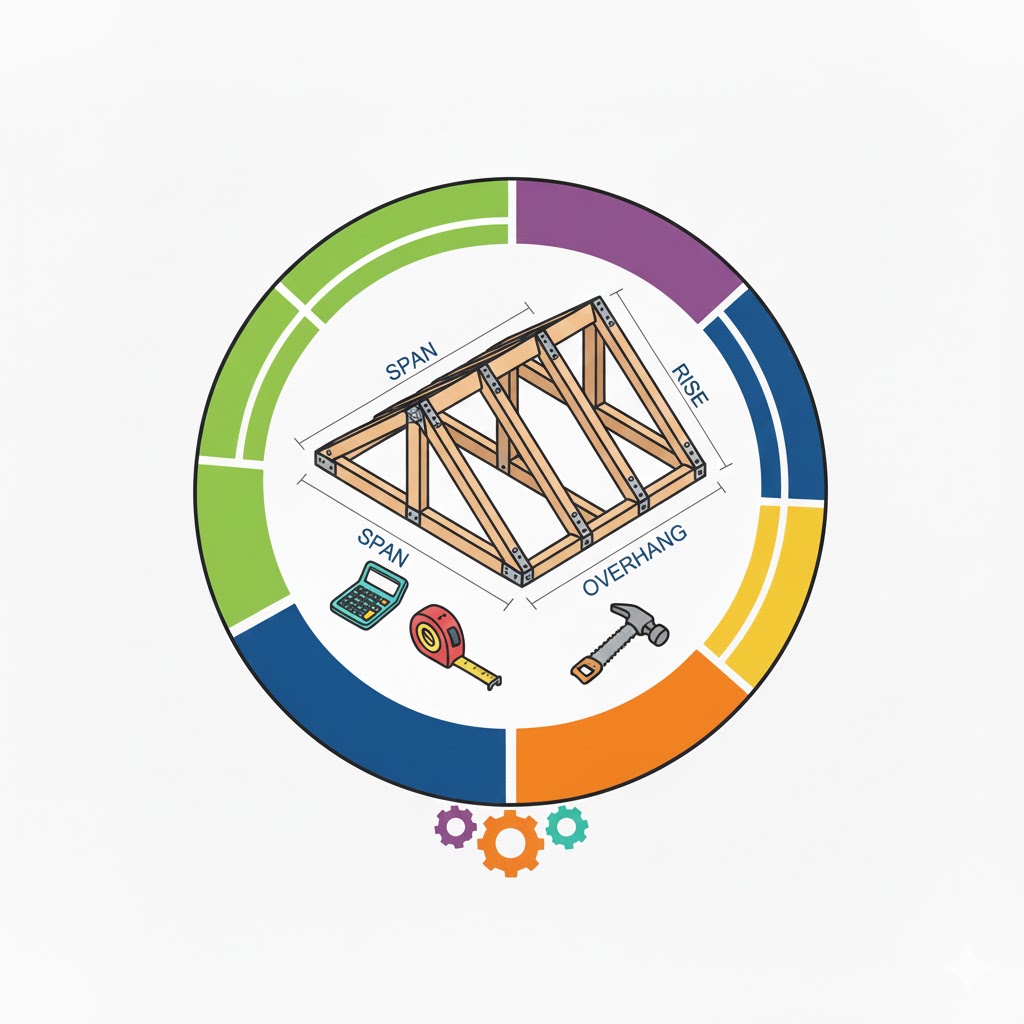
The estimator is simple but precise. Here’s a breakdown of inputs, calculations, and outputs:
Inputs
-
Unit System: Choose Imperial (feet/inches) or Metric (meters/cm).
-
Shed Dimensions: Width (wall-to-wall) and length (truss direction).
-
Overhangs: Extra roof length beyond walls to protect siding and foundation.
-
Truss Spacing: Typically 16, 24, or 48 inches (400 mm, 600 mm, or 1200 mm).
-
Roof Type: Gable (triangular, trusses on both ends) or Mono-pitch (single slope).
-
Extra Trusses: Optional additions for porches, high wind areas, or mistakes.
Calculation Logic
The tool follows a straightforward formula:
-
Example: For a 20 ft shed with 1 ft overhangs and 24-inch (2 ft) spacing:
-
Roof Type Adjustment: For gable roofs, the calculator ensures trusses at both ends. For mono-pitch roofs, the calculation typically mirrors the gable approach but accounts for slope stability.
Outputs
The tool generates:
-
Total roof span including overhangs.
-
Spacing between trusses in your chosen units.
-
Roof type confirmation.
-
Calculated trusses and total trusses including extras.
-
Practical advice on spacing, load considerations, and local building tips.
Step-by-Step Examples
Example 1: Small Gable Shed
-
Width: 10 ft
-
Length: 16 ft
-
Overhang: 1 ft each side
-
Spacing: 24 inches (2 ft)
-
Extra Trusses: 1
Calculation:
Tip: Ideal for backyard tool sheds. Use 16-inch spacing if planning a metal roof.
Example 2: Lean-to Workshop (Mono-pitch)
-
Width: 12 ft
-
Length: 24 ft
-
Overhang: 1.5 ft
-
Spacing: 24 inches
-
Extra Trusses: 2
Calculation:
Tip: Mono-pitch roofs rely on slope stability. Always check span limits for your truss design.
Example 3: Large Shed with Heavy Loads
-
Width: 14 ft
-
Length: 30 ft
-
Overhang: 2 ft
-
Spacing: 16 inches (for heavy snow)
-
Extra Trusses: 2
Calculation:
Tip: Narrower spacing increases load capacity—critical in snowy climates.
Practical Tips & Best Practices
-
Standard Spacing: 24 inches OC works for most residential sheds.
-
Heavier Loads: Reduce spacing to 16 inches for metal roofs or snow-prone regions.
-
Extras Matter: Always add 1–2 trusses to account for errors or accidental damage.
-
Check Local Codes: Some municipalities require engineered trusses for spans over 20 ft.
-
Overhang Framing: Include gable-end trusses or ladder framing for additional support.
For more material calculators that pair well with shed projects, check:
FAQs About Shed Roof Truss Estimator
1. Can I use this tool for metal roofs or heavy roofing materials?
Yes, but reduce spacing to 16 inches OC for heavier loads, and always verify truss design capacity.
2. How do overhangs affect truss quantity?
Overhangs increase the total span, which directly increases the number of trusses needed. Always include them in calculations.
3. Is this tool suitable for commercial buildings?
It’s designed for small sheds and single-story structures. For larger or multi-story buildings, consult a structural engineer.
Conclusion
The Shed Roof Truss Estimator is your go-to solution for precise, stress-free truss planning. By entering your shed dimensions, spacing, and roof type, you can quickly determine exactly how many trusses are required, including extras for safety. Whether building a simple backyard shed or a lean-to workshop, accurate calculations save money, materials, and time—while ensuring a stable, durable roof.
Try the Shed Roof Truss Calculator today, experiment with different spacing or roof types, and pair it with related material tools to streamline your entire shed-building project.