Stone Pathway Material Estimator
Stone Pathway Material Estimator
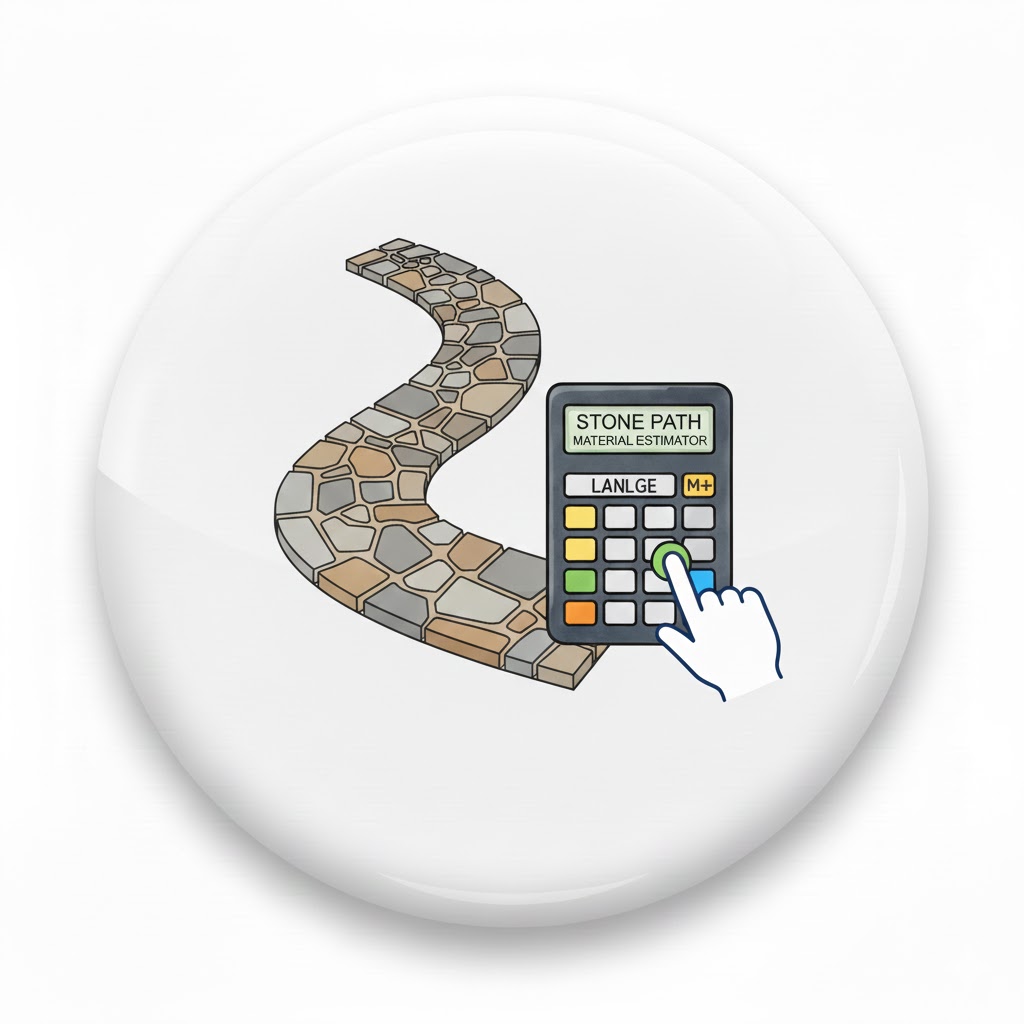
Calculate the amount of flagstone, stepping stones, gravel base, and sand needed for a natural stone pathway. Supports random or uniform layout with global imperial/metric units.
Stone Pathway Material Estimator: Calculate Stones, Gravel, and Sand for Your Garden Walkway
Designing a beautiful stone pathway can instantly elevate your garden, backyard, or front yard. But if you’ve ever tried to figure out exactly how many stones, how much gravel, or sand you need, you know it can get confusing fast. That’s where the Stone Pathway Material Estimator comes in—a practical tool that simplifies the planning process and ensures you order the right quantities, saving time, money, and effort.
Imagine wanting to install a natural stepping-stone path from your patio to your garden shed. You know the path should look natural, but how many stones do you need? What depth of gravel will provide a stable base? And how much sand is required to level the stones? Our Stone Pathway Calculator answers all these questions in minutes.
Why Use a Stone Pathway Material Estimator?
Planning a stone pathway without proper calculations can lead to common issues:
-
Overbuying stones or gravel, increasing costs unnecessarily.
-
Underestimating materials, causing delays and extra trips to suppliers.
-
Uneven surfaces due to improper base or bedding layers.
With the Pathway Paving Material Estimator, you can:
-
Estimate the exact number of stones for flagstone or stepping stones.
-
Calculate gravel base and sand bedding volumes for a stable foundation.
-
Choose between imperial or metric units for flexible planning.
-
Plan for natural layouts or uniform stepping-stone patterns.
How the Stone Pathway Material Estimator Works
The calculator is designed with simplicity and accuracy in mind. Here’s how it functions:
Inputs You Provide:
-
Units: Imperial (feet/inches) or Metric (meters/centimeters).
-
Pathway Dimensions: Length and width of your pathway.
-
Stone Type: Irregular flagstone or regular stepping stones.
-
Average Stone Size: Diameter for round stones or side length for squares.
-
Spacing Between Stones: Only for stepping stones to ensure comfortable walking distance.
-
Base Gravel Depth: Recommended 4–6 inches for durability.
-
Sand Bedding Depth: Typically 1 inch for leveling stones.
Calculations Behind the Scenes:
-
Pathway Area:
-
Number of Stones:
-
Flagstone:
Includes 15% extra for overlap and cuts.
-
Stepping Stones:
Adds 10% extra for selection and cutting.
-
-
Gravel Base Volume:
-
Sand Bedding Volume:
These formulas ensure the estimates closely match real-world installation requirements.
Step-by-Step Examples
Let’s look at three practical scenarios using the tool:
Example 1: Stepping Stone Pathway (Imperial)
-
Path Length: 30 ft
-
Path Width: 4 ft
-
Stone Type: Round stepping stones, 1.5 ft diameter
-
Spacing: 0.5 ft
-
Gravel Depth: 4 inches
-
Sand Depth: 1 inch
Calculation:
-
Stones Per Row = ceil(4 / (1.5 + 0.5)) = 3
-
Number of Rows = ceil(30 / (1.5 + 0.5)) = 19
-
Total Stones = 3 × 19 × 1.1 ≈ 63 stones
-
Gravel Volume = 30 × 4 × (4/12) = 40 cu ft ≈ 1.48 cu yd
-
Sand Volume = 30 × 4 × (1/12) = 10 cu ft ≈ 0.37 cu yd
Example 2: Flagstone Pathway (Metric)
-
Path Length: 10 m
-
Path Width: 1.5 m
-
Stone Type: Flagstone, 0.45 m average size
Calculation:
-
Path Area = 10 × 1.5 = 15 m²
-
Stones Needed = ceil((15 / 0.45²) × 1.15) ≈ 86 stones
Example 3: Mixed Layout for Garden Walkway
-
Length: 20 ft, Width: 3 ft
-
Stepping stones, 1 ft diameter, spacing 1 ft
-
Gravel Depth: 5 inches, Sand Depth: 1 inch
Calculation:
-
Stones Per Row = ceil(3 / (1 + 1)) = 2
-
Number of Rows = ceil(20 / (1 + 1)) = 10
-
Total Stones = 2 × 10 × 1.1 ≈ 22 stones
-
Gravel Volume ≈ 25 cu ft, Sand Volume ≈ 4 cu ft
These examples demonstrate how the estimator helps plan precise material quantities for any pathway type.
Installation Tips for a Durable Stone Pathway
-
Excavation Depth: Dig 4–6 inches below final grade for gravel, sand, and stone thickness.
-
Compaction: Compact gravel in 2-inch layers to prevent settling.
-
Flagstone Tips: Slight overlap and fill gaps with sand or polymeric sand.
-
Stepping Stones: Maintain 18–24 inches center-to-center for comfortable strides.
-
Weed Prevention: Use landscape fabric under the gravel.
-
Edging: Install metal, plastic, or larger stones along the edges.
-
Extra Materials: Always buy 10–20% more stones for cutting, breakage, and selection.
Why This Tool Is Trustworthy
As a developer and landscaping enthusiast, I designed this Stone Pathway Calculator to reflect real-world construction practices. It accounts for:
-
Accurate unit conversions (imperial ↔ metric)
-
Waste factors and extra material considerations
-
Proper gravel and sand volume calculations
-
User-friendly step-by-step guidance
You can confidently rely on these calculations before purchasing materials or starting construction.
Internal Resources and Related Tools
-
Check Gravel Driveway Depth Tool to calculate gravel requirements for driveways.
-
Use Sand Base for Pavers Calculator for more precise bedding layer planning.
-
Explore more Home Improvement Calculators and Gardening Calculators for project support.
FAQs
1. Can I use this estimator for large commercial pathways?
Yes, the tool works for any size pathway. For very large projects, it’s recommended to consult a landscape professional for local soil and drainage considerations.
2. Does it account for irregular stone shapes?
Yes, for flagstone (irregular layout), the estimator adds ~15% extra stones for overlap and cutting.
3. Can I adjust spacing for stepping stones?
Absolutely. The tool allows you to set custom spacing to ensure comfortable walking distances.
Conclusion
The Stone Pathway Material Estimator simplifies the planning of any garden or walkway project by accurately calculating stones, gravel, and sand needed. By using this tool, you save time, reduce waste, and ensure a stable, beautiful pathway.
Try it today, experiment with different layouts, and combine it with related tools like the Gravel Driveway Depth Tool to achieve perfect results every time. Whether you’re a DIY enthusiast or a professional landscaper, this estimator is your step-by-step guide to a flawless stone pathway.