
Wallpaper Rolls Needed Calculator
Wallpaper Rolls Needed Calculator
Calculate how many wallpaper rolls you need for your room. Works with both metric (meters) and imperial (feet/inches) units – perfect for any project worldwide.
Wallpaper Rolls Needed Calculator Explained
Wallpaper Rolls Needed Calculator is the easiest way to answer one of the most common (and costly) questions people face before decorating a room: “How many wallpaper rolls do I actually need?”
If you’ve ever stood in a store debating whether to buy one extra roll “just in case,” you’re not alone. Buy too few, and your project stalls mid-wall. Buy too many, and money gets wasted. This tool was designed from real, hands-on decorating experience to remove that guesswork and give you confidence before you start.
Whether you’re refreshing a bedroom, renovating a rental, or planning a full interior makeover, this calculator helps you plan smarter, save money, and avoid frustrating mistakes.
Why Calculating Wallpaper Rolls Is Harder Than It Looks
At first glance, wallpapering seems simple—measure the wall, buy rolls, and apply. In reality, several critical variables affect how much wallpaper you need, including:
-
Room perimeter (excluding doors and windows)
-
Wall height
-
Roll width and roll length
-
Pattern repeat, which can significantly increase waste
-
Unit system (metric or imperial)
Many people rely on rough estimates or wall area alone. That’s risky. Wallpaper is applied in vertical drops, not square meters, and pattern matching can easily add 10–20% extra material needs.
That’s exactly why this wallpaper roll quantity estimator exists—to calculate what truly matters, not just surface area.
What the Wallpaper Rolls Needed Calculator Does (And Why It’s Accurate)
This tool is built to match how wallpaper is actually installed in real life—not just theoretical math.
Core Inputs Explained
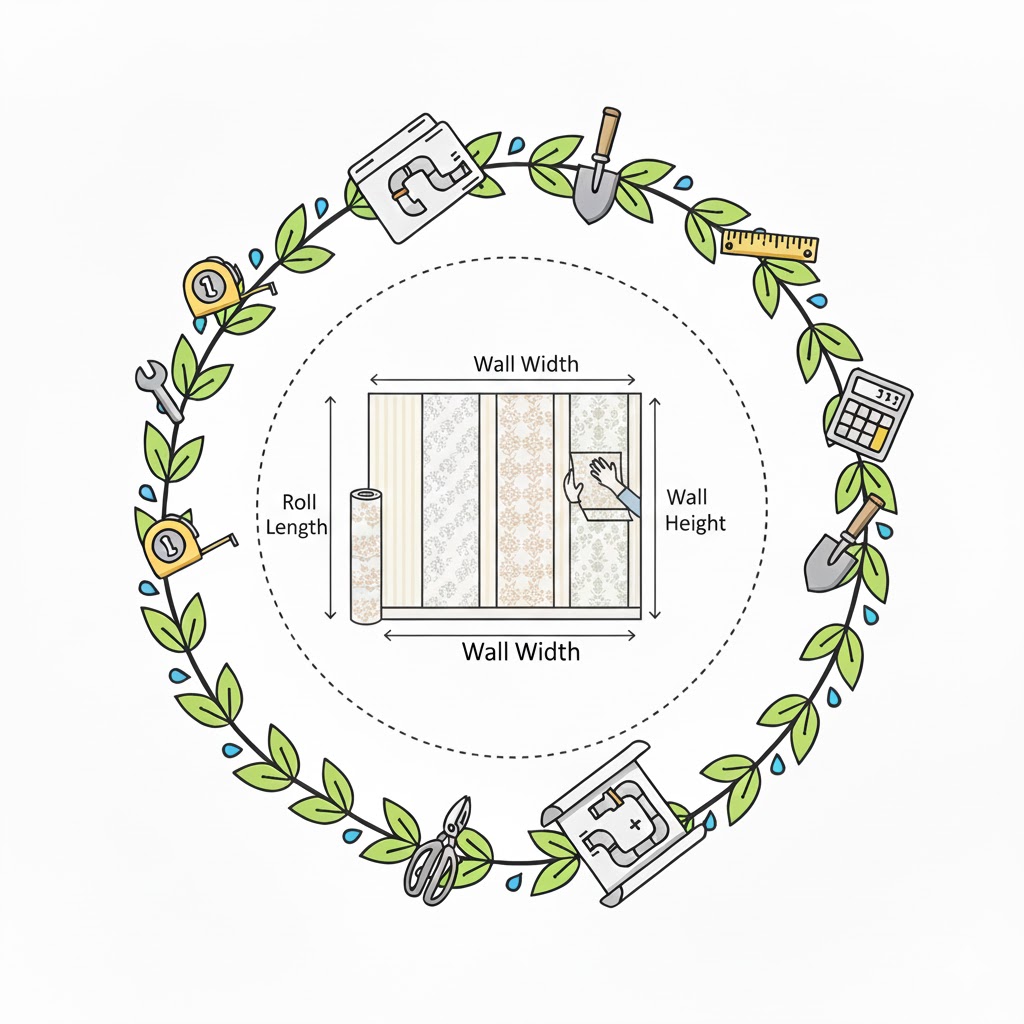
The calculator asks for five simple values:
-
Room Perimeter
The total length of all walls being covered. Doors and windows are usually excluded unless very large. -
Wall Height
Measured from floor to ceiling. Even small height changes can affect how many drops you get per roll. -
Wallpaper Roll Width
Standard rolls are often 0.53 m (21 inches) wide, but not all are the same. -
Wallpaper Roll Length
Common lengths include 10 m (33 feet), but designer rolls vary. -
Pattern Repeat
This is the hidden cost. A repeating pattern requires extra length for alignment.
The tool supports both metric and imperial units, making it a truly global wallpaper coverage calculator.
How the Calculation Works (Simple, Transparent Logic)
To build trust, here’s the exact logic used—no black-box math.
Step 1: Calculate Drops Needed
Each wallpaper strip is one “drop.”
Drops Needed = Room Perimeter ÷ Roll Width
This ensures full horizontal coverage.
Step 2: Adjust Drop Length for Pattern Repeat
If your wallpaper has a repeat, each drop must be slightly longer:
Effective Drop Length = Wall Height + Pattern Repeat
This accounts for matching patterns correctly.
Step 3: Calculate Total Wallpaper Length Needed
Total Length Needed = Drops Needed × Effective Drop Length
Step 4: Calculate Minimum Rolls
Minimum Rolls = Total Length Needed ÷ Roll Length
Always rounded up, because partial rolls don’t exist.
Step 5: Add a Safe Waste Allowance
Professional installers recommend 10–15% extra for:
-
Pattern matching
-
Trimming errors
-
Future repairs
The calculator highlights a recommended roll count with a built-in 15% buffer.
Real-Life Examples (Step-by-Step)
Example 1: Small Bedroom (No Pattern)
-
Perimeter: 12 m
-
Height: 2.4 m
-
Roll: 0.53 m × 10 m
-
Repeat: 0
Drops Needed: 12 ÷ 0.53 ≈ 23
Rolls Needed: 6
Recommended: 7 rolls
Perfect for minimalist or textured wallpapers.
Example 2: Living Room With Pattern Repeat
-
Perimeter: 18 m
-
Height: 2.7 m
-
Repeat: 0.64 m
Pattern matching increases waste significantly.
Minimum Rolls: 9
Recommended: 11 rolls
This example shows why guessing can be expensive.
Example 3: Imperial Units (US-Based Project)
-
Perimeter: 40 ft
-
Height: 8 ft
-
Roll: 21 in × 33 ft
The calculator automatically converts everything to meters internally, ensuring accurate results without manual conversion errors.
When to Use This Wallpaper Material Requirement Tool
This tool is ideal for:
-
DIY homeowners planning a single room
-
Interior designers estimating materials for clients
-
Contractors preparing cost breakdowns
-
Rental property renovations
-
Accent walls and full-room wallpapering
It pairs especially well with trim-planning tools like the
👉 https://findtechtoday.com/crown-molding-length-calculator/
👉 https://findtechtoday.com/chair-rail-placement-tool/
Expert Tips to Avoid Costly Mistakes
-
Always buy all rolls at once to ensure matching batch numbers
-
Large repeats (over 50 cm) almost always need extra rolls
-
Small windows are often ignored, but large sliding doors should be subtracted
-
Textured and vinyl wallpapers are less forgiving than plain paper
These are lessons learned from real projects—not theory.
Frequently Asked Questions
How accurate is the Wallpaper Rolls Needed Calculator?
It uses industry-standard installation logic and conservative rounding. Results are intentionally safe to prevent underbuying.
Should I subtract doors and windows?
Large openings, yes. Small doors and windows are usually ignored because waste offsets the difference.
Why does pattern repeat increase roll count so much?
Because every drop must align vertically. Even a small repeat can force extra cuts, increasing total length used.
Explore Related Tools
If you’re planning a full room makeover, you may also find these helpful:
Using multiple tools together leads to more accurate planning and fewer surprises.
Conclusion
The Wallpaper Rolls Needed Calculator was created to solve a real problem decorators face every day. It doesn’t just calculate—it thinks the way an installer does. By combining accurate measurements, pattern logic, and professional waste allowances, it gives results you can trust.
Try different values, test scenarios, and plan with confidence. A well-prepared project always looks better—and costs less in the long run.