Well Pump Depth Tool
Well Pump Depth Tool
Calculate the required well pump depth and type based on static water level, drawdown, daily water needs, and desired pressure. Supports both metric and imperial units.
Well Pump Depth Tool: Accurately Determine Pump Depth and Type for Your Water Well
Access to clean and reliable water is one of the most critical needs for any home or farm. Yet, determining the correct well pump depth and the right type of pump is often overlooked, leading to poor water flow, equipment damage, or even unnecessary expenses. This is where the Well Pump Depth Tool comes into play—a practical, easy-to-use calculator designed to help homeowners, well installers, and DIY enthusiasts estimate the proper installation depth and select the ideal pump type based on real-world water requirements.
Whether you are planning a new well or troubleshooting low water pressure, this tool offers accurate guidance by considering static water levels, drawdown, daily water needs, and desired household pressure.
Why Knowing the Correct Pump Depth Matters
Installing a well pump without proper depth calculations can lead to several issues:
-
Insufficient water pressure during peak usage.
-
Pump overheating due to running dry or excessive drawdown.
-
Wasted energy and higher electricity bills if the pump operates inefficiently.
-
Shortened pump lifespan, leading to frequent replacements.
By accurately estimating your well pump depth, you ensure consistent water flow, optimal pressure, and long-term reliability.
How the Well Pump Depth Tool Works
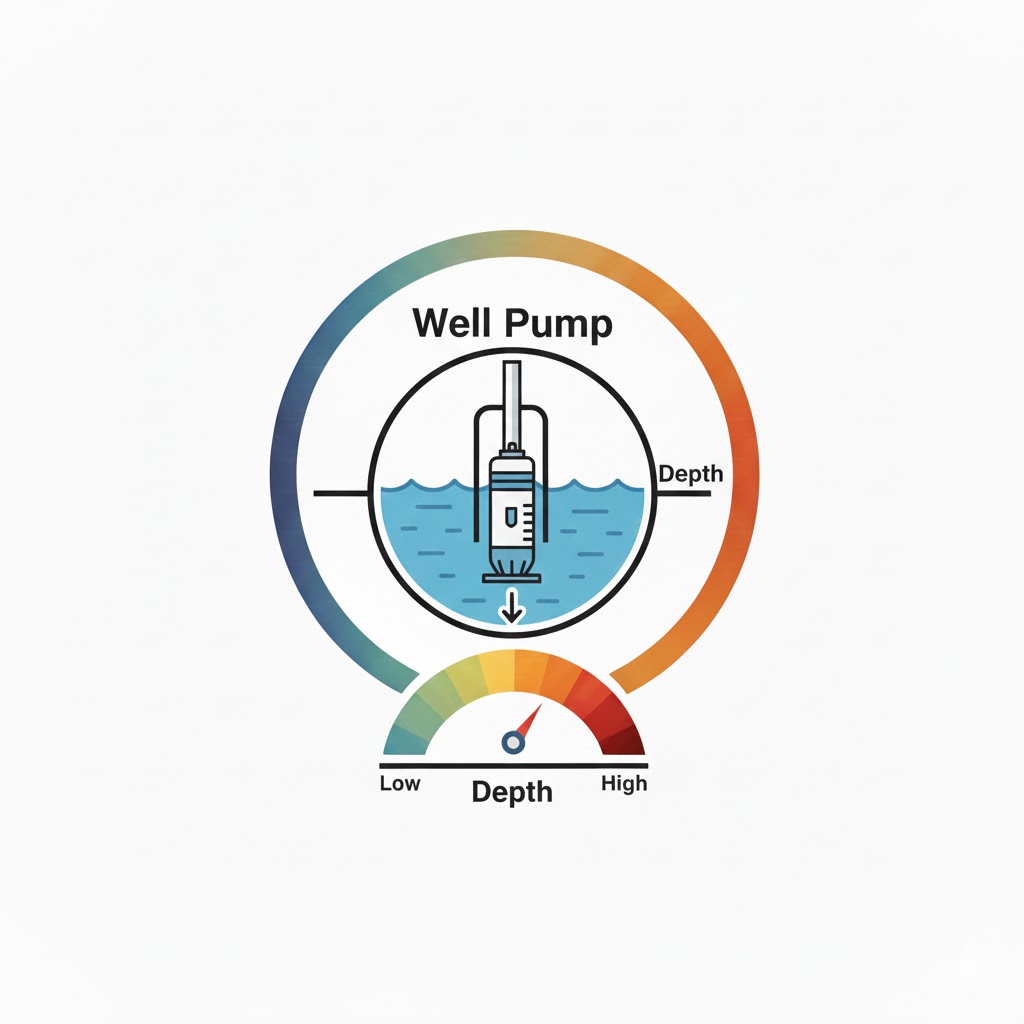
The tool is designed to provide precise results while remaining simple for non-experts. It calculates the pump depth using a few essential inputs:
Inputs
-
Unit System: Metric (meters, L/min) or Imperial (feet, GPM).
-
Static Water Level: Distance from the ground surface to the water level in the well.
-
Expected Drawdown: Water level drop during peak usage.
-
Daily Water Requirement: Volume needed for your household or farm.
-
Desired Pressure: Target water pressure at the house (30–60 psi typical).
Calculation Logic
The tool uses the following formulas internally:
-
Pumping Level =
Static Water Level + Drawdown -
Pressure Head =
Desired Pressure × 2.31(in feet for imperial units; meters converted as needed) -
Total Dynamic Head (TDH) =
Pumping Level + Pressure Head + Approx. Losses (20 ft) -
Recommended Pump Depth =
Pumping Level + Safety Margin (20 ft) -
Estimated Peak Flow Rate =
Daily Water Requirement ÷ Pumping Time (e.g., 5 hours ≈ 300 minutes)
Based on the static water level, the tool also suggests a suitable pump type:
-
Shallow Well Jet Pump: Best for water levels under ~25 ft (7 m).
-
Convertible Jet Pump: For moderate depths, between 10–25 ft (3–7 m).
-
Deep Well Submersible Pump: For depths beyond 25 ft (7 m).
Step-by-Step Examples Using the Tool
Here are practical scenarios to understand the tool’s calculations.
Example 1: Small Household Well (Metric)
-
Static water level: 10 meters
-
Drawdown: 5 meters
-
Daily water needs: 1500 liters
-
Desired pressure: 40 psi
Calculation:
-
Pumping Level = 10 + 5 = 15 m
-
Pressure Head = 40 psi × 0.703 (conversion factor to meters) ≈ 28.1 m
-
Total Dynamic Head ≈ 15 + 28.1 + 6 ≈ 49.1 m (including approximate losses)
-
Recommended Pump Depth = 15 + 6 = 21 m
-
Peak Flow Rate = 1500 ÷ 300 ≈ 5 L/min
Suggested Pump: Deep Well Submersible Pump
Example 2: Suburban Home (Imperial)
-
Static water level: 20 ft
-
Drawdown: 10 ft
-
Daily water needs: 500 gallons
-
Desired pressure: 50 psi
Calculation:
-
Pumping Level = 20 + 10 = 30 ft
-
Pressure Head = 50 × 2.31 ≈ 115.5 ft
-
Total Dynamic Head ≈ 30 + 115.5 + 20 ≈ 165.5 ft
-
Recommended Pump Depth = 30 + 20 = 50 ft
-
Peak Flow Rate = 500 ÷ 300 ≈ 1.67 GPM
Suggested Pump: Deep Well Submersible Pump
Example 3: Farm Irrigation Well
-
Static water level: 5 meters
-
Drawdown: 3 meters
-
Daily water needs: 5000 liters
-
Desired pressure: 30 psi
Calculation:
-
Pumping Level = 5 + 3 = 8 m
-
Pressure Head ≈ 30 × 0.703 ≈ 21.1 m
-
Total Dynamic Head ≈ 8 + 21.1 + 6 ≈ 35.1 m
-
Recommended Pump Depth = 8 + 6 = 14 m
-
Peak Flow Rate = 5000 ÷ 300 ≈ 16.7 L/min
Suggested Pump: Convertible Jet Pump
These examples illustrate how varying static water levels, drawdown, and daily usage influence the recommended pump type and installation depth.
Practical Tips for Well Pump Installation
-
Always verify well depth and yield with a licensed driller.
-
Include a pressure tank (80–200 L or 20–50 gallons) for system efficiency.
-
Consider pump power (HP/kW) based on total dynamic head and flow.
-
Use the Well Pump Depth Tool interactively to test different scenarios—this helps plan for seasonal fluctuations or household expansion.
-
Ensure your electrical supply matches pump requirements for safety and efficiency.
Related Tools You May Find Helpful
-
Drip Line Length Estimator – Plan irrigation system coverage efficiently.
-
Rain Barrel Volume Tool – Calculate water storage capacity.
-
Deck Stairs Stringer Calculator – For outdoor home improvement projects.
These tools complement well planning and overall water management for your property.
Frequently Asked Questions (FAQs)
1. Can I use a shallow well pump for deep wells?
No. Shallow well pumps are typically limited to 25 ft (7 m) of suction lift. Using them deeper can damage the pump or result in insufficient water flow.
2. How do I know my well’s drawdown?
Drawdown is measured during peak water usage or pump testing. A licensed well driller can provide accurate data to input into the calculator.
3. Why is the safety margin added to pump depth?
The safety margin ensures the pump remains submerged even during high water usage periods, preventing dry running and extending pump life.
Conclusion
The Well Pump Depth Tool is a practical, expert-designed calculator that simplifies complex well planning decisions. By considering static water level, drawdown, daily water needs, and desired pressure, it provides clear recommendations for pump depth and type, helping you avoid costly mistakes.
Test different scenarios using the tool to ensure your well system meets both current and future water demands. With accurate calculations and proper installation, you’ll enjoy reliable water supply and optimal pressure for years to come.