Yoga Studio Mat Spacing Calculator
Yoga Studio Mat Spacing Calculator
Calculate optimal mat spacing, maximum capacity, and comfort level for your yoga studio or class — supports metric & imperial units. Plan for comfort, safety & flow.
Yoga Studio Mat Spacing Calculator: Plan Comfortable & Safe Yoga Classes
Running a yoga studio or hosting group classes comes with one key challenge: how to optimize space without compromising comfort or safety. That’s where the Yoga Studio Mat Spacing Calculator comes in. This tool helps instructors, studio owners, and enthusiasts determine the best arrangement for mats, ensuring each student has room to move freely and safely. Whether you’re preparing for a crowded hot yoga session or a relaxed restorative class, this calculator provides accurate, actionable guidance.
Why Proper Mat Spacing Matters
Yoga is more than just poses — it’s about flow, breathing, and mindfulness. Crowded classes can hinder movement, create safety risks, and reduce the overall experience. On the other hand, too much empty space wastes studio capacity and can affect class dynamics. Proper mat spacing impacts:
-
Safety: Prevent collisions during dynamic poses like sun salutations.
-
Comfort: Each participant has adequate space to stretch and balance.
-
Instructor Access: Allows teachers to walk between mats, give adjustments, and maintain visibility.
-
Studio Efficiency: Maximizes capacity without making participants feel cramped.
Studies show that a comfortable spacing of around 60 cm (24 in) between mats is ideal for most group yoga settings. But depending on your studio size, class type, or audience, spacing can vary — this is exactly what the calculator addresses.
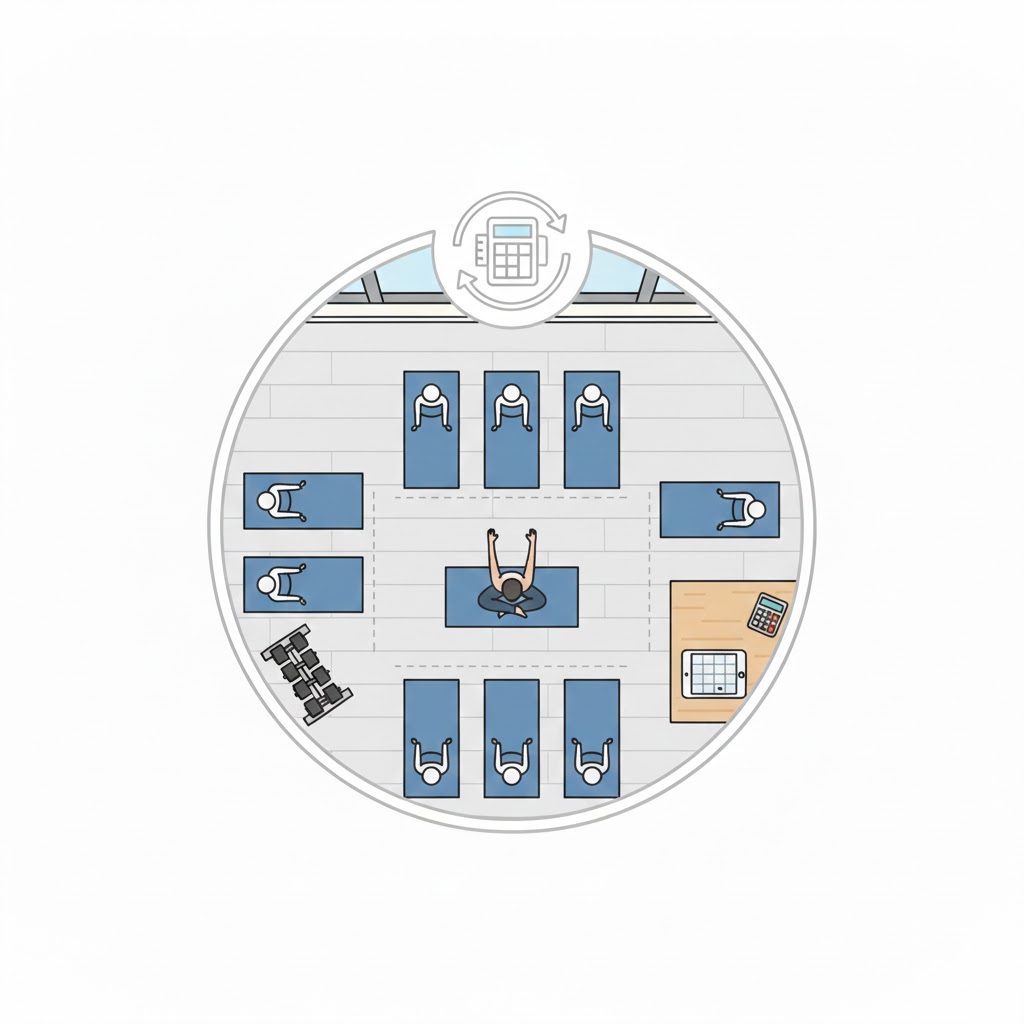
How the Yoga Studio Mat Spacing Calculator Works
The tool simplifies mat layout planning using just a few inputs:
1. Inputs
-
Room Dimensions: Enter the length and width of your studio in meters or feet.
-
Unit Type: Metric or imperial units, depending on your preference.
-
Spacing Style: Choose from tight, standard, spacious, or enter a custom spacing value.
2. Calculations
The calculator uses a simple, transparent logic:
-
Mat Dimensions: Standard yoga mats are ~1.73 m × 0.61 m (5.67 ft × 2 ft).
-
Effective Space per Mat:
Effective length = mat length + spacingandEffective width = mat width + spacing. -
Maximum Mats:
Max mats = floor(room length / effective length) × floor(room width / effective width) -
Area Coverage: Determines what portion of your studio is actually used by mats.
For example, a 10 m × 8 m studio with standard spacing (0.6 m / 24 in) fits approximately 20 mats. The calculator also shows total room area, mat area used, spacing, and coverage percentage, giving you a complete overview at a glance.
3. Outputs
-
Total room area
-
Maximum mats fitting in the studio
-
Mat dimensions and spacing used
-
Area used by mats (with percentage)
-
Expert advice on layout adjustments
Step-by-Step Examples
Example 1: Standard Class
-
Room Size: 10 m × 8 m
-
Spacing: Standard / Comfortable (0.6 m)
-
Calculation:
-
Result: 24 mats, 70% room coverage, comfortable spacing for dynamic flows.
Example 2: Tight Layout for Hot Yoga
-
Room Size: 12 m × 10 m
-
Spacing: Tight (0.3 m)
-
Result: Allows 40 mats, maximizing capacity for high-demand sessions.
Example 3: Spacious Layout for Restorative Yoga
-
Room Size: 12 m × 10 m
-
Spacing: Spacious (0.9 m)
-
Result: 24 mats, premium spacing with extra breathing room, ideal for yin or restorative classes.
Tip: You can experiment with custom spacing to balance comfort and studio capacity — the tool recalculates instantly for any scenario.
Practical Tips for Optimal Yoga Studio Layout
-
Stagger Mats: Slightly offset rows to avoid elbows or hands hitting neighboring mats.
-
Leave Wall Clearance: 0.5–1 m (1.5–3 ft) near walls for safe movement and props.
-
Adjust for Class Type: Dynamic vinyasa flows may need more spacing than meditation or pranayama sessions.
-
Consider Accessibility: Ensure there is room for instructors, assistants, or students with mobility needs.
-
Airflow & Ventilation: Proper spacing also supports good airflow, reducing fatigue and increasing comfort.
Related Tools & Resources
To further optimize your studio or fitness space, explore:
-
Treadmill Room Clearance Estimator — ensures safe distances for cardio machines.
-
Basketball Court Hoop Height Estimator — plan sports layouts for indoor courts.
-
Sports & Recreation Tools — discover calculators for various fitness and activity setups.
FAQs
1. Can I use this calculator for small home yoga rooms?
Yes! The tool works for any space, large or small. Just input your room dimensions and select an appropriate spacing style.
2. Does the calculator consider mat orientation?
It assumes standard alignment with mats placed lengthwise. You can manually adjust if you plan diagonal or staggered layouts.
3. How do I handle classes with varying mat sizes?
You can enter a custom spacing value to account for thicker or longer mats. The calculator will update max mats and area coverage automatically.
Conclusion
The Yoga Studio Mat Spacing Calculator is a practical, expert-driven tool designed to maximize comfort, safety, and efficiency for group yoga classes. By using real measurements, transparent calculations, and adjustable spacing, studio owners and instructors can make informed layout decisions.
Experiment with different spacing styles and room sizes to find the perfect balance for your classes. For more optimization tools, check out our Treadmill Room Clearance Estimator or Sports & Recreation Tools to improve every aspect of your fitness space.