Wine Cellar Rack Quantity Tool
Wine Cellar Rack Quantity Tool
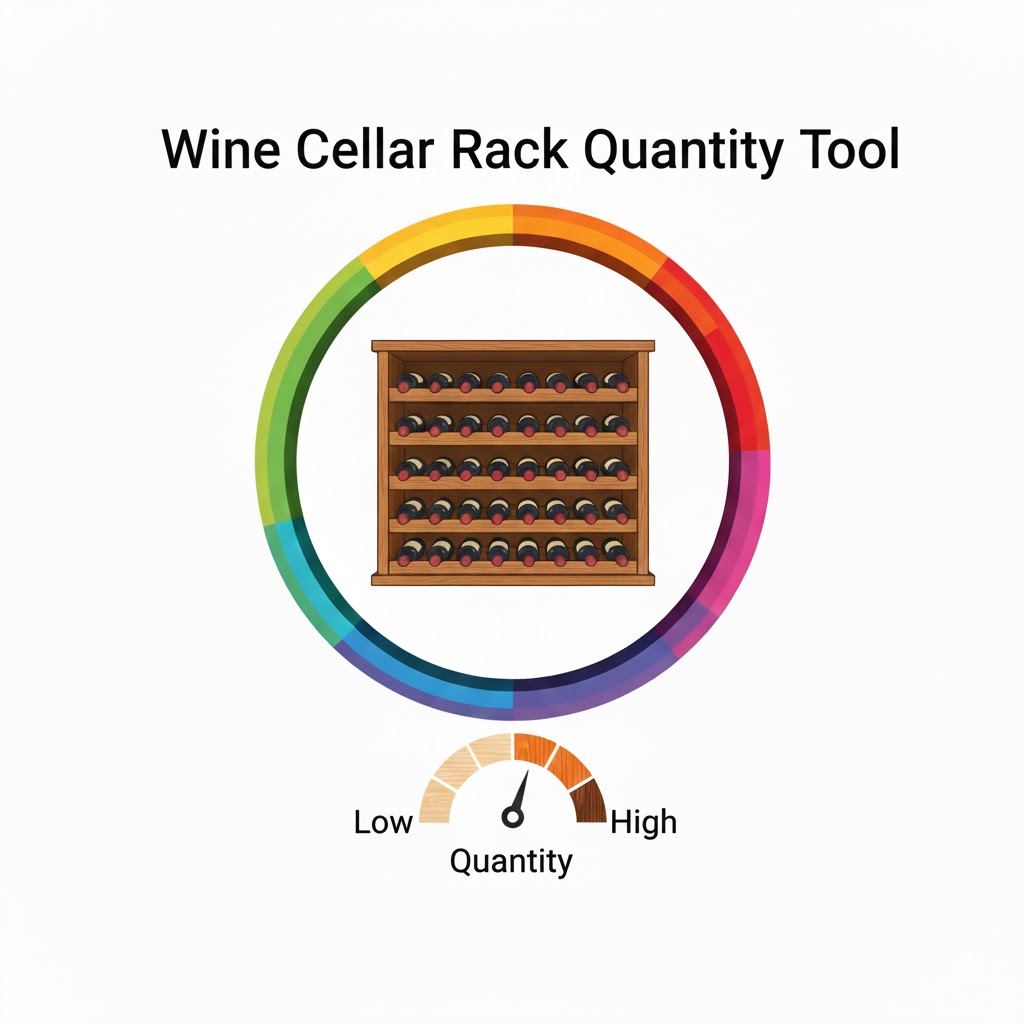
Calculate how many wine bottles your rack can hold and estimate lumber needed for a custom wine cellar rack. Supports both metric (meters/cm) and imperial (feet/inches) units – perfect for wine enthusiasts worldwide.
Wine Cellar Rack Quantity Tool: Plan Your Perfect Wine Storage
If you’re a wine enthusiast or a cellar hobbyist, you know that creating the perfect wine storage solution is more than just stacking bottles on a shelf. That’s where the Wine Cellar Rack Quantity Tool comes in. Designed for both casual collectors and serious connoisseurs, this tool helps you calculate how many bottles your rack can hold, estimate lumber requirements, and plan a wine cellar that is efficient, attractive, and practical.
Imagine buying a dozen bottles of rare vintage wine only to realize your existing rack cannot accommodate them without overcrowding. With this tool, you can instantly determine rack capacity and avoid unnecessary trial and error—saving time, effort, and money.
Why Planning Wine Rack Storage Matters
Wine storage isn’t just about fitting bottles on a shelf. Poorly planned racks can lead to:
-
Uneven weight distribution causing structural stress.
-
Wasted space that could hold more bottles.
-
Difficulty accessing specific bottles without disturbing others.
-
Degradation of wine quality due to improper storage angles or overcrowding.
By using a wine rack capacity calculator, you gain insight into:
-
Optimal bottle placement based on rack style.
-
Material estimation for custom racks.
-
Scalable solutions for small collections or large cellars.
How the Wine Cellar Rack Quantity Tool Works
The tool calculates bottle capacity and lumber requirements based on several user inputs. Here’s a step-by-step explanation of its logic:
Inputs
-
Unit System – Choose metric (meters & cm) or imperial (feet & inches).
-
Rack Dimensions – Enter width and height for the rack.
-
Rack Depth (Bottles Deep) – How many bottles fit from front to back.
-
Rack Style – Options include:
-
Diamond Bins: Staggered storage, maximizes bottle count.
-
Individual Holes: Premium display, easy access.
-
Horizontal Shelves: Bottles lying down, simple construction.
-
-
Bottle Diameter – Default is 0.08 m (750 ml bottle). Adjust for magnums or smaller bottles.
-
Extra for Waste & Trim (%) – Accounts for cutting, errors, and design adjustments.
Calculation Logic
-
Bottles per Row & Column
bottlesPerRow = Math.floor(width / bottleDia)bottlesPerColumn = Math.floor(height / bottleDia)These formulas calculate the number of bottles that fit horizontally and vertically.
-
Style Adjustment
-
Diamond bins increase capacity by ~15% due to staggered placement.
-
Individual holes multiply rows and columns by rack depth.
-
Horizontal shelves consider bottle length (~30 cm) for row calculation.
-
-
Total Linear Lumber
totalLinear = (horizontalSupports + verticalSupports) * depthBottles * (1 + extraPercent/100)This accounts for vertical and horizontal rack supports, multiplied by the depth and extra material allowance.
Outputs
-
Rack Size – Width × Height in selected units.
-
Estimated Bottle Capacity – Total bottles that fit the rack.
-
Total Linear Lumber Required – Includes extra for waste and trim.
-
Advice & Tips – Recommended materials, storage conditions, and organization strategies.
Step-by-Step Examples
Example 1: Standard Individual Holes Rack
-
Width: 2 m
-
Height: 2 m
-
Depth: 2 bottles
-
Bottle diameter: 0.08 m
-
Style: Individual Holes
-
Extra: 15%
Calculation:
Linear Lumber: Calculate supports and apply 15% extra → ~120 meters.
This rack is perfect for a home collector who wants premium display with easy bottle access.
Example 2: Diamond Bin Maximum Storage
-
Width: 3 m
-
Height: 2.5 m
-
Depth: 3 bottles
-
Bottle diameter: 0.08 m
-
Style: Diamond Bins
-
Extra: 10%
Calculation:
Ideal for wine enthusiasts with large collections who prioritize storage density.
Example 3: Horizontal Shelves for Easy Access
-
Width: 2.5 m
-
Height: 2 m
-
Depth: 2 bottles
-
Bottle length: 0.3 m
-
Style: Horizontal Shelves
Calculation:
Horizontal shelving simplifies construction and keeps corks moist for long-term storage.
Tips for Optimal Wine Rack Design
-
Use cedar or redwood for natural resistance to mold.
-
Maintain 12-15°C (55°F) and 60-70% humidity.
-
Label racks for vintage, region, or grape variety.
-
Choose individual holes for display and easy rotation.
-
Diamond bins maximize storage efficiency for large cellars.
-
Horizontal storage keeps corks moist and wine preserved.
-
Include lighting and vibration dampening for premium racks.
Related Tools for Wine Enthusiasts
-
Home Library Shelf Height Estimator – For planning shelves with precision.
-
Bookcase Adjustable Shelf Load Tool – Calculate material strength for custom shelves.
-
Well Pump Depth Tool – Useful if your cellar requires a water source for temperature or humidity control.
Explore our home improvement calculators and construction material calculators to refine your projects.
Frequently Asked Questions (FAQs)
Q1: Can I use this tool for different bottle sizes?
Yes! Simply adjust the bottle diameter input to match magnums or smaller wine bottles, and the calculator will adjust capacity accordingly.
Q2: Does the tool consider wasted space or trim?
Absolutely. Use the Extra for Waste & Trim (%) input to account for cuts, gaps, or material errors.
Q3: Which rack style should I choose?
-
Diamond bins: Maximum capacity, less visual appeal.
-
Individual holes: Premium display, easy access.
-
Horizontal shelves: Simple construction, preserves corks.
Conclusion
The Wine Cellar Rack Quantity Tool is a must-have for anyone building or expanding a wine cellar. It ensures accurate bottle capacity estimates, material planning, and optimized storage solutions. By testing different dimensions, depths, and styles, you can design a rack that suits your collection perfectly.
Try it today to plan your custom wine storage confidently and efficiently. A well-planned rack not only saves space but also preserves your valuable bottles for years to come.