Composting Bin Size Tool
Composting Bin Size Tool
Determine the ideal compost bin size for your household based on family size, waste type, and composting style. Globally applicable estimates.
Composting Bin Size Tool: Find the Perfect Bin for Your Household
Composting is one of the most practical ways to reduce household waste, improve soil health, and contribute to a sustainable lifestyle. But how do you know what size compost bin you actually need? This is where the Composting Bin Size Tool comes in. Whether you’re a small family tossing kitchen scraps or a garden enthusiast managing large yard waste, this tool helps determine the right bin volume for your specific needs.
Imagine this: You start composting your kitchen scraps in a small bin, but within weeks, the pile grows too quickly, odors start forming, and you’re forced to manage multiple containers. This scenario is common, and it happens because many people underestimate the bin capacity required for their waste type and household size. Using the Composting Bin Size Tool, you can avoid these problems and design a system that’s efficient, odor-free, and productive.
Why Bin Size Matters
Choosing the correct compost bin size isn’t just about fitting your kitchen scraps; it’s about:
-
Ensuring proper decomposition without unpleasant smells.
-
Allowing air circulation and adequate space for turning.
-
Matching the bin to your composting style—whether a fast tumbler or a multi-bin system.
-
Optimizing the reduction of organic waste, which can decrease by 30–70% during composting.
Tip: A bin that’s too small slows decomposition, while a bin that’s too large can be hard to manage.
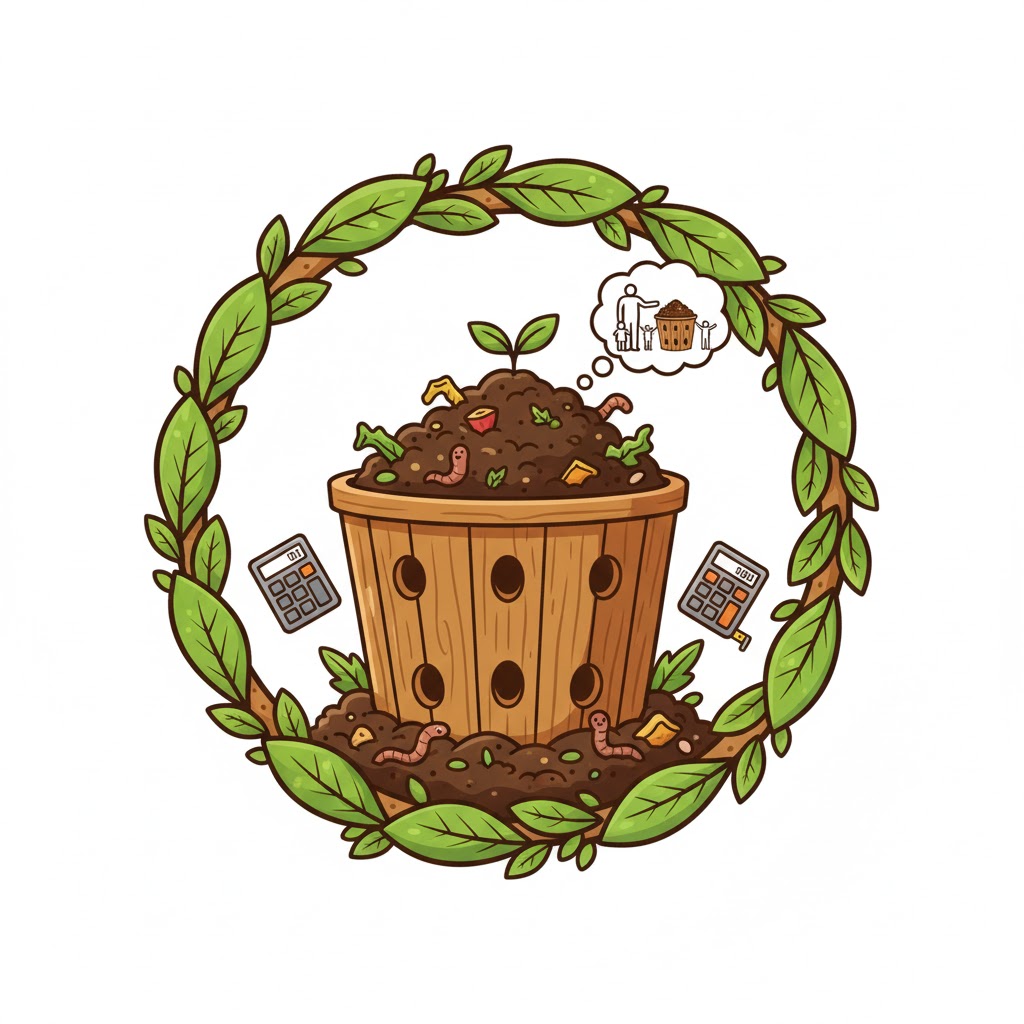
How the Composting Bin Size Tool Works
The tool calculates the ideal compost bin size based on three primary inputs:
-
Household Members – More people produce more kitchen scraps.
-
Main Waste Sources – Kitchen-only scraps, mixed kitchen + garden waste, or heavy garden waste.
-
Composting Style – Options include Tumbler / Fast, Pile / Stationary, or Multi-Bin Systems.
Here’s the logic behind the calculations:
-
Step 1: Estimate weekly waste
-
Adjusted by waste type:
-
Kitchen scraps only → ×1
-
Mixed kitchen + garden → ×2
-
Heavy garden waste → ×3
-
-
-
Step 2: Calculate annual volume
-
Step 3: Account for compost shrinkage
-
Step 4: Determine recommended bin size
-
Minimum effective hot composting volume: 700 liters
-
Adjust for style:
-
Tumbler → ×0.8 (efficient, smaller)
-
Multi-bin → ×1.5 (more total space)
-
-
Round to nearest 50 liters for practical sizing
-
-
Step 5: Convert units
By following this calculation, the tool provides a recommended bin size in liters, gallons, and cubic feet, along with weekly waste estimates.
Step-by-Step Examples
Example 1: Small Family, Kitchen Scraps Only
-
Household: 3 members
-
Waste: Kitchen scraps only
-
Style: Tumbler / Fast
Calculation:
-
Weekly Waste = 3 × 5 × 1 = 15 kg
-
Annual Volume = 15 × 52 = 780 liters
-
Processed Volume = 780 × 0.35 ≈ 273 liters
-
Recommended Bin = max(700, 273 × 3 × 0.8) ≈ 650 → rounded 700 liters
Example 2: Medium Family, Mixed Waste, Standard Pile
-
Household: 4 members
-
Waste: Kitchen + Garden
-
Style: Pile / Stationary
Calculation:
-
Weekly Waste = 4 × 5 × 2 = 40 kg
-
Annual Volume = 40 × 52 = 2080 liters
-
Processed Volume = 2080 × 0.35 ≈ 728 liters
-
Recommended Bin = max(700, 728 × 3 × 1) ≈ 2184 → rounded 2200 liters
Example 3: Large Family, Heavy Garden Waste, Multi-Bin
-
Household: 6 members
-
Waste: Heavy Garden
-
Style: Multi-Bin
Calculation:
-
Weekly Waste = 6 × 5 × 3 = 90 kg
-
Annual Volume = 90 × 52 = 4680 liters
-
Processed Volume = 4680 × 0.35 ≈ 1638 liters
-
Recommended Bin = max(700, 1638 × 3 × 1.5) ≈ 7360 → rounded 7350 liters
These examples show how household size, waste type, and composting style dramatically affect bin size.
Practical Tips for Composting Success
-
Use kitchen scraps for small bins and multi-bin systems for large gardens.
-
Maintain a balance of greens (nitrogen) and browns (carbon) to speed decomposition.
-
Ensure aeration and turning space—even the perfect bin will fail without airflow.
-
Start small and scale up if weekly waste exceeds recommendations.
-
Consider related tools to optimize home sustainability:
FAQs
Q1: Can I compost only kitchen scraps in a multi-bin system?
Yes, but it may be underutilized. Smaller tumblers are more efficient for purely kitchen waste.
Q2: How do I know if my bin is too small?
If your pile doesn’t heat up, smells, or overflows quickly, your bin is likely undersized. Recalculate using our tool with adjusted household or waste inputs.
Q3: How often should I turn the compost?
For hot composting, every 1–2 weeks is ideal. For tumblers, spinning every few days works well. Multi-bin systems allow batch rotation.
Conclusion
The Composting Bin Size Tool takes the guesswork out of selecting the right compost bin. By entering your household size, waste type, and preferred composting style, you get a customized recommendation that optimizes space, airflow, and waste reduction. Whether you are a beginner or an experienced gardener, using the tool ensures you maximize compost efficiency and soil health.
Try the tool today to calculate your perfect compost bin and explore related sustainability calculators for a complete eco-friendly home setup.