
Native Plant Spacing Estimator
Native Plant Spacing Estimator
Calculate how many native plants you need for your garden bed. Supports different plant types with recommended spacing for natural, dense growth.
Native Plant Spacing Estimator: How to Plan Your Garden Like a Pro
Have you ever stood in your garden, excited to plant native species, only to wonder, “How many plants do I actually need?” This is a common challenge for gardeners, landscapers, and urban planners. The Native Plant Spacing Estimator is designed to solve exactly that problem — providing a clear, practical guide to planting native species efficiently while maintaining a natural, thriving ecosystem.
By using this tool, you can avoid overcrowding, reduce maintenance, and create spaces that attract pollinators and wildlife. Let’s explore how this estimator works, why it matters, and how you can use it in real-life gardening projects.
Why Proper Native Plant Spacing Matters
Planting native species isn’t just about aesthetics — it’s about ecosystem health. Proper spacing ensures:
-
Healthy plant growth: Crowded plants compete for sunlight, water, and nutrients.
-
Biodiversity support: Correct spacing creates habitats for pollinators, birds, and beneficial insects.
-
Weed management: Overcrowding can lead to weak plants and allow invasive weeds to take hold.
-
Reduced maintenance: Plants spaced correctly require less pruning and replacement.
For instance, planting groundcovers like creeping phlox too close may result in mildew or slower spread, whereas spacing perennials too far apart can leave bare soil exposed, increasing erosion and reducing visual appeal.
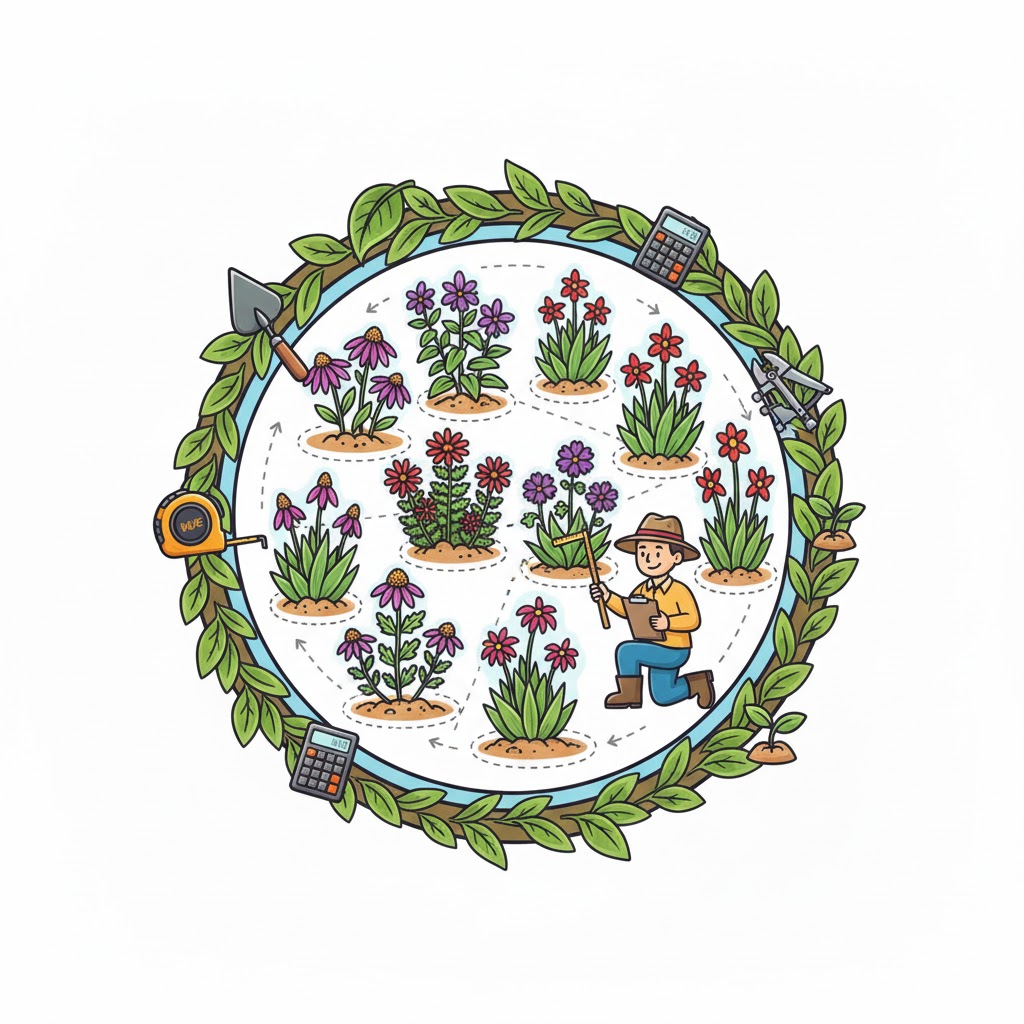
How the Native Plant Spacing Estimator Works
The Native Plant Spacing Estimator uses a combination of plant type, desired density, and garden area to calculate exactly how many plants you need. Here’s a breakdown:
Inputs
-
Garden Bed Area (m²): The total planting space. Example:
50 m². -
Primary Plant Type: Categories include groundcover, perennials/wildflowers, small shrubs, large shrubs, or mixed native gardens.
-
Desired Density: Natural, dense, or sparse depending on how you want your garden to look.
Outputs
-
Recommended spacing (cm & inches) — ensures plants have room to grow without crowding.
-
Plants per m² — calculates approximate plant density.
-
Exact plants needed — the calculated number to fill the garden area.
-
Recommended plants — includes a 10% buffer to account for planting loss or uneven growth.
Calculation Logic
The tool uses this formula:
Where:
-
spacingCmis the plant spacing adjusted for type and density. -
areais the garden size in m². -
recommendedPlantsadds a 10% buffer to ensure full coverage.
For example, for perennials at natural density in a 50 m² bed with a spacing of 45 cm:
-
Plants per m²:
10000 / (45*45) ≈ 4.94 plants/m² -
Total plants:
4.94 * 50 ≈ 247 -
Recommended plants:
247 * 1.10 ≈ 272 plants
This ensures a healthy, visually appealing layout while accommodating natural growth.
Step-by-Step Examples
Example 1: Groundcover for a Backyard Bed
-
Area: 20 m²
-
Plant type: Groundcover
-
Density: Dense
-
Spacing:
30 cm * 0.8 ≈ 24 cm
Result: 382 plants to quickly cover the area, creating a lush, low-maintenance groundcover.
Example 2: Perennials in a Pollinator Garden
-
Area: 50 m²
-
Plant type: Perennials / Wildflowers
-
Density: Natural
-
Spacing: 45 cm
Result: Enough plants to establish a natural-looking, pollinator-friendly habitat.
Example 3: Small Shrubs in a Landscape
-
Area: 100 m²
-
Plant type: Small shrubs
-
Density: Sparse
-
Spacing:
100 cm * 1.3 = 130 cm
Result: 65 shrubs arranged for a clean, structured landscape with enough space for mature growth.
Tips for Using the Native Plant Spacing Estimator
-
Experiment with density settings: Natural, dense, or sparse settings impact growth speed, wildlife habitat, and aesthetics.
-
Use triangular or staggered rows: Can increase planting density by ~15% without overcrowding.
-
Check species-specific tags: Some native plants have unique spacing requirements.
-
Layer your garden: Taller shrubs at the back, perennials in the middle, and groundcovers upfront.
-
Add mulch and soil amendments: Supports plant health and reduces water loss.
For gardeners planning irrigation alongside their native plants, you might also explore tools like the Greywater System Pipe Estimator or Rainwater Harvesting Tank Calculator to optimize water efficiency.
FAQs
Q1: Can I mix different native plant types in one bed?
Yes! Use the “Mixed Native Garden” option to calculate an average spacing that accommodates multiple species while maintaining a natural look.
Q2: What does “recommended plants with 10% extra” mean?
It accounts for potential plant loss during planting, uneven growth, or gaps in coverage to ensure your garden reaches full density.
Q3: Is this estimator suitable for rooftop or container gardens?
Absolutely! Just calculate the area of your rooftop or container space in m² and select plant types that suit container growth.
Conclusion
The Native Plant Spacing Estimator takes the guesswork out of planning your garden, helping you:
-
Determine exact plant numbers.
-
Optimize spacing for growth, wildlife, and aesthetics.
-
Reduce maintenance while improving biodiversity.
Whether you’re designing a backyard pollinator garden, a mixed native landscape, or a structured shrub layout, this tool saves time, reduces errors, and ensures your plants thrive. Try adjusting plant types, density, and area to see how your garden plan changes — you’ll be amazed at the clarity it brings to your planting projects.
Enhance your landscaping further by exploring home improvement calculators or gardening calculators for integrated planning.
Meta Description:
Plan your garden efficiently with the Native Plant Spacing Estimator — calculate plant spacing, numbers, and density for thriving native landscapes.