How to Explain AI to a 10 Year Old
How to Explain AI to a 10 Year Old – Artificial Intelligence for Childrens
Artificial Intelligence is everywhere today—from your phone unlocking with your face to the way YouTube suggests videos you might like. But when your child asks, “What is AI?”, it can be tricky to give an answer that makes sense. This guide will show you exactly how to explain AI to a 10 year old using simple words, relatable examples, and stories they’ll remember.
Parents and teachers often struggle to simplify complex technology. Kids are curious, and they deserve real answers that make them think, not just textbook definitions. So, let’s explore AI for kids in a way that’s fun, engaging, and easy to understand.
What Is AI in Simple Words?
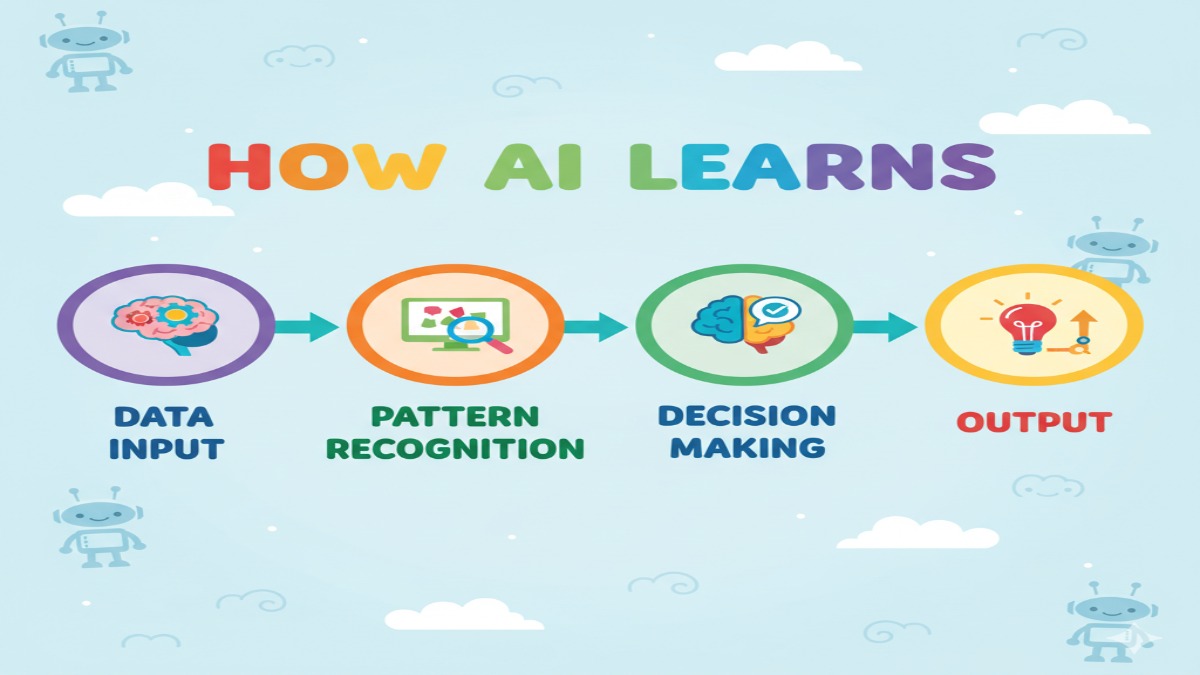
The easiest way to start explaining AI to a child is to compare it to how people learn. Imagine teaching your child to recognize animals. You might show them 20 pictures of dogs and say, “This is a dog.” After seeing enough examples, they can spot a dog anywhere. That’s exactly how Artificial Intelligence works—it learns by example.
AI is like a smart helper that learns from information instead of being told what to do every single time. For example, AI in your phone learns how you type and suggests the next word. It’s not magic; it’s learning patterns from data.
According to a GoHenry article, explaining AI as “teaching computers to think and learn like humans” makes it easier for children to understand. The key is to show how it’s used in their daily life.
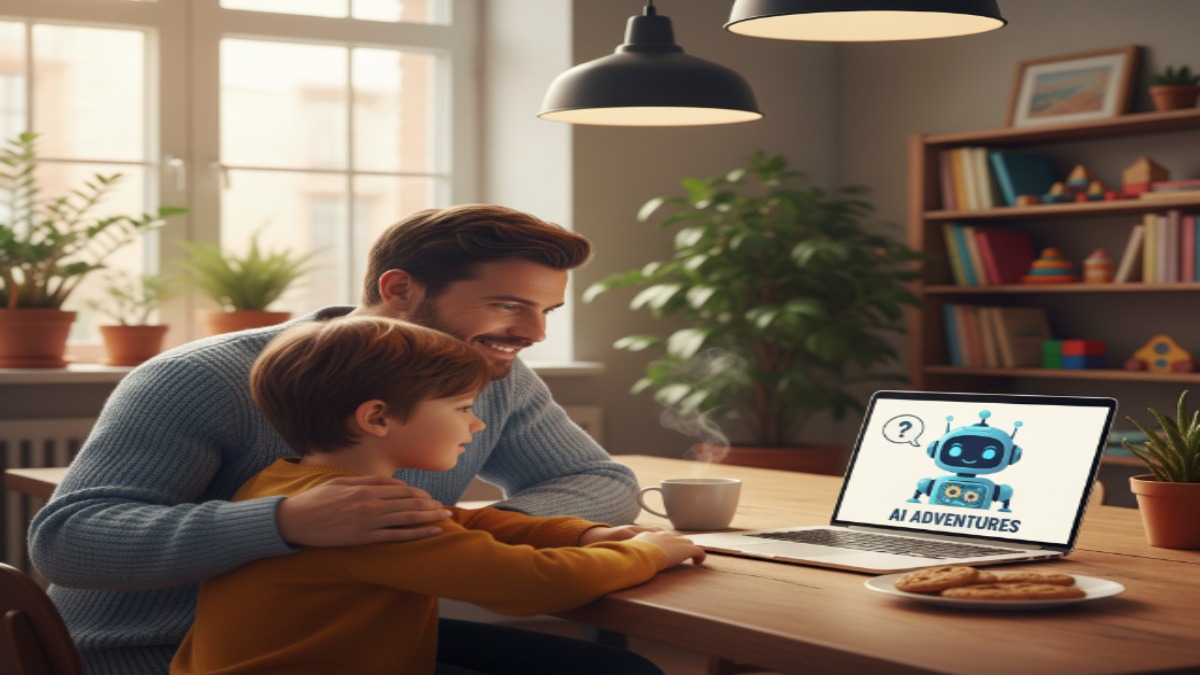
Everyday Examples Kids Already Know
The best way to explain AI to a 10 year old is to use things they already recognize.
-
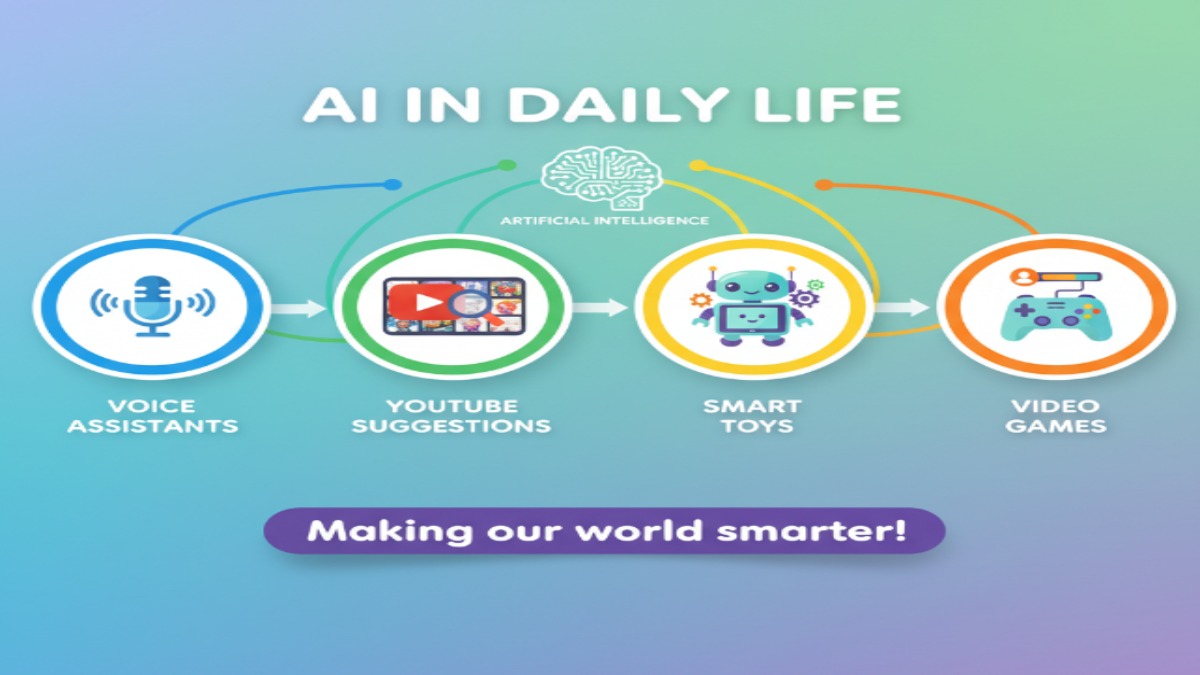
Voice Assistants: When kids say, “Hey Siri” or “Alexa, play a song,” they’re talking to AI. These assistants listen, understand, and respond using language models—just like a helpful friend who learns what you like.
-
YouTube and Netflix Suggestions: When your child watches one cartoon and gets recommendations for similar ones, that’s AI at work. It studies patterns to suggest what they might enjoy next.
-
Video Games: Many games use AI to make characters move, talk, or react like real people. The enemies you play against in Minecraft or FIFA? That’s computer intelligence learning how to challenge you better.
You can explain that AI doesn’t think or feel like humans—it just follows what it learns. But it can still seem smart because it uses millions of examples to find patterns quickly.
For a deeper dive into AI designed for kids, check out CodaKid’s beginner guide to AI for children. It breaks down AI concepts in fun and educational ways.
How AI Learns: The “Training” Example Kids Understand
Children understand the idea of practice. You can say, “AI learns just like you do when you practice math or drawing.”
Let’s take an example. Imagine a computer learning to recognize cats. You show it thousands of cat pictures. The more it sees, the better it becomes at spotting cats. If you show a dog by mistake, the AI might get confused at first—but with more examples, it improves.
This process is called training, and the information used to train AI is called data. It’s similar to how kids learn from experience. The more they read or play, the smarter they get.
Real-world case studies show how this works. Google’s AI was once trained to identify skin diseases by looking at thousands of medical images. It learned to spot patterns that even some doctors missed. This shows how AI can “learn” to see patterns just like humans do—but much faster.
Why Kids Should Learn About AI Early
Experts agree that AI for kids is not just about understanding technology—it’s about preparing for the future.
According to educators and AI experts, introducing AI concepts early helps kids develop logical thinking, creativity, and problem-solving skills. Many schools around the world are now including basic AI lessons in science and technology classes.
For instance, Finland’s education system teaches kids to think critically about how machines make decisions. This builds awareness and helps them use technology responsibly.
If your child shows interest, encourage them to explore safe online tools or coding games that teach AI basics. Websites like FindTechToday regularly share free resources and guides on practical tech topics that help children and parents learn together.
How AI Is Used in Real Life (Simple Examples for Kids)
Once a child understands what AI means, it helps to show how it appears in daily life. Kids love examples they can relate to.
Here are some real-life uses of AI for kids to understand easily:
-
Smart Toys: Some toys, like Cozmo or Miko, use AI to recognize faces and respond with emotions. They learn how to interact with children over time.
-
Streaming Platforms: When Netflix or YouTube suggests shows your child might like, that’s AI recommending based on what others enjoy.
-
Educational Apps: Tools like Duolingo use AI to decide which lessons a child needs to practice next.
-
Games: In games like Roblox or Minecraft, AI helps design smarter game characters and challenges.
AI is not something far away—it’s quietly shaping the apps, devices, and even classroom tools kids use every day.
If you’d like to explore how AI interacts with our data, check out How to Protect Your Privacy in the Age of AI. It explains in plain words how to stay safe while using AI-based tools.
How Human Thinking Is Different from AI Thinking
When explaining AI to a 10 year old, one key point is this: AI is smart, but not like humans.
You can tell a child that humans learn from emotions, experiences, and creativity, while AI learns only from data. Humans understand “why,” but AI understands “how.” For instance, a child can tell a joke because they find it funny, but AI tells a joke because it has seen similar words together.
This difference helps kids see that AI can be helpful but not truly alive. It doesn’t have feelings, imagination, or empathy—it only follows logic.
Here’s a fun way to show it:
Ask your child, “What happens if I drop an ice cream on the floor?” They’ll laugh and say, “It melts, and I’ll be sad.” AI might know it melts but won’t understand sadness.
That’s why people guide AI with ethical rules—to make sure it helps us in the right way.
How AI Is Changing School and Learning
Today’s classrooms are already being influenced by AI, even if kids don’t notice it. Tools that help students learn at their own speed or translate languages instantly are powered by artificial intelligence.
For example, some schools use AI writing assistants to help children improve grammar or check for plagiarism. Math learning apps use AI to spot where a student struggles and provide customized practice questions.
Teachers say that using AI saves them time on grading and helps them focus more on teaching creativity and critical thinking—skills no machine can replace.
According to educational studies, students who use AI-driven apps show faster improvement in reading comprehension. The AI doesn’t replace the teacher; it supports learning by adapting to each child’s needs.
To understand how AI tools help professionals, you can also read How to Use Gemini Advanced for Excel Data Analysis. It’s a great real-world example of how AI can make complex tasks easier—even for adults.
How to Explain AI to a Child Using Games and Fun Activities
Children learn best through play. You can turn AI explained for children into a fun experience by using games and stories.
Here are a few ideas:
-
“Teach the Robot” Game: Ask your child to act as a robot. Give them step-by-step instructions, like “Move two steps forward,” “Turn left,” etc. Explain that this is how AI follows commands.
-
Guess the Pattern: Show them pictures (for example, animals or shapes) and ask them to guess the rule you used to group them. This helps them see how AI finds patterns in data.
-
Use Coding Games: Platforms like Scratch let children create stories and animations while learning how computers think.
You can even let your child try voice recognition tools like Google Assistant. When they ask a question, point out that the assistant “learns” by listening to millions of voices to answer better.
Games like these build curiosity and give children the joy of discovering how AI really works.
Safety and Ethics: What Kids Should Know About AI
When discussing AI for kids, it’s important to talk about safety. Kids should learn early that AI needs to be used responsibly.
Explain that AI tools collect data to learn, so it’s important not to share personal information like their full name, school, or location online. Encourage them to always ask a parent or teacher before trying new apps or games that use AI.
Ethics is another key part. You can tell kids that AI should be used to help people, not to harm or cheat. For instance, using AI to copy homework answers isn’t right—but using it to understand a topic better is a smart idea.
Parents can find simple privacy tips in this detailed article on FindTechToday. It’s written in plain language and helps families use AI safely.
What Experts Say About Teaching AI to Kids
Experts agree that the earlier children understand technology, the more confident and creative they become.
Dr. Cynthia Breazeal, an MIT professor known for her work in social robotics, says children who engage with AI early learn to ask deeper questions about how the world works. They don’t just use technology—they think critically about it.
Educational psychologist Dr. Sandra Leal adds that AI explained for children helps them develop empathy toward how decisions are made by machines, which prepares them for future careers in tech, science, and design.
Many tech leaders encourage parents to introduce AI topics naturally—through conversation, books, and everyday examples—without pressure or complexity. The goal is curiosity, not technical mastery.
As AI becomes part of daily life, this approach builds confidence instead of confusion.
Real Stories: How Kids Are Using AI Creatively
Let’s look at a few real-life examples that show how kids around the world are already engaging with AI.
In the United States, a 12-year-old girl named Arushi built an AI-powered app to help detect plant diseases using photos. She said she got the idea after watching her grandparents struggle with farming issues.
In the UK, a group of schoolchildren used AI in a science project to predict recycling patterns in their community. Their school later used their model to improve waste collection schedules.
These stories show how young minds, when exposed to AI for kids programs, start using technology not just for fun—but to solve real problems.
AI is not only about robots or coding. It’s about learning to think differently, finding patterns, and creating something new that helps others.
How AI Will Shape the Future for Today’s Kids
When we talk about AI for kids, it’s not just about understanding technology—it’s also about preparing them for the world they’ll grow up in.
Studies show that by 2030, over 40% of current jobs will use AI in some form. This doesn’t mean robots will take every job—it means humans will work with AI tools. Jobs in medicine, design, writing, and even farming already use AI to make work easier and faster.
Explaining this to a 10-year-old can be simple:
You can say, “In the future, doctors might use AI to help find illnesses faster, and artists might use AI to create new designs. AI will be your helper, not your replacement.”
By helping children understand this balance early, they’ll grow up seeing AI as a partner for creativity, not something to fear.
How Parents and Teachers Can Guide AI Learning
Parents and teachers play a key role in teaching children about AI. You don’t need to be a tech expert to do it—you just need curiosity and the right approach.
Here’s how to guide children effectively:
-
Start with conversations: Ask open questions like, “What do you think makes a robot smart?”
-
Use real-life examples: When your child uses YouTube, explain how it “learns” from what they watch.
-
Encourage creativity: Let them build small projects with free tools like Scratch or Teachable Machine.
-
Set boundaries: Talk about using AI responsibly, including checking facts and protecting privacy.
Educators recommend making AI part of everyday learning. For example, when teaching math, explain how AI also uses numbers and patterns. When teaching reading, discuss how language models like ChatGPT learn from words.
For parents who want to go deeper, FindTechToday has simple, easy-to-read guides about AI and modern digital tools to help families stay updated.
Common Myths Kids Believe About AI
Children often have funny and creative ideas about what AI can do. Addressing these myths helps them see the truth clearly.
Here are some common ones:
-
“AI is a real person.”
Explain that AI may talk or sound human, but it doesn’t feel emotions. It’s just a smart program. -
“AI can do anything.”
Tell them AI has limits. It can only do what it’s trained to do. It can’t make decisions without rules. -
“AI will take all the jobs.”
Show them examples where AI helps people instead—like doctors diagnosing faster or farmers predicting weather better. -
“AI is always right.”
Kids should know that AI sometimes makes mistakes because it learns from data that can be wrong. Humans are still needed to guide it.
Breaking these myths builds critical thinking—a skill children will need as AI becomes a bigger part of life.
Teaching Children to Think Critically About AI
When discussing how to explain AI to a child, focus on helping them think, not just memorize.
You can teach your child to ask questions like:
-
“Who made this AI?”
-
“What data did it learn from?”
-
“Can it be wrong sometimes?”
These questions help kids understand that AI is made by humans and can make errors. It also builds awareness about bias—when an AI makes unfair decisions because of the data it was trained on.
Schools that include AI discussions in their lessons often see higher engagement. Students start connecting technology with real-world problems, such as climate change or health issues.
By encouraging curiosity and caution together, you help children become thoughtful users of AI instead of passive consumers.
Case Study: How One School Used AI to Improve Learning
At a primary school in Singapore, teachers introduced an AI writing assistant that helped students improve storytelling skills. The AI offered ideas for stronger characters and better sentence flow, while the teacher guided creativity.
After six months, reading scores improved by 23%. Students said the tool made learning “fun and less scary.” This is a strong example of how AI explained for children in the classroom can lead to real improvement.
Teachers reported that students were more confident in writing because they understood AI wasn’t replacing their effort—it was helping them learn faster.
That’s the kind of message kids need to hear: AI is a tool, not a teacher. Humans still hold the power to think, create, and feel.
How to Talk About AI at Home
Explaining AI doesn’t need a classroom. Parents can do it naturally during daily routines.
-
At breakfast, ask your child how their tablet knows what videos to suggest.
-
During car rides, talk about GPS apps that “learn” the best routes.
-
When shopping online, explain how recommendations appear.
These small talks help children see how AI quietly supports their world. You don’t need to teach everything at once—just connect ideas to real life.
Parents can also check resources like FindTechToday’s AI articles for step-by-step guidance on safe and practical ways to discuss technology at home.
Key Takeaways
Here’s a quick summary to wrap up what we’ve learned about how to explain AI to a 10 year old:
-
Start with simple comparisons—AI learns like humans but from data, not emotions.
-
Use real-life examples like games, YouTube, or smart toys.
-
Encourage curiosity with games and stories.
-
Teach safety, ethics, and privacy early.
-
Remind children that AI is a tool, not a replacement for human creativity.
-
Keep the learning fun, simple, and connected to their world.
The goal isn’t to make your child an AI expert—it’s to make them comfortable, confident, and curious about the technology shaping their future.
FAQs About How to Explain AI to a 10 Year Old
1. What’s the easiest way to explain AI to a child?
Tell them AI is like a student who learns from examples instead of a teacher. The more examples it sees, the better it becomes at recognizing things.
2. How can I make learning about AI fun for my kid?
Use games, stories, and voice assistants like Siri or Alexa to show AI in action. Encourage them to ask questions and explore how machines “think.”
3. Is AI safe for children to use?
Yes, when guided by parents or teachers. Make sure they understand not to share personal details online and to use trusted apps and educational tools only.
Conclusion
Explaining AI to kids isn’t about teaching programming or complicated terms. It’s about opening their minds to how machines learn and how humans guide them.
By showing examples from daily life, playing interactive games, and asking questions together, parents and teachers can make AI a fun and meaningful topic for children.
When you know how to explain AI to a 10 year old in simple words, you help them see the world not as something run by machines—but as a place where humans and technology work together to make life better.
Encourage curiosity, guide them with responsibility, and let them imagine what amazing things they could create with AI in the future.
For more practical guides and easy-to-understand tech articles, visit FindTechToday — your trusted space for learning about the modern digital world.