Vertical Garden Panel Calculator
Vertical Garden Panel Calculator
Calculate the number of plants, soil volume, and irrigation needs for your wall-mounted vertical garden panel or living wall system.
Vertical Garden Panel Calculator: Optimize Your Living Wall with Ease
Creating a lush vertical garden is one of the most rewarding ways to bring greenery into small urban spaces, balconies, or indoor walls. But figuring out how many plants you need, how much soil or growing medium to use, and the water requirements can quickly become confusing. That’s where the Vertical Garden Panel Calculator comes in — a tool designed to help gardeners, landscapers, and indoor plant enthusiasts plan their living walls efficiently, saving time, money, and guesswork.
Imagine you want a 2-meter-tall panel on your balcony wall filled with a mix of herbs and small succulents. How many plants will you need to create a lush, full look without overcrowding? How much soil or substrate will be required, and how often should you water? This tool provides clear, actionable answers in seconds, giving you confidence before you start planting.
Why Use a Vertical Garden Panel Calculator?
Building a vertical garden involves more than just hanging pots. There are key considerations to ensure plant health and aesthetics:
-
Space efficiency: Determine the optimal number of plants to avoid overcrowding or gaps.
-
Resource planning: Estimate soil or hydroponic substrate and water needs.
-
Plant selection guidance: Choose plants suitable for your panel’s light and spacing.
-
Cost and maintenance control: Avoid buying excess plants, soil, or irrigation supplies.
By using a vertical garden panel estimator, you can create a thriving wall planter system that looks professional and grows efficiently.
How the Vertical Garden Panel Calculator Works
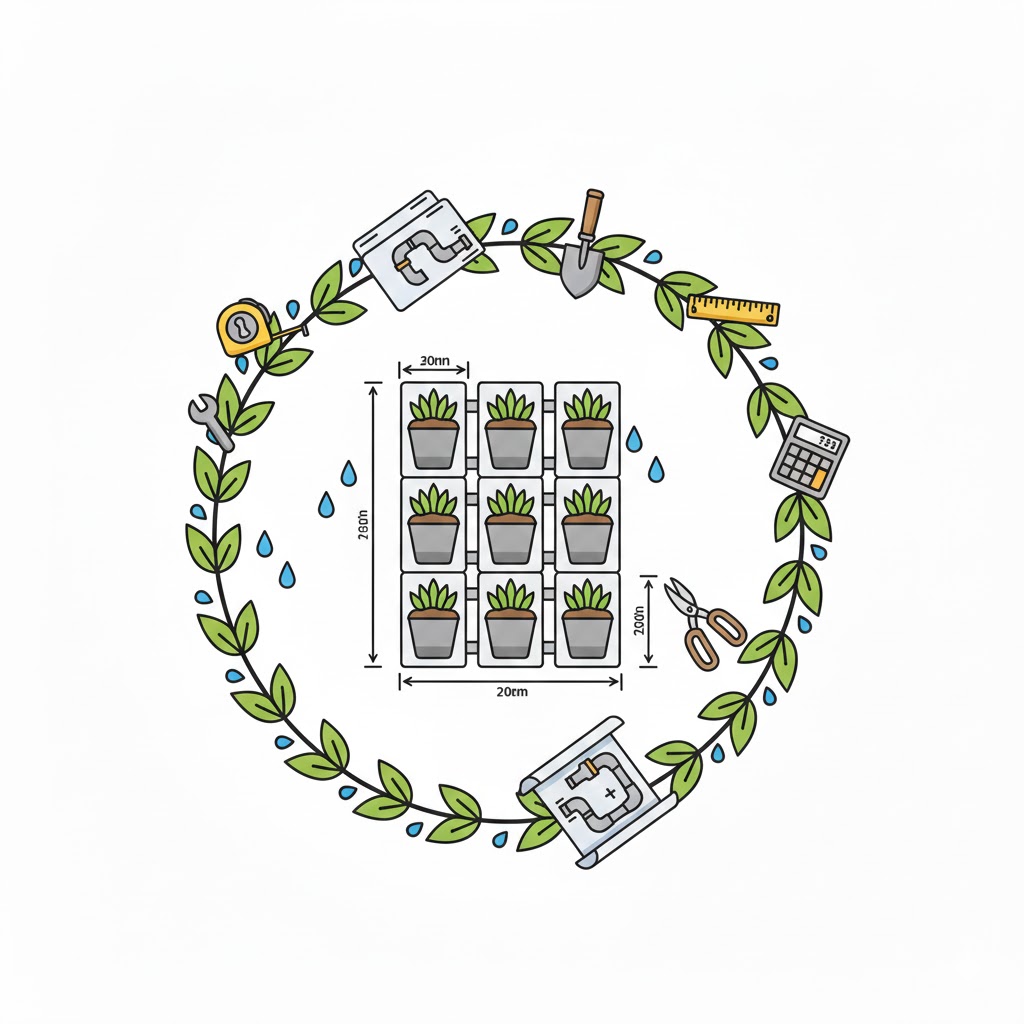
The calculator works on three primary inputs:
-
Panel Dimensions: Width and height in centimeters.
-
Plant Spacing: Distance between plants (15–40 cm, depending on plant size).
-
System Type:
-
Fabric Pocket / Felt: Lightweight, ideal for small herbs and succulents.
-
Modular Trays / Pots: Easy maintenance with individual planting units.
-
Hydroponic Systems: Soil-free growth for rapid plant development.
-
Behind the Calculations
Here’s how the tool determines your requirements:
-
Panel Area (m²):
Converts panel dimensions from centimeters to square meters.
-
Estimated Number of Plants:
-
The 1.15 factor accounts for staggered planting, which creates a natural, full coverage.
-
Adjusts for different plant spacings depending on size and density.
-
-
Soil or Growing Media Volume:
-
Pocket system: ~1.5 liters per plant
-
Modular trays: ~3 liters per plant
-
Hydroponic: no soil required
-
-
Water Requirements:
-
Vertical gardens evaporate more quickly than horizontal beds; approximately 4 liters per m² per day is recommended.
-
These calculations ensure accurate, practical planning for any vertical wall setup.
Step-by-Step Examples
Example 1: Small Balcony Panel
-
Panel size: 100 cm × 200 cm
-
Plant spacing: 20 cm
-
System: Modular trays
Calculations:
-
Area:
(100 / 100) * (200 / 100) = 2 m² -
Plants:
10000 / (20*20) * 1.15 * 2 ≈ 58 plants -
Soil volume:
58 * 3 = 174 liters -
Water:
2 * 4 = 8 liters/day
Takeaway: A medium-sized balcony panel can accommodate nearly 60 plants with roughly 174 liters of substrate.
Example 2: Indoor Herb Wall
-
Panel size: 150 cm × 120 cm
-
Plant spacing: 15 cm
-
System: Fabric pockets
Calculations:
-
Area:
(150/100) * (120/100) = 1.8 m² -
Plants:
10000 / (15*15) * 1.15 * 1.8 ≈ 92 plants -
Soil volume:
92 * 1.5 ≈ 138 liters -
Water:
1.8 * 4 ≈ 7.2 liters/day
Takeaway: For dense herb planting, fabric pockets allow high plant density without overloading the wall.
Example 3: Hydroponic Living Wall
-
Panel size: 200 cm × 250 cm
-
Plant spacing: 30 cm
-
System: Hydroponic
Calculations:
-
Area:
(200/100)*(250/100) = 5 m² -
Plants:
10000 / (30*30) * 1.15 * 5 ≈ 64 plants -
Soil: None (hydroponic)
-
Water:
5 * 4 = 20 liters/day
Takeaway: Hydroponic systems eliminate soil but require precise water and nutrient management.
Practical Tips for Vertical Gardens
-
Use drip irrigation to reduce water waste and ensure consistent hydration.
-
Stagger plant placement to maximize coverage and visual fullness.
-
Select plants compatible with light and climate conditions for your wall.
-
Regularly prune fast-growing plants to maintain the panel shape.
-
Monitor substrate weight in balcony installations to avoid structural issues.
Related Tools to Enhance Your Garden
-
Bee-Friendly Plant Layout Estimator – Plan pollinator-friendly gardens.
-
Birdhouse Placement Tool – Integrate vertical greenery with urban wildlife.
-
Herb Garden Pot Estimator – Determine pot quantities for indoor and balcony herbs.
These tools complement the vertical garden calculator by helping you design functional, thriving green spaces.
FAQs
1. Can I mix plant types on a single vertical panel?
Yes, but consider plant height, water needs, and sunlight requirements. Use the calculator to adjust spacing for larger plants.
2. How often should I water vertical garden panels?
Daily watering is ideal for soil-based panels. Hydroponic systems require continuous monitoring of water and nutrients.
3. Will the calculator work for very small or very large panels?
Absolutely. Enter your exact panel dimensions and choose spacing and system type. The tool adapts to all sizes, providing accurate plant counts and soil volumes.
Conclusion
The Vertical Garden Panel Calculator empowers gardeners, landscapers, and DIY enthusiasts to plan their living walls with confidence. By estimating plants, soil, and water requirements in seconds, it removes guesswork and ensures lush, thriving panels. Whether designing a small balcony wall, an indoor herb garden, or a large hydroponic living wall, this tool streamlines planning and maximizes results.
Try experimenting with different dimensions, plant spacings, and systems to find the perfect balance for your vertical garden. Complement your planning with tools like the Bee-Friendly Plant Layout Estimator and Birdhouse Placement Tool for a complete green solution.