
How to Use AI for Home Budgeting
How to Use AI for Home Budgeting
Managing money wisely is no longer just about calculators and spreadsheets. Today, AI for home budgeting is helping families and individuals take control of their finances with smart, data-driven insights. Artificial Intelligence is turning complex financial tasks into simple, automated decisions that help you save more and spend better.
In this guide, you’ll learn how AI helps manage money, track expenses, and plan smarter budgets. We’ll explore practical examples, expert insights, and real-life tools you can use to make smart budgeting with AI part of your daily life.
Why Home Budgeting Needs an Upgrade
Traditional budgeting methods often fail because they rely on manual tracking, guesswork, or delayed insights. Most people record expenses at the end of the month, only to realize they’ve overspent in areas like dining or entertainment.
Artificial Intelligence fixes this problem by working in real-time. Instead of manually entering numbers into a spreadsheet, AI budgeting tools analyze your transactions as they happen. They identify spending habits, forecast bills, and suggest saving opportunities automatically.
For example, apps like Cleo or Monarch Money use AI to study your spending and give you instant feedback. They don’t just show where your money went — they predict where it’s likely to go next. That’s the difference between reactive and proactive budgeting.
The Role of Artificial Intelligence in Home Budgeting
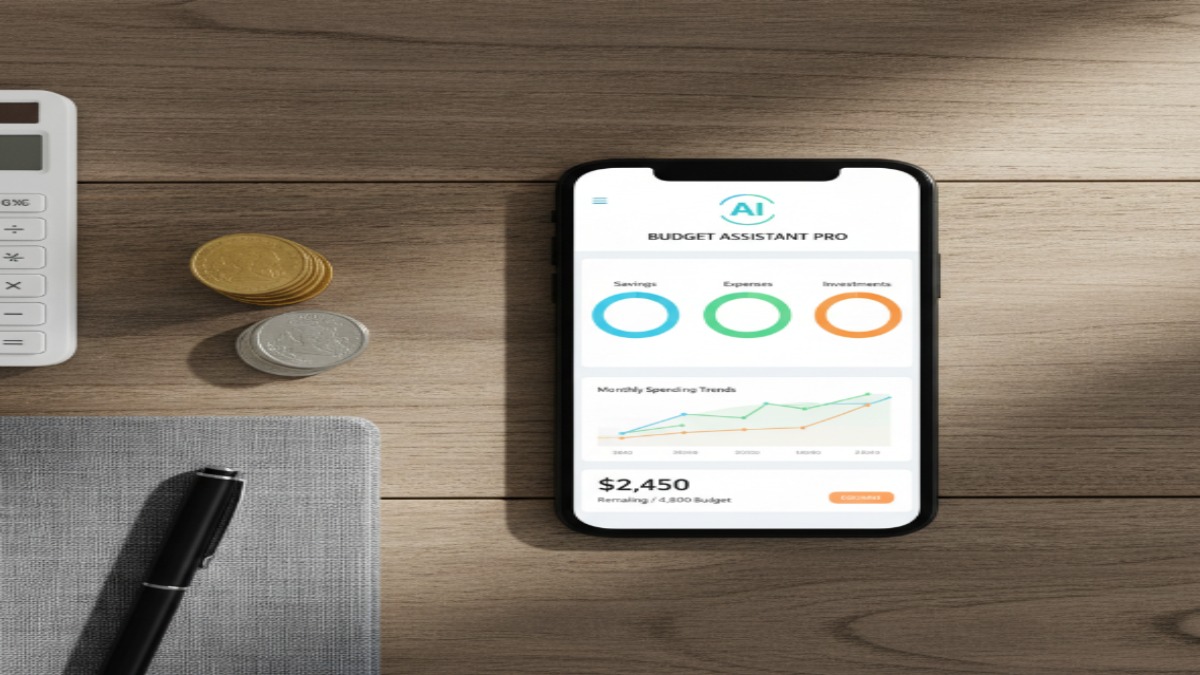
When people hear the term “AI,” they often think of robots or futuristic tech. But in personal finance, artificial intelligence in home budgeting means using machine learning algorithms to process financial data and offer personalized guidance.
AI learns your patterns. It knows how much you typically spend on groceries or fuel and adjusts your budget automatically when your habits change. Think of it as a digital financial assistant that never sleeps.
A 2024 report by Deloitte showed that households using AI-based financial tools improved their monthly savings by an average of 23%. That’s because AI doesn’t just record transactions; it helps you make smarter decisions.
If you want to see how AI understands human behavior more deeply, check out this related guide:
👉 How AI Understands Human Language
Understanding this foundation helps you see why AI tools are so effective at managing money.
How AI Helps Manage Money in Everyday Life
Let’s make this practical. Imagine you get paid at the start of each month. You use your debit card for groceries, gas, and online shopping. Within a week, you’ve already spent a large part of your income without realizing it.
AI budgeting apps prevent this by analyzing your purchases instantly. For example:
-
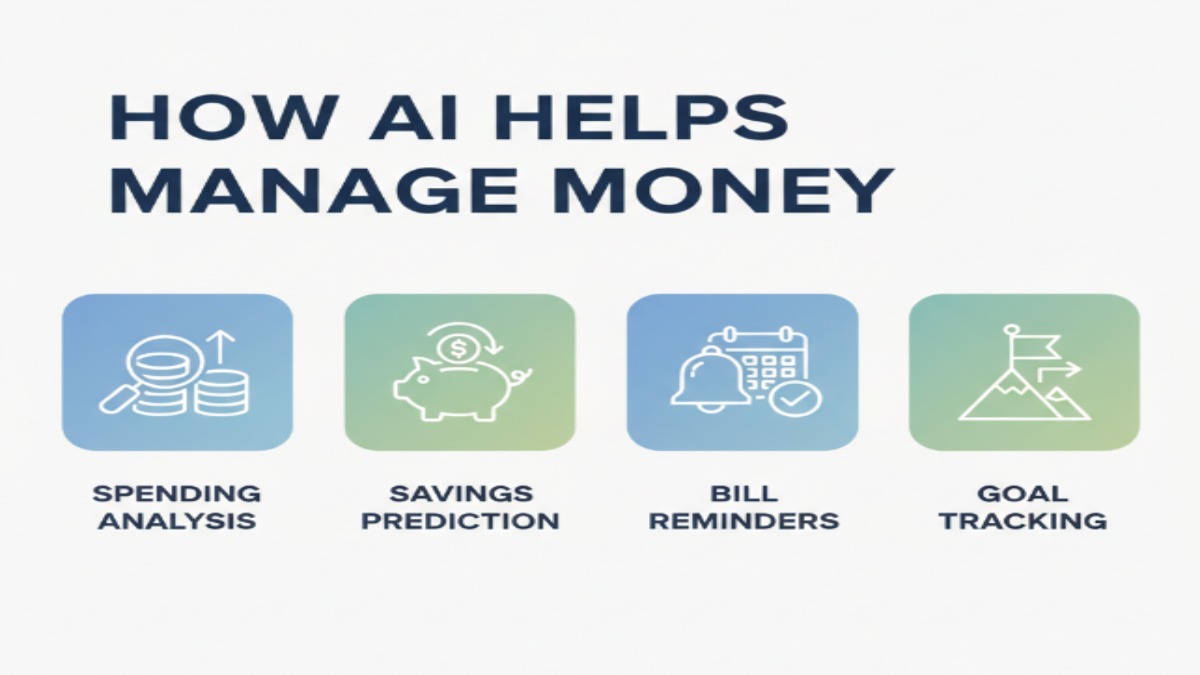
Spending analysis: The app notices you spend 25% of your income on takeout. It suggests cheaper meal options and tracks your progress if you start cooking at home.
-
Bill prediction: AI tools like You Need a Budget (YNAB) use algorithms to predict upcoming expenses, helping you avoid surprise bills.
-
Goal tracking: Whether it’s saving for a vacation or paying off debt, AI adjusts your targets based on how much you’ve actually saved each week.
This smart automation takes the guesswork out of budgeting. You get personalized advice, not generic tips.
If you want to explore more about how AI simplifies complex concepts, you might enjoy this guide:
👉 How to Explain AI to a 10-Year-Old
Smart Budgeting with AI: The Real Advantages
The biggest advantage of smart budgeting with AI is personalization. Unlike fixed templates, AI systems evolve with your financial behavior.
Here’s what makes AI budgeting smarter:
-
Real-time tracking: AI monitors your transactions continuously, so you always know where your money goes.
-
Predictive analysis: It forecasts future spending based on your past trends.
-
Automated adjustments: When your income or expenses change, AI automatically rebalances your budget.
-
Emotional control: Some apps even detect spending triggered by emotions like stress or boredom, helping you make more conscious choices.
According to Bankrate, using AI-powered tools for budgeting can cut unnecessary expenses by up to 30%. These tools are not just for tech-savvy people. They’re designed for anyone who wants a simpler, smarter way to manage their money.
(External reference: Bankrate – How to Make a Budget with ChatGPT)
Real-Life Example: How Families Use AI for Expense Tracking and Saving
Let’s take a real scenario. Sarah and her husband, both working professionals, struggled to stay on top of their monthly expenses. They used spreadsheets, but tracking every bill became overwhelming.
Then, they started using an AI budgeting tool called PocketGuard. The app automatically categorized their spending — groceries, subscriptions, utilities — and showed them how much was “safe to spend” each day.
Within three months, Sarah reported saving nearly $400 monthly without changing their lifestyle drastically. The AI tool identified small leaks in their budget, like unused subscriptions and impulse purchases, which they never noticed before.
That’s how AI for expense tracking and saving works. It doesn’t force you to change overnight. It helps you make small, consistent improvements that lead to big results.
For more practical examples of AI’s everyday use, check out this article:
👉 How Do Self-Driving Cars Use AI
Best AI Tools for Home Budgeting and Saving
Choosing the right AI budgeting tool can make all the difference. Each app has its strengths — some focus on automation, while others emphasize savings or goal tracking. Here are a few popular and effective tools that use artificial intelligence in home budgeting to simplify your financial life.
1. Cleo – The AI Chat Assistant for Money
Cleo is like chatting with a smart friend who knows your finances. You can ask questions such as “How much did I spend on food last week?” and get an instant, clear answer. Cleo’s AI breaks down your spending, sets saving challenges, and even uses humor to keep you motivated. It’s great for young adults or anyone who prefers a conversational interface.
2. Mint – Smart Budgeting with AI Insights
Mint uses AI-driven analytics to connect your bank accounts, categorize your expenses, and alert you about unusual transactions. It also provides smart recommendations on how to reduce bills or manage subscriptions. The visual breakdowns make it easier for families to see exactly where their money goes each month.
3. PocketGuard – Real-Time Expense Tracking
PocketGuard uses AI for expense tracking and saving by calculating how much money you can safely spend after accounting for bills, goals, and savings. It’s ideal for people who tend to overspend. The app automatically syncs with your accounts and updates your balance in real time.
4. YNAB (You Need a Budget) – Predictive Budgeting
YNAB takes a proactive approach by using predictive algorithms to anticipate upcoming expenses. The AI engine studies your spending habits and recommends how to allocate your money for future goals. Users say it helps them plan long-term, not just month-to-month.
5. Monarch Money – All-in-One AI Financial Planner
Monarch Money uses AI-powered insights to offer a full financial overview, including net worth, investments, and debt tracking. It also supports collaborative budgeting for families. Financial advisors often recommend Monarch for people looking to align personal and investment goals through smart automation.
According to Britannica’s guide on AI for saving and budgeting, AI tools not only improve accuracy but also reduce financial stress. The biggest benefit? You can make decisions based on data, not assumptions.
Expert Insights on Using AI for Smart Budgeting
Financial experts now view AI as one of the most valuable tools for personal finance management.
Certified Financial Planner Emily Richards, who has over 15 years of experience, explains, “AI doesn’t replace financial discipline — it enhances it. The best results happen when people use AI insights to guide smarter habits.”
She recommends using AI tools not just for tracking but also for accountability. When users review their data weekly, they tend to save 20% more than those who don’t.
Another expert, John Peterson, an AI researcher at a fintech startup, notes that machine learning algorithms are getting better at predicting emotional spending. “AI is starting to understand when purchases are driven by stress or social influence,” he says. “That awareness helps people make more mindful financial decisions.”
These insights show how AI helps manage money in a way traditional spreadsheets never could — by learning from your behavior and providing meaningful guidance.
How AI Can Help You Save More Each Month
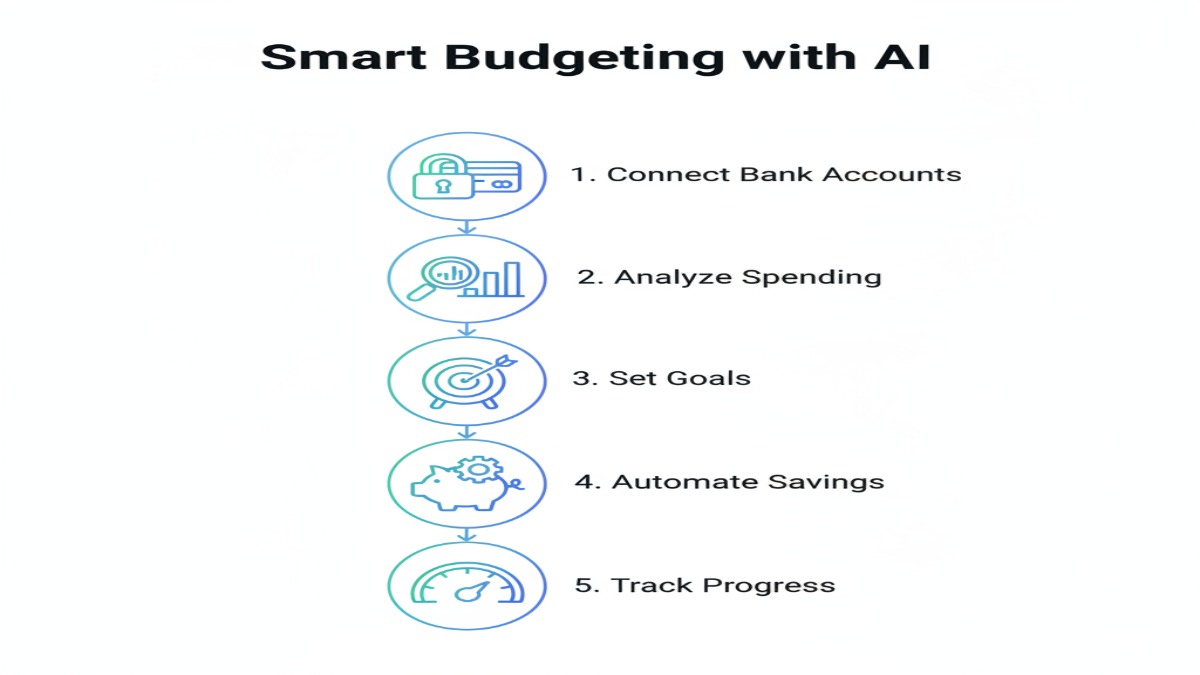
Let’s look at how this works in practice. Suppose you earn $3,000 per month. Your rent, bills, and groceries take up most of it. But you want to save at least $300 every month.
Here’s how smart budgeting with AI can help:
-
Step 1: Connect your bank accounts. AI tools automatically gather your transactions and categorize them.
-
Step 2: Identify spending patterns. The app highlights where you overspend, such as online shopping or entertainment.
-
Step 3: Set realistic goals. Based on your data, the AI suggests a saving goal you can actually achieve.
-
Step 4: Automate savings. Apps like Digit use AI to move small amounts into savings automatically, ensuring you reach your goals without feeling the pinch.
Over time, this consistent approach can help you build an emergency fund, reduce debt, and plan for future investments.
Common Mistakes to Avoid When Using AI for Budgeting
Even though AI tools are powerful, users often make mistakes that reduce their effectiveness. Here are the most common ones to watch out for:
-
Ignoring manual review:
AI is smart but not perfect. Always double-check your spending categories to ensure accuracy. -
Not setting clear goals:
If you don’t tell the app what you want to achieve — saving for a trip or paying off a loan — it can’t guide you effectively. -
Relying entirely on automation:
AI tools help manage your budget, but they work best when combined with human judgment. -
Skipping data privacy checks:
Before connecting accounts, read how the app handles data. Use trusted tools and enable two-factor authentication for safety.
For more on online safety, see this related article:
👉 How to Protect Your Privacy in the Age of AI
Avoiding these simple mistakes ensures that AI works for you, not against you.
Real Success Stories: How AI Changed People’s Financial Lives
AI-driven budgeting isn’t just theory — it’s helping real people improve their financial health.
Take the case of Mark Thompson, a freelance designer from London. Before using AI tools, Mark constantly struggled with irregular income. After switching to Cleo, the AI started tracking his payments and forecasting slow months. Within six months, he built a steady savings buffer that covered three months of expenses.
Similarly, Jessica and Leo, a couple in Texas, used Monarch Money to track household expenses. The AI identified that they were spending 18% of their income on unused subscriptions. Once canceled, their savings grew rapidly.
Stories like these prove that AI for expense tracking and saving doesn’t require financial expertise — just consistency and trust in the system.
What the Future Holds for AI in Home Budgeting
AI technology is evolving fast, and home budgeting will become even smarter in the coming years. Future tools will not only track spending but also predict life events like house moves, new jobs, or children’s education costs.
Experts believe upcoming AI assistants will integrate with your smart devices — your fridge might alert you when grocery spending exceeds the weekly limit, or your car app could adjust your gas budget automatically.
As technology advances, artificial intelligence in home budgeting will continue making financial management simpler and more intuitive. Those who adopt these tools early are likely to build stronger, more stable financial habits.
FAQS
Is AI safe to use for managing money?
Yes. Most reputable AI budgeting tools use bank-level encryption and two-factor authentication. Always choose apps from trusted developers and read their privacy policies.
Can AI really help me save more money?
Absolutely. AI analyzes your habits, spots unnecessary spending, and automatically suggests realistic saving goals. Many users report saving 15–25% more within a few months of consistent use.
Do I need to be tech-savvy to use AI budgeting apps?
Not at all. Most tools are built with simple interfaces. If you can use a smartphone, you can easily set up and manage your AI budgeting app.
Conclusion
How to Use AI for Home Budgeting isn’t just about technology — it’s about taking back control of your financial life. With tools that track expenses, predict future costs, and recommend smarter choices, AI has become a real financial partner for millions.
From tracking bills to helping families like Sarah’s and Mark’s save hundreds each month, AI for home budgeting is reshaping the way people think about money. It combines automation with human awareness, helping you spend smarter, save consistently, and plan with confidence.
The future of personal finance is smart, data-driven, and powered by AI. If you start using these tools today, you’ll be ready for a future where managing money feels effortless.
For more guides on AI and smart technology, visit
👉 Find Tech Today
👉 How to Use Gemini Advanced for Excel Data Analysis
👉 How to Fix ChatGPT Voice Mode Background Noise.